Industrial manufacturing
Nanomaterials

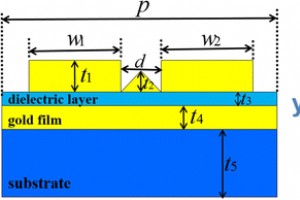
AbstractWe propose and numerically investigate a perfect ultra-narrowband absorber with an absorption bandwidth of only 1.82 nm and an absorption efficiency exceeding 95% in the visible region. We demonstrate that the perfect ultra-narrowband absorption is ascribed to the coupling effect induced by
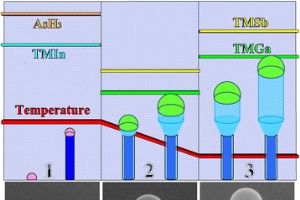
AbstractWe report the inaugural self‑catalyzed synthesis of high‑quality GaSb nanowires on InAs stems by metal‑organic chemical vapor deposition (MOCVD) on Si(111) substrates. Employing a two‑step flow protocol for trimethylgallium (TMGa) and trimethylantimony (TMSb), we first preserve Ga droplets o
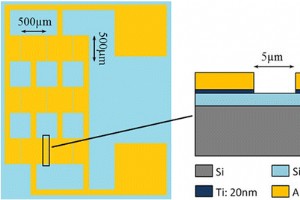
AbstractWe demonstrate that heating‑enhanced dielectrophoresis (HE‑DEP) markedly increases the alignment density of individual single‑walled carbon nanotubes (SWCNTs). Scanning electron microscopy (SEM) confirms an ultrahigh, well‑ordered alignment that surpasses current records. The mechanism is cl

Abstract Self‑assembly of silver nanoprism dimers frequently yields misaligned, edge‑to‑edge configurations. In acidic media, the sharp tips of Ag nanoprism are prone to oxidation, resulting in truncated nanoprism (TNP) dimers. By modeling a truncated Ag TNP dimer with variable misalignment, we clar
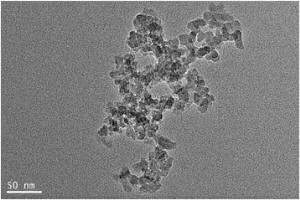
AbstractWe introduce a nanoparticle‑enhanced wormlike micellar system (NEWMS) built from cetyltrimethylammonium bromide (CTAB) and sodium salicylate (NaSal) and reinforced with silica nanoparticles. Prior to mixing, we characterized the silica nanofluid by dynamic light scattering (DLS) and transmis
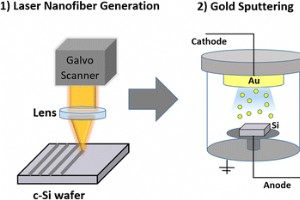
AbstractBiocompatible-sensing materials hold an important role in biomedical applications where there is a need to translate biological responses into electrical signals. Increasing the biocompatibility of these sensing devices generally causes a reduction in the overall conductivity due to the proc
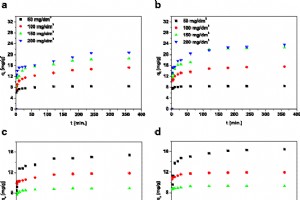
AbstractMagnetic biochar nanocomposites were fabricated by impregnating commercial biochar with zero‑valent iron. The study investigates how contact time, initial concentrations of Cd(II), Co(II), Zn(II) and Pb(II), sorbent dosage, solution pH, and temperature influence adsorption performance. Exper
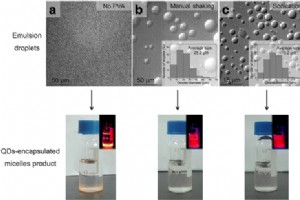
AbstractThe interfacial‑instability method is a versatile approach for creating nanocrystal‑encapsulated micelles (micellar nanocrystals) that are valuable for biosensing, imaging, and therapy. Using fluorescent CdSe/ZnS quantum dots (QDs) as a model, we systematically studied how emulsion droplet s
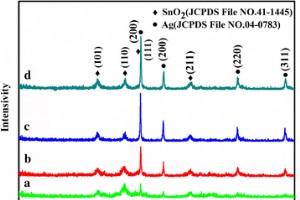
AbstractHierarchical silver‑decorated tin(IV) oxide (SnO₂) microspheres were obtained through a single‑step hydrothermal route that requires no templates or surfactants. X‑ray diffraction (XRD), scanning and transmission electron microscopy (SEM/TEM), X‑ray photoelectron spectroscopy (XPS), Brunauer
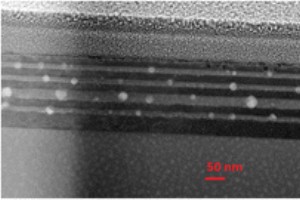
AbstractFormation of bismuth nanocrystals in GaAsBi layers grown by molecular beam epitaxy at 330 °C substrate temperature and post-growth annealed at 750 °C is reported. Superlattices containing alternating 10 nm-thick GaAsBi and AlAs layers were grown on semi-insulating GaAs substrate. AlAs layers
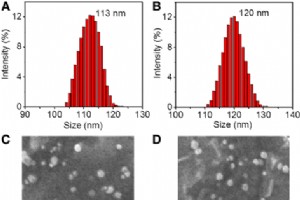
AbstractHuman serum albumin (HSA) is a natural, non‑immunogenic carrier that can encapsulate lipophilic drugs and improve their pharmacokinetics. We engineered resveratrol (RV)-laden HSA nanoparticles conjugated with arginine–glycine–aspartate (RGD) via a polyethylene glycol (PEG) linker (HRP–RGD NP

AbstractComposite membranes were obtained by modification of heterogeneous polymer cation and anion-exchange membranes with nanoparticles of zirconium hydrophosphate and hydrated zirconium dioxide, respectively. The ion-exchange materials were investigated with the methods of electron microscopy, po
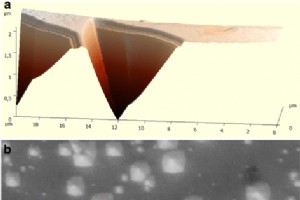
AbstractChanges in conductivity of irradiated and non-irradiated p-Si mono-crystals under the influence of elastic uniaxial mechanical stress were investigated in this paper. An analytical expression was suggested to describe the dependence of surface conductivity as a function of mechanical stress

AbstractMost polymers exhibit high flammability and poor degradability, which restrict their applications and causes serious environmental problem like “white pollution.” Thus, titanate nanotubes (TNTs) were adopted to decorate graphene oxide (GO) by a facile solution method to afford TNTs/GO nanoco
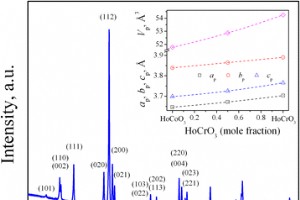
Abstract\nWe synthesized the mixed holmium cobaltite‑chromite HoCo0.5Cr0.5O3 (orthorhombic perovskite, space group Pbnm) by solid‑state reaction at 1373 K. Using in‑situ high‑resolution X‑ray synchrotron powder diffraction (beamline ID22, ESRF) we mapped the crystal structure from 300 to 1140 K. The
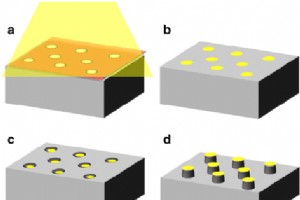
Abstract We demonstrate the creation of highly ordered gallium arsenide (GaAs) nanopillar arrays using metal‑assisted chemical etching (MACE) with gold (Au) nanodot catalysts. Au nanodots were patterned on GaAs substrates through a porous alumina mask produced by two‑step anodization. By employing a
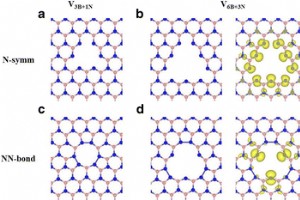
AbstractUsing density functional theory (DFT), we examined the atomic, electronic, and magnetic behavior of triangular vacancies in single‑layer hexagonal boron nitride (h‑BN). Our calculations reveal that the relaxed geometry of a triangular vacancy depends strongly on its size and that all stable
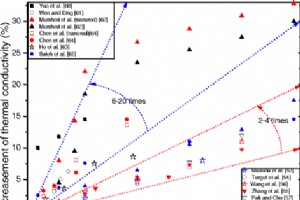
Abstract The field of nanofluids has experienced rapid growth due to their exceptional heat and mass transport properties, fluidity, and dispersion stability. These attributes make them attractive for a variety of energy systems, including solar collectors, refrigeration, heat pipes, and energy stor
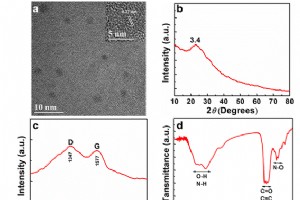
AbstractHydrogen peroxide (H2O2) is an important product of oxidase-based enzymatic reactions, such as glucose/glucose oxidase (GOD) reaction. Therefore, the probing of generated H2O2 for achieving the detection of various carbohydrates and their oxidases is very significative. Herein, we report one
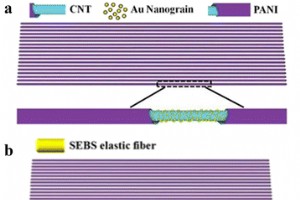
AbstractLinear stretchable supercapacitors have attracted much attention because they are well suited to applications in the rapidly expanding field of wearable electronics. However, poor conductivity of the electrode material, which limits the transfer of electrons in the axial direction of the lin
Nanomaterials