Industrial manufacturing
Nanomaterials


AbstractFePO4 nanoparticles combine biocompatibility, high bioavailability, magnetic responsiveness, and superior sensory properties, making them ideal for food fortification, biomedical imaging, and drug delivery. In this study, we engineered FePO4 as a carrier for the anticancer agent doxorubicin

AbstractThe second near‑infrared (NIR‑II, 1000–1300 nm) window offers unparalleled tissue penetration, positioning it as the ideal optical regime for imaging and photothermal therapy. Yet, crafting gold nanorods that absorb within this band while maintaining low cytotoxicity remains challenging. We
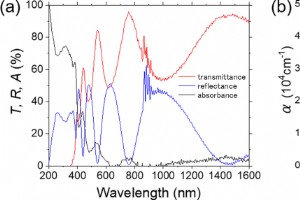
AbstractTwo‑dimensional (2‑D) materials, with atomically thin layers, offer transformative potential for electronics and optoelectronics. Transition‑metal monochalcogenides and dichalcogenides—specifically gallium selenide (GaSe) and molybdenum diselenide (MoSe₂)—feature intrinsic bandgaps and high

Abstract Nanoparticle superlattices are usually produced via solution‑based chemistry. In this work we demonstrate that a gas‑phase cluster‑beam deposition can generate self‑assembled monolayer superlattices on template‑free substrates. Fe nanoparticles form an average two‑dimensional, densely packe
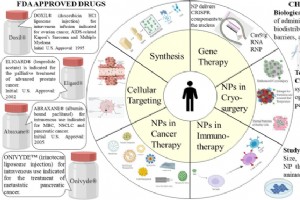
AbstractCancer remains a leading cause of mortality worldwide, driven by complex pathophysiology and resistance to conventional therapies. Nanoparticles (1–100 nm) offer a transformative platform, combining biocompatibility, reduced toxicity, enhanced stability, and precise tumor targeting through t

Abstract Metal-based medicines have a 4,000‑year legacy, with platinum compounds pioneered by cisplatin over four decades ago. Recent advances show that metallic nanoparticles, particularly gold nanoparticles (AuNPs), exhibit unique physicochemical traits that surpass their bulk counterparts. AuNPs
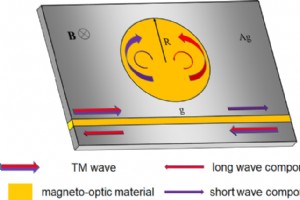
AbstractWe designed a simple on-chip integrated optical isolator made up of a metal–insulator–metal waveguide and a disc cavity filled with magneto-optical material to enhance the transverse magneto-optical effect through the coin paradox spin–orbit interaction (SOI). The simulation results of the n
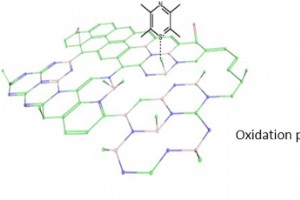
AbstractBoron‑based nanomaterials are rapidly emerging as non‑toxic, earth‑abundant photocatalysts for solar energy conversion and environmental remediation. Boron carbon oxynitride (BCNO) is a quaternary semiconductor whose electronic, optical, and physicochemical properties can be finely tuned by
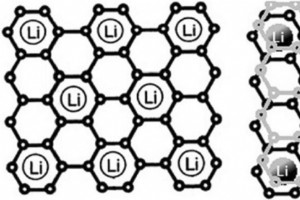
AbstractEnhancing anode performance is central to next‑generation lithium‑ion batteries. This review focuses on high‑capacity alloy anodes—particularly silicon—and the challenges of volume expansion, pulverization, and solid‑electrolyte interphase (SEI) growth. We demonstrate how reducing these ma
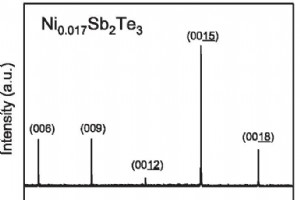
Abstract Magnetic‑susceptibility measurements on Ni‑doped Sb₂Te₃ reveal a sharp discontinuity at the Néel temperature (TN) and a narrow hysteresis loop below TN. The zero‑field‑cooled (ZFC) and field‑cooled (FC) curves coincide above the transition, then bifurcate below it; the separation grows as

AbstractEarly detection of ovarian cancer remains a critical challenge, largely due to nonspecific symptoms and the absence of reliable screening tools. We present a cost‑effective, flexible graphene biosensor fabricated on polyethylene terephthalate (PET) that detects circulating tumor cells (CTCs)

Fullerene Peapods Single‑walled carbon nanotubes (SWNTs) create a protected interior cavity that can be filled with molecules such as fullerenes. When C60 or other fullerene species are encapsulated inside SWNTs, the resulting hybrid is known as a fullerene peapod. These structures combine the uniq

Semiconducting nanoparticles, with all three dimensions between 1 and 20 nm, exhibit remarkable electronic, magnetic, catalytic, and optical behaviors. Their extraordinary properties arise from a high surface‑to‑volume ratio and size‑induced quantum confinement. Quantum Size Effect When a particle’

Silver NanocubesSilver remains one of the most sought‑after materials in nanotechnology due to its exceptional electrical, optical, and catalytic properties. Over the past decade, researchers have fabricated silver nanostructures in a variety of morphologies—including spheres, discs, rods, wires, s

Solar Cell Basics Solar cells harness sunlight and convert it into electricity. The global share of solar‑generated power has grown steadily as more modules are installed. Yet the gap between potential and actual utilization remains large. Semiconductors act as light absorbers, transforming photon

Nonconductors Conduct Current at the NanoscaleConventional conductors readily transmit electricity, while insulators or dielectrics resist it unless exposed to extreme voltage that triggers dielectric breakdown. At the nanoscale, however, researchers at the University of Michigan have shown that eve
Pyroelectric Effect Devices ranging from computers to cars to high‑voltage transmission lines lose significant heat to the environment. The pyroelectric effect—first noted by the Greek philosopher Theophrastus when heated tourmaline attracted straw—converts this lost thermal energy into electricity

Graphene: A Unique 2‑D Material Graphene is a single‑atom‑thick sheet of carbon arranged in a honeycomb lattice. Its electrons move at near‑relativistic speeds, behaving like massless Dirac particles. This gives graphene exceptional electrical conductivity, mechanical strength, and complete optical

Nanozymes: Gold Nanoparticle‑Based RNA Cleavage for Gene Silencing A nanozyme is a gold nanoparticle conjugated with an endoribonuclease and a DNA strand that is complementary to a specific RNA target. When the DNA‑RNA hybrid forms, the endonuclease cleaves the RNA at a precise site, mimicking the
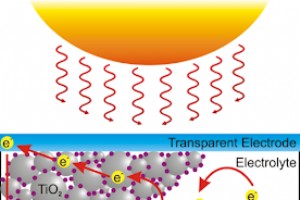
Researchers from the Applied Nano Tech & Science Lab at Korea Advanced Institute of Science and Technology and the Laser Thermal Lab at UC Berkeley have developed a nano‑tree architecture that significantly improves the performance of dye‑sensitized solar cells (DSSCs). Dye‑Sensitized Solar Cells
Nanomaterials