Industrial manufacturing
Nanomaterials

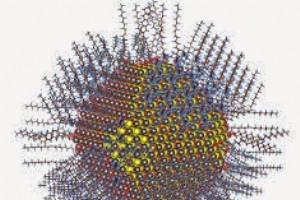
A nanoparticle—also called a nanopowder, nanocluster, or nanocrystal—is a microscopic particle whose at least one dimension is below 100 nm. Because of this extreme size, nanoparticles occupy a unique position between bulk materials and individual atoms or molecules, giving rise to distinctive phys

Nano-Concrete Innovation Nano-concrete incorporates sub-500 nm Portland cement particles, dramatically improving bulk properties by controlling reactions at the atomic level. This precision engineering yields thinner finished products, quicker setting times, and reduced environmental footprint com
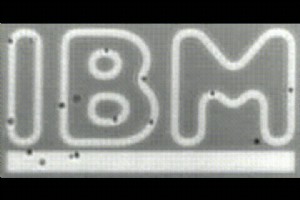
Today, IBM Research announced the first real‑world demonstration of a rocking Brownian motor for nanoparticles, published in the peer‑reviewed journal Science. The device guides nanoscale particles along engineered racetracks, enabling researchers to separate nanoparticle populations with unpreced
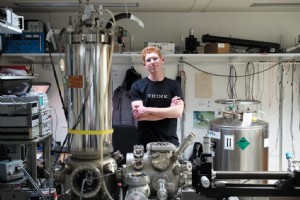
In a breakthrough published today in Nature Nanotechnology, IBM scientists have, for the first time, quantified the energy levels of a single molecule placed on an insulating surface. This milestone brings us one step closer to realizing practical single‑molecule electronic devices. Background Sinc

Dissolved Ocean Carbon (DOC) is the planet’s largest reduced carbon reservoir, roughly 200 times the mass of the living biosphere and comparable to the atmospheric CO₂ pool. Yet, only about 10 % of DOC has been chemically characterized, leaving a critical knowledge gap for predicting how this vast s
Nanomaterials deliver unparalleled optical and electrical characteristics and promise bottom‑up integration into mainstream semiconductor fabrication. Yet, precise, contamination‑free deposition at designated chip sites remains a formidable obstacle. Graphene—exceptionally thin, robust, flexible, a
IBM Research – Almaden, located in Silicon Valley, has, for the first time, measured the magnetic field generated by the nucleus of a single atom. The discovery, published in the journal Science, demonstrates that the subtle magnetic influence of a nucleus can be detected via its effect on the surro
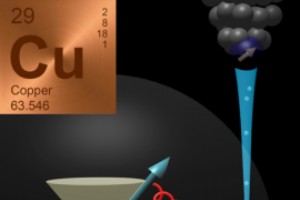
IBM Research has pioneered a technique that precisely controls the magnetism of a single copper atom, laying the groundwork for atomic‑scale data storage and quantum computation. In a recent publication in Nature Nanotechnology, we demonstrated that nuclear magnetic resonance (NMR) can be applied to
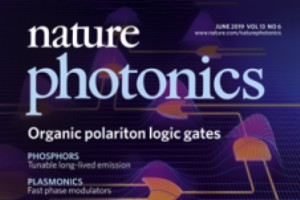
Modern digital computers have reshaped society, yet the core technologies that power them still have significant room for evolution. As data volumes swell and artificial‑intelligence workloads grow, the demand for more powerful, efficient computing platforms intensifies. The electronic transistor an
Energy conversion and transport in biological systems hinge on the precise charging and discharging of molecules. Porphyrins—such as chlorophyll and hemoglobin—are central to these processes, and their charge‑induced structural changes also drive the performance of organic electronic and photovolta
![Scientists Successfully Synthesize and Visualize Cyclo[18]Carbon](https://www.mfgrobots.com/article/uploadfiles/202112/2021122409224431_S.jpg)
For the first time, researchers have stabilized and directly imaged a ring of 18 carbon atoms, confirming the elusive cyclo[18]carbon structure. Carbon is one of the universe’s most abundant elements, existing in many allotropes that exhibit radically different properties—from the hardness of diamo
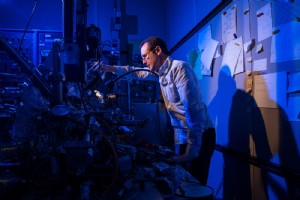
Our IBM Research team has achieved a landmark breakthrough in quantum control, demonstrating that individual atoms can serve as reliable qubits for quantum information processing. In the newly published paper “Coherent spin manipulation of individual atoms on a surface,” appearing in the journal Sc

Photograph of a GaP‑on‑insulator chip with integrated devices being measured with optical fibers. The green glow is the third‑harmonic light generated while pumping one of the ring resonators with a laser. In the peer‑reviewed paper Integrated Gallium Phosphide Nonlinear Photonics published in Natu
IBM Research scientist Dr. Leo Gross, University of Regensburg professor Dr. Jascha Repp, and University of Santiago de Compostela professor Dr. Diego Peña Gil have been awarded an ERC Synergy Grant for their project “Single Molecular Devices by Atom Manipulation” (MolDAM). The grant provides up to
Published today, IBM researchers in Zurich have, for the first time, quantified the thermal conductance of metallic quantum point contacts made of gold down to a single atom at room temperature. As devices shrink to the nanoscale, heat dissipation becomes a critical reliability factor. Last year, IB
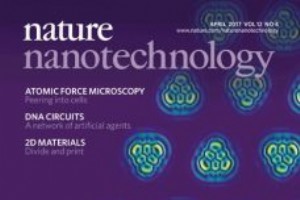
https://www.ibm.com/blogs/research/wp-content/uploads/2017/02/32305901096.mp4 Triangulene gets its first close‑up thanks to IBM and University of Warwick researchers. (7 April, UPDATE: the paper is featured on the cover of the April issue of Nature Nanotechnology). The April 2017 Volume 12 No 4
When IBM first unveiled functional 7 nm test chips in 2015 in partnership with GLOBALFOUNDRIES and Samsung, we anticipated rapid manufacturing readiness within a year. Today, the semiconductor industry is accelerating, and IBM is charting the path to the next generation of nodes beyond 7 nm. At th
IBM scientists in Zurich have been honored with the 2017 Compound Semiconductor Industry Innovation Award, recognizing five years of breakthrough research that integrates high‑mobility materials into silicon CMOS to scale devices below 7 nm. Across the spectrum—from mobile phones to the Internet of

Published today in the peer‑reviewed journal Nano Letters, IBM scientists have successfully guided an electron through an InAs III‑V semiconductor nanowire integrated on silicon, achieving ballistic transport for the first time. This milestone lays the groundwork for next‑generation quantum wire dev
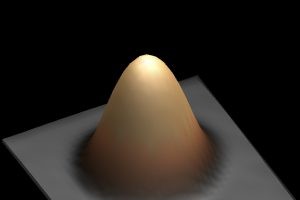
Imagine fitting the entire iTunes library of 35 million songs onto a credit‑card‑sized device. While still a dream, a recent study by IBM Research‑Almaden in San Jose, California, brings us closer to that reality. Published in Nature, the research shows how to read and write one bit of data on a sin
Nanomaterials