Industrial manufacturing
Nanomaterials

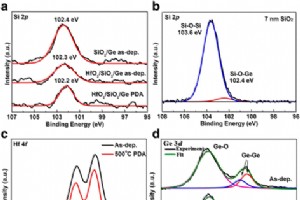
AbstractIn situ-formed SiO2 was introduced into HfO2 gate dielectrics on Ge substrate as interlayer by plasma-enhanced atomic layer deposition (PEALD). The interfacial, electrical, and band alignment characteristics of the HfO2/SiO2 high-k gate dielectric stacks on Ge have been well investigated. It
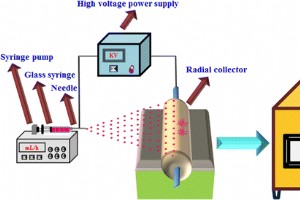
AbstractWe report a straightforward one‑step electrospinning synthesis of SrTiO₃‑modified rutile TiO₂ composite nanofibers. X‑ray diffraction, scanning and transmission electron microscopy confirm the successful formation of a SrTiO₃/TiO₂ heterojunction. Photocatalytic tests reveal that the SrTiO₃/T
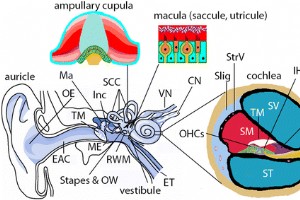
Abstract\nLiposome nanocarriers (LPNs) offer high drug loading and efficient uptake in the inner ear following minimally invasive intratympanic delivery. Yet, their biocompatibility in this sensitive organ had not been systematically evaluated. In this study, LPNs—with or without gadolinium‑tetra‑az
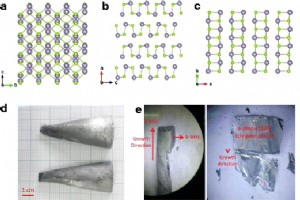
AbstractWe report p-type tin monoselenide (SnSe) single crystals, grown in double-sealed quartz ampoules using a modified Bridgman technique at 920 °C. X-ray powder diffraction (XRD) and energy dispersive X-ray spectroscopy (EDX) measurements clearly confirm that the grown SnSe consists of single-cr
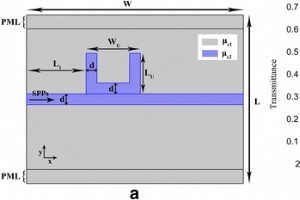
AbstractA graphene-based on-chip plasmonic nanostructure composed of a plasmonic bus waveguide side-coupled with a U-shaped and a rectangular nanocavities has been proposed and modeled by using the finite element method in this paper. The dynamic tunability of the plasmon-induced transparency (PIT)
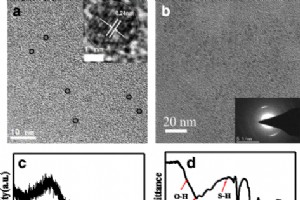
AbstractWe report a 50‑second microwave‑assisted synthesis of nitrogen and sulfur co‑doped carbon quantum dots (N,S‑CQDs) that exhibit an unprecedented pyridinic‑rich structure. This design yields both a high photoluminescence quantum yield (23.6 %) and robust enzyme‑mimic catalytic activity, outper
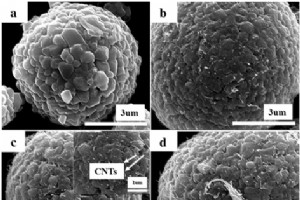
AbstractWe report a straightforward mechanical grinding approach that incorporates carbon nanotubes (CNTs) onto the surface of LiNi0.8Co0.15Al0.05O2 (NCA) cathodes without compromising crystal structure or morphology. The resulting NCA/CNT composite delivers a reversible capacity of 181 mAh g-1 afte
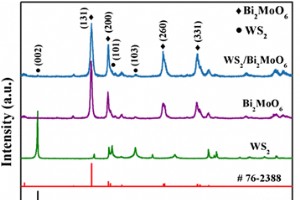
Abstract 420 nm) for efficient rhodamine B (RhB) degradation. Pre‑exfoliated WS₂ nanoslices serve as a 2‑D substrate, onto which Bi₂MoO₆ nanoflakes grow, forming a tight nanojunction that promotes rapid charge separation and transport. Comprehensive characterization by XRD, XPS, SEM, TEM/HRTEM, and
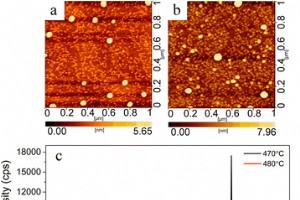
AbstractA pronounced high count rate of single-photon emission at the wavelength of 1.3 μm that is capable of fiber-based quantum communication from InAs/GaAs bilayer quantum dots coupled with a micropillar (diameter ~3 μm) cavity of distributed Bragg reflectors was investigated, whose photon extrac
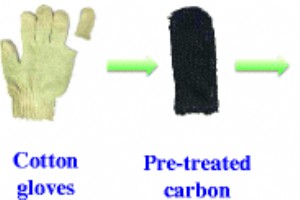
AbstractOne of the most significant hurdles in leveraging biomass‑derived nanocarbons for supercapacitors is the loss of intrinsic structure during activation. In this study, we introduce a novel class of activated carbon fibers (ACFs) by using waste cotton gloves (CG) as the precursor. CG, largel
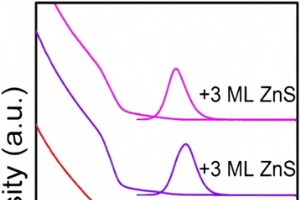
AbstractWe describe a phosphine‑free, single‑pot protocol for creating ZnSe/CdS/ZnS core‑shell quantum dots (QDs) that combine type‑II and type‑I band alignments to suppress reabsorption. The resulting red‑emitting QDs achieve an impressive 82 % photoluminescence quantum yield (QY) and exceptional o
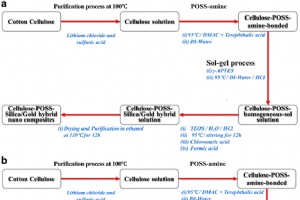
AbstractWe present a streamlined, one‑step sol‑gel route to fabricate cellulose–polyhedral oligomeric silsesquioxanes (POSS) hybrids incorporating silica cores coated with a uniform gold shell. The process simultaneously hydrolyses tetraethyl orthosilicate (TEOS) and reduces chloroaurate (HAuCl4) in
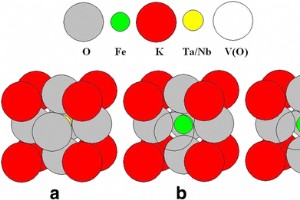
AbstractNanoparticles of potassium tantalate (KTaO3) and potassium niobate (KNbO3) were synthesized by oxidation of metallic tantalum in molten potassium nitrate with the addition of potassium hydroxide. Magnetization curves obtained on these ferroelectric nanoparticles exhibit a weak ferromagnetism
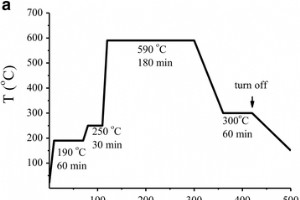
AbstractMetal‑oxide hydrogen sensors were fabricated using nanosized tin dioxide prepared by a sol‑gel route. The sensing layers were impregnated with PdCl₂ solutions of varying concentrations to enhance sensitivity. We investigated how the temperature profile during sensor sintering influences the
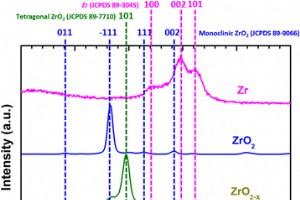
AbstractWe report a tri‑layer ZrO₂/ZrO₂₋ₓ/ZrO₂ resistive memory that switches without external compliance, exploiting a controllable transition between interfacial and filamentary modes. In the interfacial regime, oxygen‑ion migration in the ZrO₂₋ₓ layer modulates resistance; in the filamentary regi
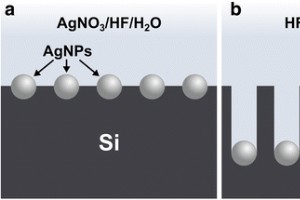
Abstract Porous silicon nanowires (SiNWs) fabricated by metal‑assisted chemical etching (MACE) are increasingly valuable for optoelectronics, thermoelectrics, and biomedical sensing. Precise control of their morphology—length, diameter, porosity, and crystallinity—is essential for device optimizati
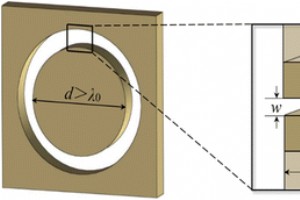
AbstractAchieving two‑dimensional superfocusing beyond the diffraction limit in the far‑field with nanoring‑based plasmonic lenses (NRPLs) has been a longstanding challenge. Here we demonstrate that, by tuning the state of polarization (SOP) of the incident light, NRPLs can generate distinct focal s
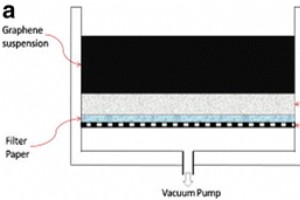
AbstractSupercapacitors combine ultrahigh capacitance, rapid charge‑discharge, and exceptional cycling life, making them ideal for next‑generation energy storage. Materials that offer high specific surface area, robust mechanical and chemical stability, and low cost are essential. Graphene—a singl
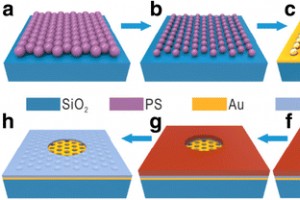
AbstractA novel low-cost, batch-fabrication method combining the spin-coating nanosphere lithography (NSL) with the conventional photolithographic technique is demonstrated to efficiently produce the metallic planar microlenses and their arrays. The developed microlenses are composed of subwavelengt
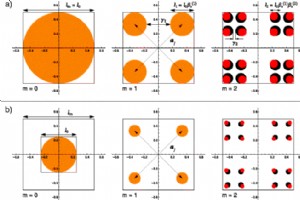
AbstractSmall-angle scattering (of neutrons, x-ray, or light; SAS) is considered to describe the structural characteristics of deterministic nanoscale fat fractals. We show that in the case of a polydisperse fractal system, with equal probability for any orientation, one obtains the fractal dimensio
Nanomaterials