Industrial manufacturing
Nanomaterials

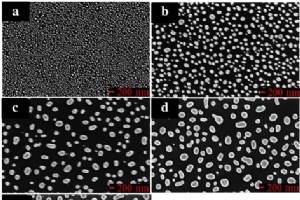
AbstractA substrate surface on which gold particles are distributed is prepared by annealing an ultra-thin gold film to enable glancing angle deposition. By cooling the substrate and controlling its spin rate, two spiral-like and one screw-like gold nanohelix arrays are grown upon the seeded surface
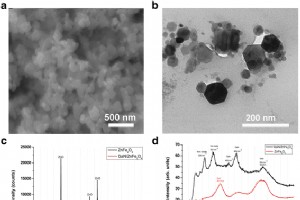
AbstractWe report the synthesis and cellular uptake of multifunctional GaN/Fe nanoparticles and demonstrate their utility as magnetic guides for endothelial cells. The particles are produced by growing a GaN shell on ZnO/Fe2O3 cores via hydride vapor phase epitaxy (HVPE) followed by core decompositi
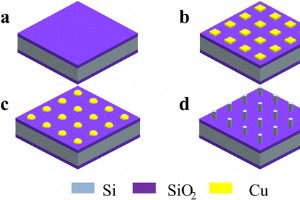
AbstractWe demonstrate a straightforward, catalyst‑free synthesis of amorphous silicon nanowires (α‑SiNWs) directly on 300‑nm SiO₂/Si(100) substrates. Micron‑scale Cu patterns, deposited by sputtering and patterned through photolithography, act as solid‑liquid‑solid (SLS) catalysts during annealing
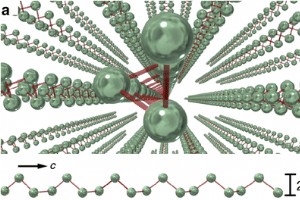
AbstractWe have shown that the inherent atom‑chain architecture of trigonal tellurium (Te) enables its mechanical exfoliation into sub‑nanometer‑thick flakes and nanowires. Atomic force microscopy (AFM) reveals that Te can be cleaved into layers 1–2 nm thick and wires narrower than 100 nm. Raman spe

AbstractWe computed the specific absorption rate (SAR) of dilute assemblies of iron‑oxide nanoparticles arranged in random clusters subjected to an alternating magnetic field. The calculations employed the Landau–Lifshitz stochastic equation, which incorporates both thermal fluctuations of the magne
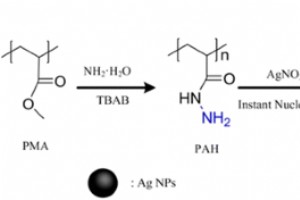
Abstract We report the first synthesis of a pH‑responsive Ag@polyacryloyl hydrazide (Ag@PAH) nanoparticle that serves as a tunable surface‑enhanced Raman scattering (SERS) substrate, achieved without external reducing or capping agents. The core–shell nanostructure exhibits a controllable plasmonic
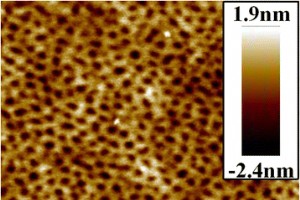
Abstract We report a facile, one‑step method to generate highly ordered nanopatterns in the triblock copolymer polystyrene‑block‑poly(2‑vinylpyridine)-block‑poly(ethylene oxide) (PS‑b‑P2VP‑b‑PEO) by adding lithium chloride (LiCl) dissolved in toluene. Systematic variation of processing parameters—p
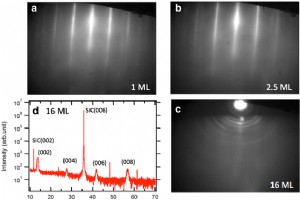
AbstractWe investigate how the optical band gap of epitaxial MoSe2 ultrathin films evolves with temperature. Films with controlled thicknesses (1–16 ML) were grown on graphenized SiC substrates by molecular‑beam epitaxy (MBE) and characterized by spectroscopic ellipsometry in ultra‑high vacuum from
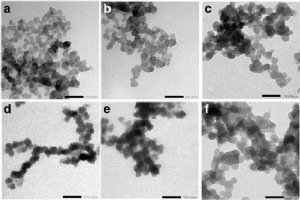
AbstractWe report the design, synthesis, and comprehensive evaluation of polystyrene (PS) core–shell nanoparticles coated with polyaniline (PANI) doped with lauryl sulfuric acid (LSA). PS nanoparticles (15–30 nm) were prepared via microemulsion polymerization of styrene in aqueous SLS solution. Subs
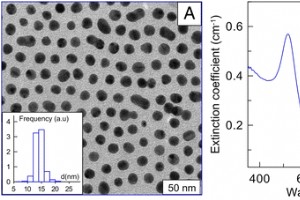
Abstract Cell‑culture models provide a reliable platform to assess the potential toxicity of nanomaterials and to dissect their mechanistic impact on cancer biology. Here we evaluate how 15‑nm citrate‑stabilized gold nanoparticles (AuNPs) influence two epithelial cell lines of distinct origin: the

AbstractAs a nano-sized drug carrier with the advantage of modifiability and proper biocompatibility, DNA tetrahedron (DNA tetra) delivery is hopeful to enhance the inhibitory efficiency of nontargeted anticancer drugs. In this investigation, doxorubicin (Dox) was assembled to a folic acid-modified
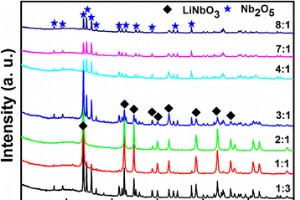
AbstractWe investigated how the lithium‑to‑niobium (Li/Nb) molar ratio influences the hydrothermal synthesis of Li‑Nb‑O compounds and their subsequent photocatalytic activity. A Li/Nb ratio below 3:1 promotes the formation of LiNbO3, whereas ratios above 3:1 suppress LiNbO3 formation and instead mod
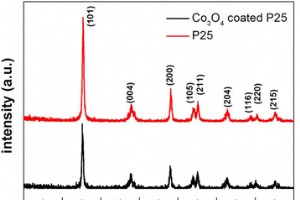
Abstract Co₃O₄‑coated commercial TiO₂ (P25) powders were fabricated by plasma‑enhanced atomic layer deposition (PEALD). X‑ray diffraction, transmission electron microscopy, and X‑ray photoelectron spectroscopy confirmed that the anatase TiO₂ lattice and crystallite size remain unchanged, while trace
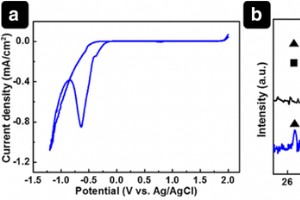
AbstractWe demonstrate that electrodeposited SnO₂ thin films on fluorine‑doped tin oxide (FTO) can serve as an effective electron transport layer (ETL) in planar heterojunction perovskite solar cells (PSCs). By carefully tuning the applied voltage, bath temperature, and deposition time, we control t
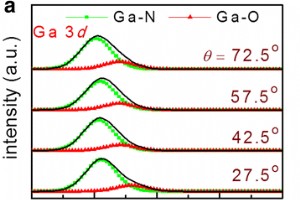
AbstractWe use angle‑resolved X‑ray photoelectron spectroscopy (ARXPS) to probe the surface polarization of Ga‑face GaN/AlGaN/GaN heterostructures capped with 1–3 nm Al₂O₃ deposited by atomic‑layer deposition (ALD). The band‑edge profile evolves from upward bending in the bare GaN region to downward
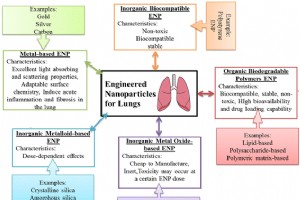
Abstract Nanotechnology is reshaping biomedicine by enabling unprecedented precision in imaging and drug delivery. Recent innovations—radionuclide probes, quantum‑dot fluorophores, magnetic nanoparticles, and gold‑nanoparticle biosensors—have markedly improved the detection and treatment of cancer
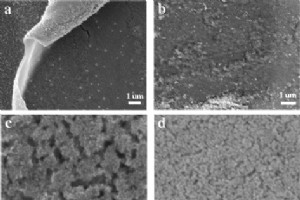
Abstract In this study, a uniform nanoporous NiO film up to 2.6 µm thick was fabricated by incorporating polyethylene glycol (PEG) into the precursor solution. PEG markedly suppressed crack formation and prevented delamination from fluorine‑doped tin oxide (FTO) substrates. The NiO cathode, sensitiz
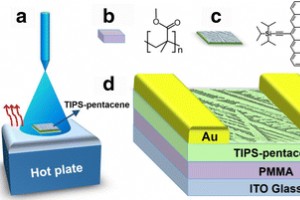
AbstractWe fabricated bottom‑gate, top‑contact organic field‑effect transistors (OFETs) using a spray‑coating approach and investigated the impact of in‑situ annealing during deposition. Compared with conventional post‑annealing, a 60 °C in‑situ anneal increased the field‑effect mobility from 0.056
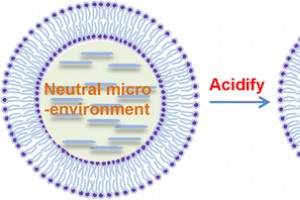
AbstractLiposomes offer a versatile platform for delivering bioactive compounds, yet the intrinsic instability of pH‑sensitive drugs in physiological conditions remains a challenge. We engineered a liposomal formulation that creates an acidic micro‑environment within its aqueous core, thereby protec
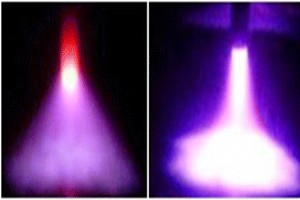
AbstractUltrafine manganese ferrites MnxFe3−xO4 (x = 0–1.3) were synthesized by contact non‑equilibrium plasma (CNP) in two alkaline media (pH 11.5 and 12.5). The influence of cation ratio and initial pH on phase purity, crystallite size and magnetic behaviour was examined by X‑ray diffraction (XRD
Nanomaterials