


Industrial manufacturing
Nanomaterials

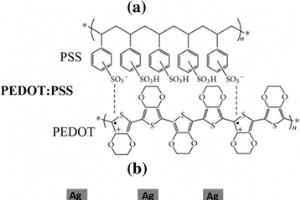
AbstractIn a recent experimental investigation, efficient Si/organic hybrid solar cells were fabricated using dimethyl sulfoxide (DMSO) and a surfactant‑doped PEDOT:PSS blend. By subjecting the PEDOT:PSS films to a post‑treatment with polar solvents, the device performance could be further increased
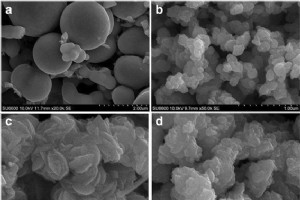
AbstractWe report a simple, ambient‑temperature, one‑pot method for producing CuS nanoparticle‑coated CuSCN composites with tunable color and conductivity. By mixing copper sulfate, sodium thiosulfate, and triethyl amine hydrothiocyanate (THT) in a 1:1:1 molar ratio, a white‑gray CuSCN phase forms i
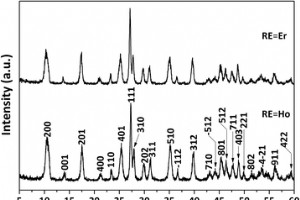
AbstractPhase‑pure (La0.97RE0.01Yb0.02)2O2S nanophosphors (average crystallite size ≈45 nm; RE = Ho, Er) were obtained by annealing hydrothermally crystallized layered hydroxyl sulfate precursors in flowing hydrogen at 1200 °C for 1 h, producing water vapor as the sole exhaust. Under 978‑nm laser ex

Abstract 95 % drug entrapment and controlled release in phosphate‑buffered saline (pH 7.4), releasing ~90 % of GEN over 24 h. Cellular uptake studies in HeLa cells showed a statistically significant (p 55 % apoptotic cell death, markedly higher than GCN (~22 %) and free GEN. These findings confirm t

AbstractWe examined how the spatial arrangement of regioregular poly(3‑hexylthiophene) (P3HT) chains dispersed in a poly(methyl methacrylate) (PMMA) matrix influences key photophysical parameters—electronic absorption, band‑gap, and photoluminescence (PL) quantum yield (QY). By varying the P3HT load
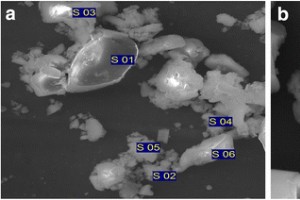
AbstractFine ZnS:Cu, obtained by method of self-propagating high-temperature synthesis was investigated. As flux in the mixture NaCl was used, Zn and S were taken in stoichiometric ratio; Cu concentration in charge consisted ~1.5 wt.%. Using SEM data, it was established that obtained ZnS:Cu consists

AbstractThis study introduces a high‑order dielectric metasurface composed of a silicon nanobrick array. By precisely tuning the brick length and width, the device delivers two distinct incremental transmission phases for X‑linear‑polarized (XLP) and Y‑linear‑polarized (YLP) light, achieving transmi
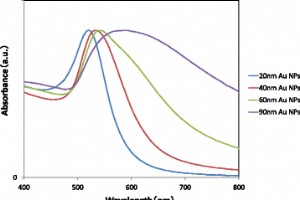
AbstractWe fabricated TiO₂ photoanodes that incorporate gold nanoparticles (AuNPs) in a controlled, stacked architecture by sequentially depositing TiO₂ paste and AuNP solutions on indium tin oxide (ITO) glass. By varying the AuNP concentration at each layer, we explored how the spatial distribution
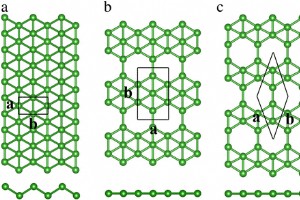
AbstractRecent experimental work has demonstrated the successful growth of atomically thin boron sheets—borophene—on Ag(111) by molecular‑beam epitaxy. Two distinct surface phases were observed, yet the precise atomic arrangements and their thermodynamic stability remain debated. In this study we em
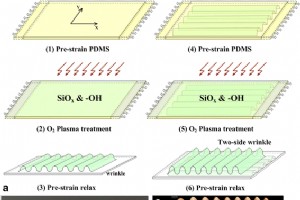
BackgroundMulti‑degrees‑of‑freedom (MDOF) motion parameters are critical for precise positioning and attitude control in large‑scale systems, including aircraft, robotic arms, and precision manufacturing. High‑precision sensing of displacement, pitch, and deflection angles is therefore essential acr
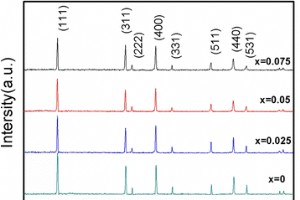
AbstractA Cr3+ and F− composite-doped LiNi0.5Mn1.5O4 cathode material was synthesized by the solid-state method, and the influence of the doping amount on the material’s physical and electrochemical properties was investigated. The structure and morphology of the cathode material were characterized

AbstractTraditional nanoparticle formulations of hydrophobic anticancer drugs often rely on organic solvents, raising concerns about residual toxicity. Here, we present a fully green synthesis of folate‑modified 10‑hydroxycamptothecine (HCPT) nanoneedles (HFNDs) that eliminates organic solvents whil
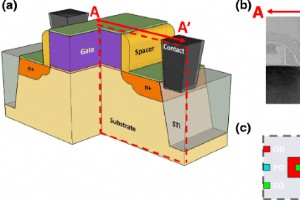
AbstractWe present a novel 4‑transistor/2‑resistor (4T2R) non‑volatile SRAM (nv‑SRAM) that integrates STI‑based resistive random‑access memory (RRAM) directly within a standard CMOS logic process. The cell employs a self‑inhibit load mechanism that enables data to be stored non‑volatilely while main
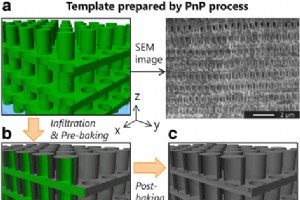
AbstractThree‑dimensional (3D) periodic nanostructures are prized for their unique photonic, phononic, and electronic properties. Conventional templating methods using colloidal crystals or photopolymers often suffer from limited design flexibility and structural collapse during infiltration or remo
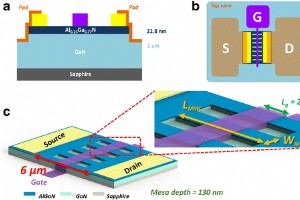
AbstractWe report a breakthrough in normally‑off AlGaN/GaN high‑electron‑mobility transistors (HEMTs) by controlling the via‑hole‑length in a multi‑mesa‑channel (MMC) architecture. Enhancement‑mode (E‑mode) devices with channel widths up to 300 nm were fabricated, demonstrating positive threshold v
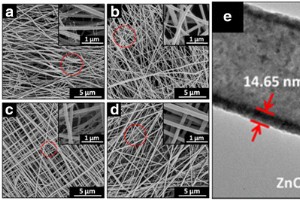
AbstractThis study demonstrates the integration of atomic layer deposition (ALD) and hydrothermal synthesis to decorate electrospun polyamide‑6 (PA‑6) nanofibers (NFs) with zinc oxide (ZnO). FE‑SEM, HRTEM, and STEM reveal that the ZnO seed layer thickness, controlled by the number of ALD cycles, an
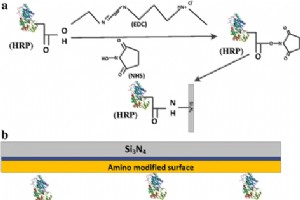
AbstractThere are many techniques for the detection of molecules. But detection of molecules through solid-state nanopore in a solution is one of the promising, high-throughput, and low-cost technology used these days. In the present investigation, a solid-state nanopore platform was fabricated for
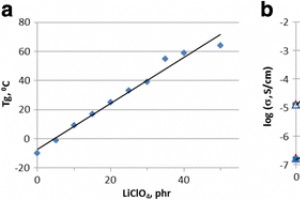
Abstract We synthesized hybrid amorphous polymers from diglycide aliphatic ester of polyethylene glycol (DEG‑1) cured with polyethylene polyamine (PEPA) and incorporated lithium perchlorate (LiClO4). Differential scanning calorimetry, wide‑angle X‑ray diffraction, infrared spectroscopy, scanning el
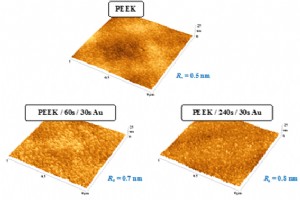
Abstract Polyetheretherketone (PEEK) offers exceptional chemical stability and biomechanical compatibility for biomedical implants, yet its hydrophobic, bioinert surface hampers cell attachment. In this study, we explored the synergistic effect of argon plasma activation and gold sputter‑coating on

AbstractHigh‑density, vertically aligned silicon nanowires (SiNWs) were produced by electroless etching of n‑type Si(100) wafers in a HF/AgNO3 solution. The resulting nanowires exhibit a wide range of diameters (20–300 nm) and morphologies (round, rectangular, triangular). Optical measurements show
Nanomaterials

Bracing for a Skilled Labor Shortage: Strategic Actions for Manufacturers Through 2040

Structural Steel Fabrication & Durability: Key Facts You Need to Know

Infineon Joins the Connectivity Standards Alliance Board to Accelerate IoT Open Standards
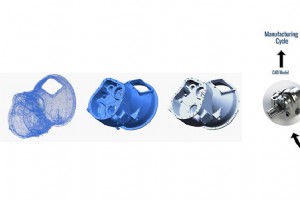
Reverse Engineering Explained: Unlocking Product Secrets & Replacements
