Industrial manufacturing
Nanomaterials

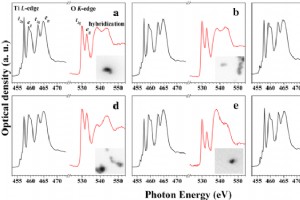
AbstractWe examined TiO₂ nanoparticles (NPs) doped with five transition metals—Cr, Mn, Fe, Co, and Ni—to evaluate their catalytic performance for 2‑aminothiophenol (2‑ATP) oxidation. Using scanning electron microscopy (SEM), Raman spectroscopy, scanning transmission X‑ray microscopy (STXM), and high
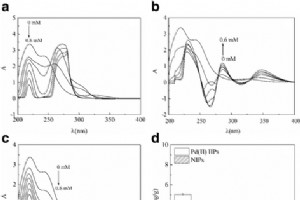
AbstractThree kinds of functional monomers, 4-vinylpridine(4-VP), 2-(allylthio)nicotinic acid(ANA), and 2-Acetamidoacrylic acid(AAA), were used to synthetize palladium(II) ion-imprinted polymeric nanospheres (Pd(II) IIPs) via precipitation-polymerization method in order to study the effects of diffe
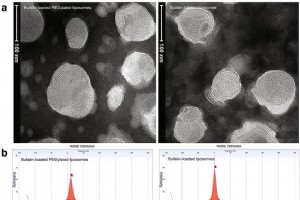
AbstractBufalin, a cardiac glycoside extracted from Venenum Bufonis 76 %), and distinct surface charges (2.2 mV vs. –18.0 mV). The PEGylated formulation released bufalin more slowly in vitro and, in Sprague‑Dawley rats, prolonged plasma half‑life (87.8 min vs. 40.5 min for free drug) and increased
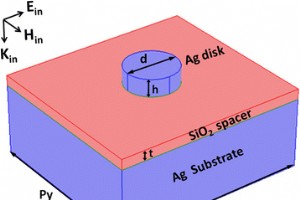
AbstractWe numerically investigate the coupling effects of surface plasmon polaritons (SPPs) and magnetic dipole (MD) resonances in metamaterials, which are composed of an Ag nanodisk array and a SiO2 spacer on an Ag substrate. The periodicity of the Ag nanodisk array leads to the excitation of SPPs
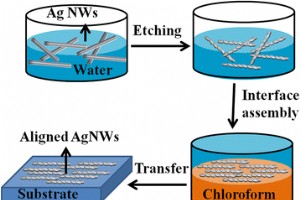
Abstract Silver nanowires (AgNWs) were chemically etched to dramatically increase surface roughness and then self‑assembled at liquid/gas interfaces using an interfacial assembly method, yielding aligned, chemically etched AgNW films. These films were evaluated as novel surface‑enhanced Raman scatte
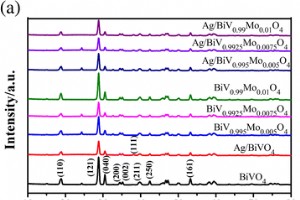
Abstract 420 nm), reveal that the Ag/BiV₀.₉₉₂₅Mo₀.₀₀₇₅O₄ composite delivers the highest activity, achieving complete decolorization within two hours. These findings highlight the synergistic role of Ag and Mo in enhancing charge separation and visible‑light response, advancing BiVO₄‑based photocata
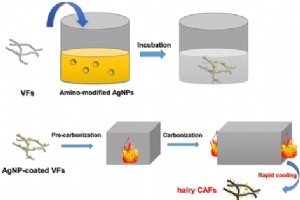
AbstractAnisotropic nanomaterial‑modified carbon fibers are emerging as superior alternatives to conventional composites. Here we report the fabrication of activated carbon fibers (ACFs) densely decorated with silver nanohair using a facile self‑assembly approach followed by rapid thermal annealing.

AbstractWe investigated eight‑period In0.2Ga0.8N/GaN quantum wells (QWs) in blue light‑emitting diodes (LEDs) with silicon (Si) doping introduced in the first two to five quantum barriers (QBs). Epilayers were grown on 20‑pair In0.02Ga0.98N/GaN superlattices, serving as strain‑relief layers (SRLs),
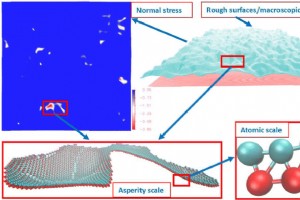
AbstractThe evolution of the contact area with normal load for rough surfaces has great fundamental and practical importance, ranging from earthquake dynamics to machine wear. This work bridges the gap between the atomic scale and the macroscopic scale for normal contact behavior. The real contact a
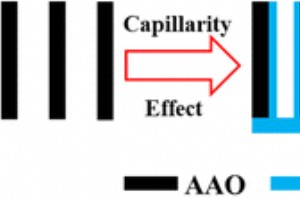
AbstractHighly ordered TiO2 nanotube (TNT) arrays were fabricated by combining a hard anodic aluminum oxide (AAO) template with a soft block‑copolymer (PS‑b‑PEO) scaffold. The soft template, complexed with titanium‑tetraisopropoxide (TTIP), controls the grain size of the calcined TiO2. We found that
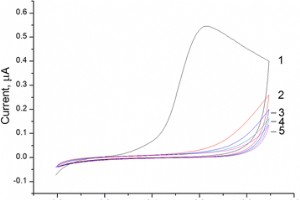
AbstractIn this study we optimized the electropolymerization of a semipermeable polyphenylenediamine (PPD) membrane on platinum disk electrodes to suppress interferences in amperometric sensing. Two deposition routes were compared: cyclic voltammetry (CV) and constant‑potential oxidation. CV proved
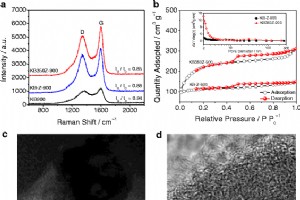
AbstractLarge‑scale fabrication of active, stable, porous carbon catalysts for the oxygen reduction reaction (ORR) from protein‑rich biomass has become a focal point in fuel‑cell research. We present a streamlined, two‑step pyrolysis approach that couples zinc chloride activation and acid leaching t
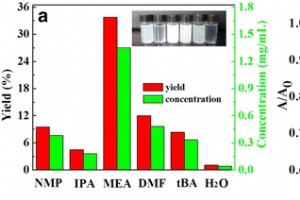
AbstractAs one of the simple and efficient routes to access two-dimensional materials, liquid exfoliation has received considerable interest in recent years. Here, we reported on high-efficient liquid exfoliation of hexagonal boron nitride nanosheets (BNNSs) using monoethanolamine (MEA) aqueous solu
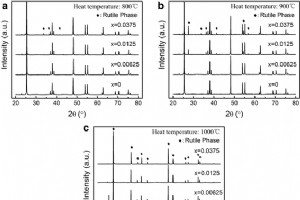
Abstract Chromium‑doped TiO2 pigments were prepared by a solid‑state reaction and characterized with X‑ray diffraction, SEM, XPS, and UV‑VIS‑NIR reflectance spectroscopy. Incorporating Cr3+ accelerates the anatase‑to‑rutile phase transition and compresses the lattice. The crystal structure and Cr co
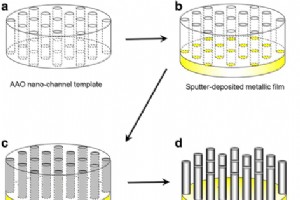
AbstractFe nanowire arrays with diameters of 30 ± 5 nm were electrodeposited into anodized aluminum oxide (AAO) nanochannels using a rectangular‑pulsed potential technique. At a cathodic potential of –1.2 V, the wires grew at ~200 nm s⁻¹, achieving an aspect ratio of ~2000. When a large overpotentia
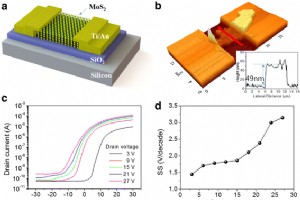
AbstractWe studied the variation of photoresponsivity in multi-layer MoS2 phototransistors as the applied bias changes. The photoresponse gain is attained when the photogenerated holes trapped in the MoS2 attract electrons from the source. Thus, the photoresponsivity can be controlled by the gate or
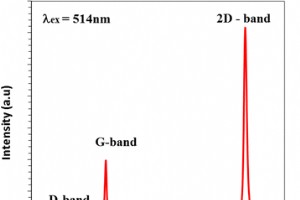
Abstract We present a detailed Raman mapping study of monolayer graphene’s G and 2D bands on silicon strip‑waveguide micro‑ring resonators (MRRs). By correlating peak positions, intensities, and widths with spatial location, we demonstrate that graphene remains electrically intrinsic when suspended,
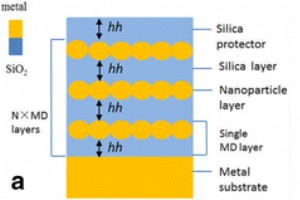
AbstractWe present a theoretical investigation of a broadband solar light absorber that employs a multilayer stack of tungsten nanoparticle layers separated by SiO2 dielectric films. Numerical simulations demonstrate an average absorbance exceeding 94 % across the 400–2500 nm band. The high performa
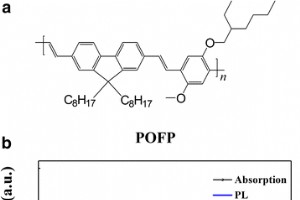
AbstractIn this study we report on the conjugated polymer poly[(9,9‑dioctyl‑2,7‑divinylenefluorenylene)‑alt‑co‑(2‑methoxy‑5‑(2‑ethylhexyloxy)‑1,4‑phenylene)] (POFP). The material displays remarkably high photoluminescence quantum yields and efficient electron transport, making it an ideal gain medi
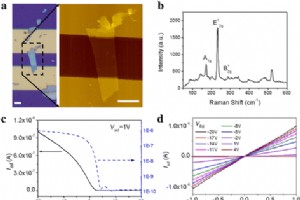
Abstract We report the fabrication of an air‑stable, p‑type, multi‑layer MoTe2 phototransistor that incorporates asymmetric source and drain contacts. Using Au electrodes, the device exhibits a pronounced photovoltaic response in the off‑state. Spatially resolved photocurrent mapping with scanning p
Nanomaterials