Industrial manufacturing
Nanomaterials

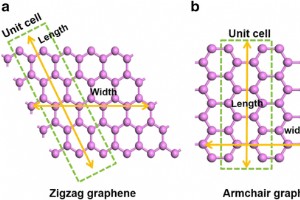
AbstractWe employ first‑principles density functional theory to systematically design and evaluate the work function (WF) of graphene for electronic device applications. By exploring pristine, hydroxyl‑modified, defective, and doped graphene structures, we reveal that WF is strongly dependent on rib
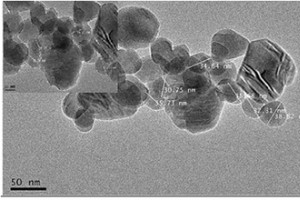
AbstractWe report a simple, eco‑friendly synthesis of spherical gold‑conjugated cockle‑shell‑derived calcium carbonate nanoparticles (Au‑CSCaCO3NPs) and assess their physicochemical properties and biocompatibility. Gold nanoparticles were produced by citrate reduction and coupled with aragonite CaCO
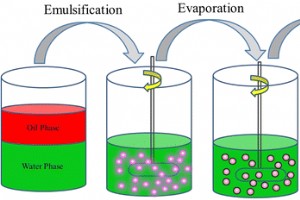
AbstractEmploying nano‑delivery carriers for pesticide active ingredients enhances utilization rates and prolongs efficacy through controlled release and improved protection. Yet, most controlled‑release formulations feature large, polydisperse particles, limiting performance insights. In this study
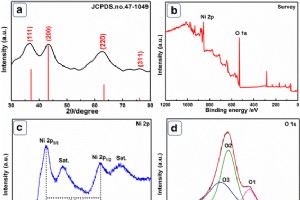
AbstractTransition‑metal oxides (TMOs) are attractive electrocatalysts due to their low cost and chemical robustness, yet their intrinsic activity often falls short of demanding applications. Introducing a hollow‑porous architecture has emerged as an effective way to enhance electrocatalytic perfor
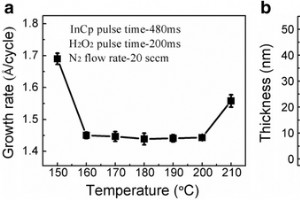
AbstractAtomic‑layer deposition (ALD) of indium oxide (In₂O₃) nanofilms was examined using cyclopentadienyl indium (InCp) and hydrogen peroxide (H₂O₂) as precursors. The films can be deposited at relatively low temperatures of 160–200 °C, exhibiting a consistent growth rate of 1.4–1.5 Å per cycle. S
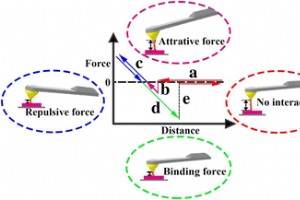
Abstract Thin polymer films exhibit relaxation behaviors that are highly sensitive to temperature and film thickness. Conventional bulk instruments cannot resolve these dynamics at the nanometer scale. In this study, we used atomic force microscopy (AFM) force–distance curves to probe the relaxation
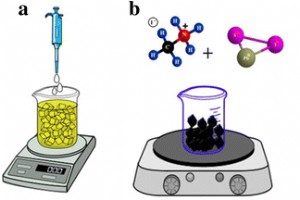
AbstractWe present a comparative study of three scalable routes for producing methylammonium lead iodide (MAPbI3) perovskite particles: (1) anti‑solvent precipitation, (2) dry‑mix milling, and (3) spray‑pyrolysis. Spray‑pyrolysis, which atomizes the precursor solution into a hot‑wall reactor, deliv
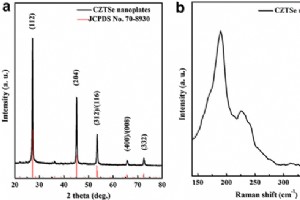
Abstract90 % degradation of Rhodamine B within 120 min and retained their activity over five consecutive cycles, underscoring their stability and practical potential for wastewater treatment. BackgroundEnvironmental contamination by chemical pollutants in natural water bodies has prompted intensive

Abstract Resistive random‑access memory (RRAM) is a nascent non‑volatile technology that requires accurate models to design efficient devices and standardize implementations. This review synthesizes the physical and phenomenological models that have been proposed for RRAM, detailing their principles
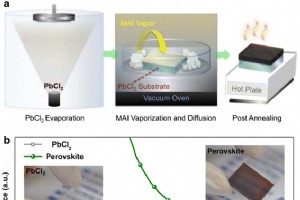
AbstractReliable, high‑quality perovskite layers are crucial for efficient planar solar cells. We present a sequential vapor‑processing strategy that first deposits a PbCl2 layer by physical vacuum evaporation, followed by a controlled MAI vapor diffusion step. The resulting perovskite films are com
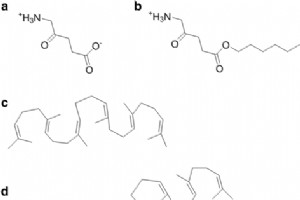
Abstract Protoporphyrin IX (PpIX), the endogenous photosensitizer produced after 5‑aminolevulinic acid (5‑ALA) administration, is a cornerstone of photodiagnosis (PD) and photodynamic therapy (PDT) for several malignancies. Yet, 5‑ALA’s zwitterionic nature limits its penetration across biological ba

AbstractAbrasive flow polishing is pivotal in ultra‑precision machining, where nanometric particles suspended in a fluid remove material at the atomic scale. This study employs three‑dimensional molecular dynamics (MD) simulations to quantify how the impact angle of SiC abrasive grains affects the c
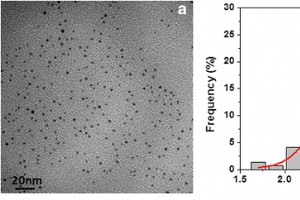
AbstractZero‑valent palladium (Pd(0)) is renowned for converting molecular oxygen into highly reactive atomic oxygen, thereby catalyzing oxygen‑involving reactions. By embedding a trace amount of Pd(0) nanoclusters (≈2.8 nm, 0.3 wt %) into poly(N‑vinyl‑2‑pyrrolidone) (PVP, μW≈10,000 g mol-1), we dem
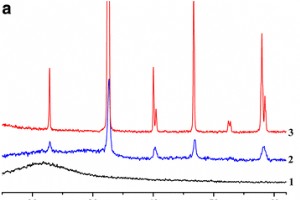
Abstract Lanthanum‑strontium manganite (La₁₋ₓSrₓMnO₃, LSMO) nanoparticles were synthesized by three distinct routes: a sol‑gel approach, precipitation from a diethylene glycol (DEG) solution, and reverse microemulsion with two different surfactants. Employing organic solvents and reagents significan
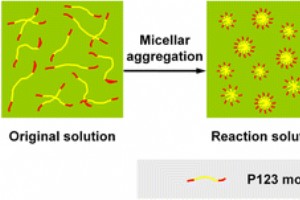
AbstractWormhole‑like mesoporous tin oxide (SnO₂) was prepared through a simple evaporation‑induced self‑assembly (EISA) route. The resulting materials were evaluated for their gas‑sensing capabilities against several target gases. Calcination temperature emerged as a critical factor: the sample cal
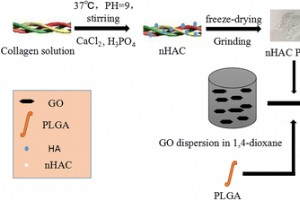
Abstract Biodegradable porous scaffolds are central to bone tissue engineering. In this study, nano‑hydroxyapatite/collagen (nHAC) blended with poly(lactic‑co‑glycolic acid) (PLGA) and varying amounts of graphene oxide (GO) were fabricated by freeze‑drying. The resulting composites exhibited a conti
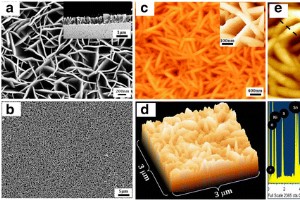
Abstract We report a non‑enzymatic glucose sensor built on mesoporous, well‑aligned nickel oxide (NiO) nanopetals (NPs) hydrothermally grown on fluorine‑doped tin oxide (FTO) glass. Structural analysis (XRD, SEM, TEM, AFM, EDX, XPS) confirms a dense, vertically oriented NP morphology with an average
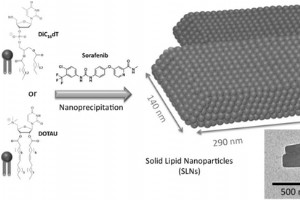
AbstractAlthough the application of sorafenib, a small inhibitor of tyrosine protein kinases, to cancer treatments remains a worldwide option in chemotherapy, novel strategies are needed to address the low water solubility (< 5 μM), toxicity, and side effects issues of this drug. In this context,
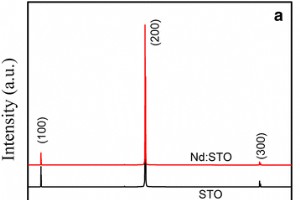
AbstractPt/Nd:SrTiO3 (STO)/In devices were fabricated by depositing Schottky-contact Pt and Ohmic-contact In electrodes on a single crystal STO with Nd doping. The Pt/Nd:STO/In devices show multi-level resistance-switching (RS) memory and memory-state-dependent photovoltage (PV) effects, which can b
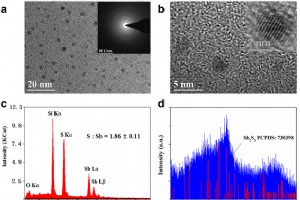
AbstractAntimony sulfide (Sb2S3) has been applied in photoelectric devices for a long time. However, there was lack of information about Sb2S3 quantum dots (QDs) because of the synthesis difficulties. To fill this vacancy, water-soluble Sb2S3 QDs were prepared by hot injection using hexadecyltrimeth
Nanomaterials