Industrial manufacturing
Nanomaterials

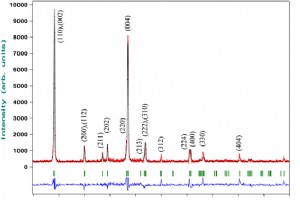
Abstract We investigated how varying the molar ratio of lead iodide (PbI₂) to methylammonium iodide (MAI) in the precursor solution—combined with a fixed low level of methylammonium chloride (MACl)—affects the crystallinity, morphology, and electrical properties of CH₃NH₃PbI₃₋ₓClₓ thin films. Incre
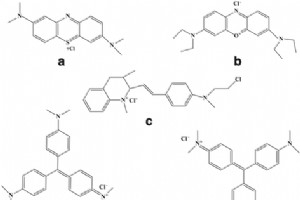
AbstractWe report a facile coprecipitation route to synthesize polycatechol‑modified Fe3O4 magnetic nanoparticles (Fe3O4/PCC MNPs). The PCC layer confers a negatively charged, oxygen‑rich surface that binds cationic dyes through electrostatic attraction, while preserving superparamagnetic behavior f
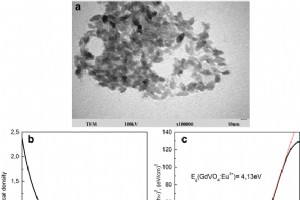
AbstractThis study investigates the generation of reactive oxygen species (ROS) in aqueous solutions containing gadolinium orthovanadate GdVO₄:Eu³⁺ nanoparticles (VNPs) and their complexes with methylene blue (MB). Using conjugated‑diene formation, hydroxyl‑radical detection with coumarin, and singl
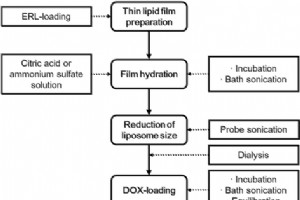
Abstract90 % DOX encapsulation efficiency (EE) versus ~17 % for the pH method. ERL EE reached 30 %. Transmission electron microscopy revealed crystalline DOX‑sulfate cores and less‑ordered ERL crystals in the bilayer. The vesicles remained size‑stable across 4–37 °C and released ERL rapidly (<8 h) w
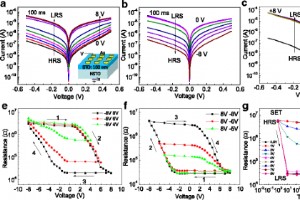
AbstractWe report asymmetric resistive switching in BaTiO3/Nb:SrTiO3 epitaxial heterojunctions. The SET transition (high‑to‑low resistance) completes in ~10 ns under +8 V, whereas the RESET transition (low‑to‑high resistance) requires ~105 ns under –8 V. The difference originates from the distinct s
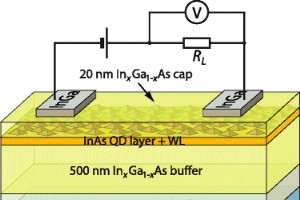
AbstractPhotoelectric properties of the metamorphic InAs/In x Ga1 − xAs quantum dot (QD) nanostructures were studied at room temperature, employing photoconductivity (PC) and photoluminescence spectroscopies, electrical measurements, and theoretical modeling. Four s
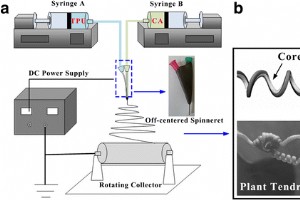
AbstractTo investigate how cellulose acetate (CA) and thermoplastic polyurethane (TPU) combine to produce helical nanofibers, we systematically varied the electrospinning parameters and analysed the interfacial interactions that drive fibre morphology. Our experiments show that a CA solution of 14 w
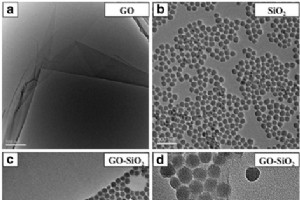
AbstractWe present a novel spherical support fabricated from reduced graphene oxide (RGO) and SiO₂ that serves as a durable scaffold for Ziegler–Natta catalysts. The support exhibits a porous, sandwich‑like architecture that preserves graphene’s intrinsic properties while providing extensive surface
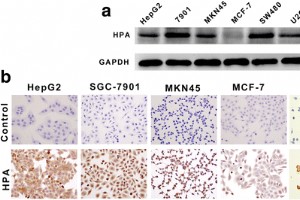
Abstract Heparanase (HPA) is widely expressed in metastatic malignancies and has emerged as a promising tumor‑associated antigen (TAA) for both immunotherapy and molecular imaging. We engineered a magnetic gold nanoparticle probe conjugated with an anti‑HPA monoclonal antibody (HPA&GoldMag) to enabl
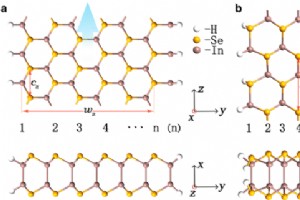
Abstract We investigate the electronic band structure and current–voltage (I‑V) characteristics of one‑dimensional InSe nanoribbons using density functional theory combined with the nonequilibrium Green’s function approach. The study includes bare and hydrogen‑passivated ribbons with zigzag (Z), Kle
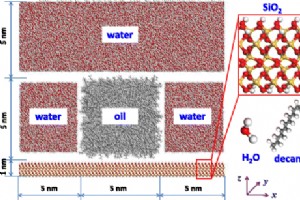
AbstractOil wettability in the water-oil-rock systems is very sensitive to the evolution of surface charges on the rock surfaces induced by the adsorption of ions and other chemical agents in water flooding. Through a set of large-scale molecular dynamics simulations, we reveal the effects of surfac
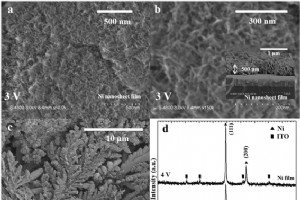
Abstract We report the synthesis of α‑nickel sulfide (α‑NiS) nanosphere films that retain functional stability for over five years at ambient conditions. The films were produced by electrodepositing a nickel nanosheet layer onto indium tin oxide (ITO) glass, followed by sulfurization in vacuum‑seale
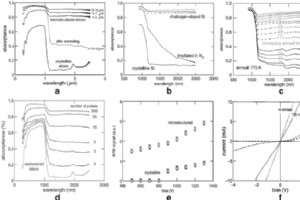
AbstractSilicon is a cornerstone of modern electronics, yet its high surface reflectance and 1.07 eV bandgap limit photon absorption, especially beyond 1.1 µm. Black silicon—silicon engineered with nanostructured spikes—offers broadband absorption from UV to infrared, making it ideal for photodiodes
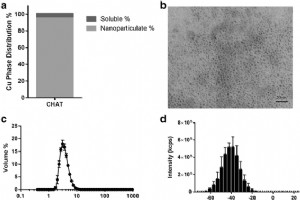
AbstractBacterial resistance to antimicrobial therapies is an increasing clinical problem. This is as true for topical applications as it is for systemic therapy. Topically, copper ions may be effective and cheap antimicrobials that act through multiple pathways thereby limiting opportunities to bac
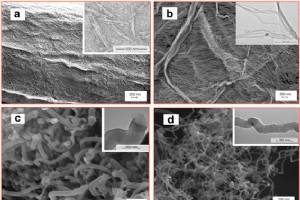
AbstractIn this study, we synthesized and evaluated natural nanomaterials—cellulose nanocrystal (CNC) and nanofiber cellulose (NFC)—and synthetic carbon-based nanoparticles—carbon nanofiber (CNF) and carbon nanotube (CNT). By systematically varying structure, morphology, and surface area, we compare
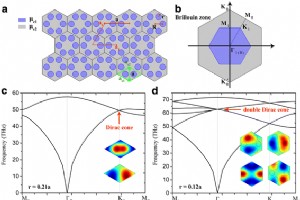
AbstractOriginating from the investigation of condensed matter states, the concept of quantum Hall effect and quantum spin Hall effect (QSHE) has recently been expanded to other field of physics and engineering, e.g., photonics and phononics, giving rise to strikingly unconventional edge modes immun
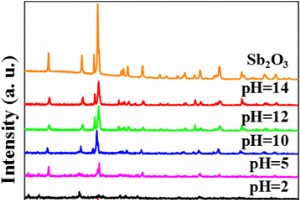
AbstractWe report the facile, one‑step hydrothermal synthesis of sulfur‑doped antimony trioxide (S‑Sb₂O₃) nanocrystals using SbCl₃ and thioacetamide (TAA). By adjusting the precursor solution pH, the sulfur content can be precisely tuned, with S²⁻ occupying interstitial sites in the Sb₂O₃ lattice. T
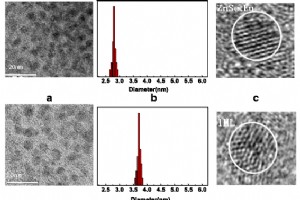
AbstractLow-toxic core-shell ZnSe:Eu/ZnS quantum dots (QDs) were prepared through two steps in water solution: nucleation doping and epitaxial shell grown. The structural and morphological characteristics of ZnSe/ZnS:Eu QDs with different shell thickness were explored by transmission electron micros
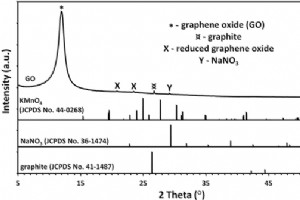
AbstractSurface‑modified materials featuring biocidal nanoparticles offer a promising strategy against multidrug‑resistant pathogens. We report a graphene oxide (GO) nanocomposite decorated with silver nanoparticles (Ag‑NPs) that exhibits superior antibacterial and antifungal activity compared with
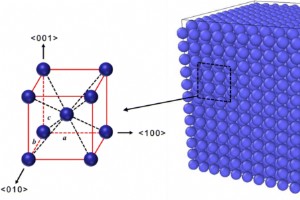
Abstract Atomistic simulations can elucidate the mechanisms that govern the mechanical response of tantalum (Ta). In this study, we use molecular dynamics (MD) to examine how temperature and pressure influence the elastic properties of Ta single crystals subjected to tensile loading. We first compa
Nanomaterials