Industrial manufacturing
Nanomaterials

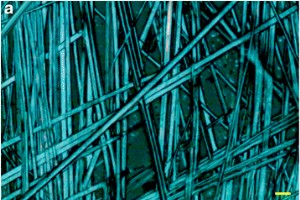
Abstract We examined the long‑term effect of atmospheric humidity on self‑assembled CH3NH3PbI3 (MAPbI3) microwires (MWs) using photoluminescence (PL), Raman spectroscopy, and X‑ray diffraction (XRD). Over 11 weeks, the MWs displayed a 21 nm red‑shift of the PL peak (from 759 nm to ~780 nm) and an ov
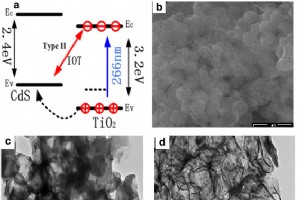
Abstract We report the fabrication of Ti0.91O2 nanosheet/CdS quantum‑dot hybrid spheres by a layer‑by‑layer self‑assembly route. Photoluminescence (PL) measurements reveal a pronounced spectral shift and a markedly prolonged PL lifetime of 3.75 ns, compared with 0.43 ns for Ti0.91O2 alone and 0.35 n

AbstractNew representative of carbacylamidophosphates - diphenyl-N-(trichloroacetyl)-amidophosphate (HL), which contains two phenoxy substituents near the phosphoryl group, was synthesized, identified by elemental analysis and IR and NMR spectroscopy, and tested as a cytotoxic agent itself and in co

AbstractDirect methanol fuel cells (DMFCs) suffer from high methanol crossover and the expensive Nafion® membrane. We fabricated a non‑Nafion, sodium alginate (SA) based polymer electrolyte membrane reinforced with 0.02–0.20 wt % sulfonated graphene oxide (SGO) via a simple solution‑casting approach
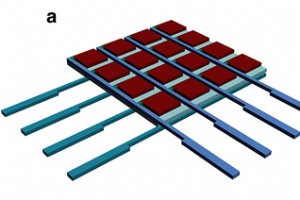
Abstract We demonstrate a 4 × 4 flexible sensor array comprising 16 micro‑capacitive units fabricated from a 50 µm thick poly(vinylidene fluoride) (PVDF) piezoelectric film. Optical imaging and piezoresponse force microscopy (PFM) confirm a sharp PVDF/electrode interface and robust piezoelectric dom
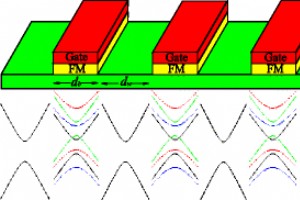
AbstractWe study the spin- and valley-dependent energy band and transport property of silicene under a periodic potential, where both spin and valley degeneracies are lifted. It is found that the Dirac point, miniband, band gap, anisotropic velocity, and conductance strongly depend on the spin and v

AbstractIn this study, reduced graphene oxide (rGO) and carbon nanotubes (CNT) were incorporated into CL‑20 composites as conductive fillers to boost thermal conductivity. Scanning electron microscopy (SEM) and X‑ray diffraction (XRD) revealed a uniform, three‑dimensional heat‑conducting network whe
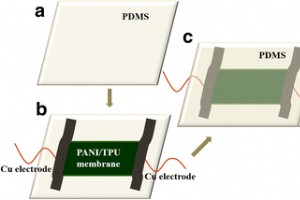
Abstract We have engineered a thermoplastic polyurethane (TPU) nanofibrous composite, functionalized in situ with polyaniline (PANI) via electrospinning, to create a flexible strain sensor that can endure strains up to 165% with rapid response and long‑term stability. The composite maintains consist
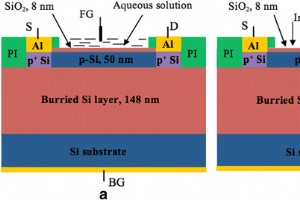
AbstractSilicon nanowire (NW) field-effect transistor (FET) sensors of various lengths were fabricated. Transport properties of Si NW FET sensors were investigated involving noise spectroscopy and current–voltage (I–V) characterization. The static I–V dependencies demonstrate the high quality of fab

AbstractA convenient, low-cost, and highly sensitive fluorescent aptasensor for detection of leukemia has been developed based on graphene oxide-aptamer complex (GO-apt). Graphene oxide (GO) can absorb carboxyfluorescein-labeled Sgc8 aptamer (FAM-apt) by π-π stacking and quench the fluorescence thro
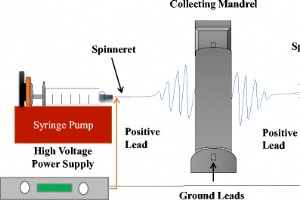
AbstractWound healing is a multifaceted process governed by growth factors, cellular migration, and extracellular matrix remodeling. While bioactive dressings have advanced, only a handful reach clinical practice due to delivery challenges. We engineered a nanofibrous scaffold composed of chitosan (
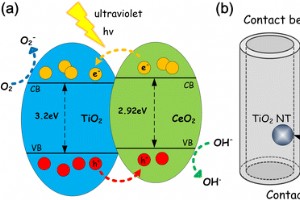
Abstract This study presents a straightforward, low‑cost method for decorating anodic TiO₂ nanotube (NT) arrays with cerium oxide (CeO₂) nanoparticles (NPs). By exploiting the TiO₂ NTs as nano‑containers, a dilute Ce(NO₃)₃ solution is introduced into the tubes, followed by a 450 °C anneal that therm

AbstractThis study reports a novel TiO₂–carbon nanofiber (TiO₂‑CNF) support for platinum–ruthenium (PtRu) anode catalysts in direct methanol fuel cells (DMFCs). The TiO₂‑CNF was fabricated by a sol‑gel/electrospinning route, followed by high‑temperature carbonization. Comparative electrochemical tes
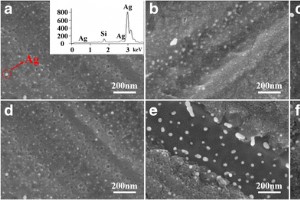
Abstract We report a single‑crystalline silicon (sc‑Si) solar cell featuring an inverted‑pyramid microstructure that achieves a record conversion efficiency of 20.19 % on a standard 156.75 × 156.75 mm2 wafer. The structure is produced through a two‑step process: (1) metal‑assisted chemical etching (
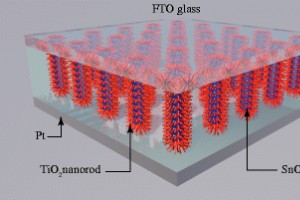
Abstract Abstract Self‑powered ultraviolet photodetectors (UVPDs) based on photoelectrochemical (PEC) cells have become a focal point of research owing to their low cost, straightforward fabrication, and rapid response characteristics. In this work, we introduce SnO₂‑TiO₂ nanomace arrays, which cons

Abstract Copper (Cu) and zinc oxide (ZnO) nanoparticles (NPs) are widely applied as antimicrobial agents in cosmetics, food additives and medicine. However, their potential toxicity to humans and ecosystems remains a critical concern. This study investigated the in‑vivo fate and safety profile of b
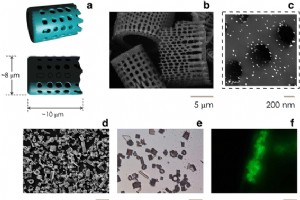
AbstractSilica diatom frustules are naturally occurring, silicon‑dioxide shells featuring highly ordered pore lattices that can be leveraged as low‑cost, high‑performance platforms for molecular capture and detection. We present a scalable photo‑deposition method that uniformly coats these frustules
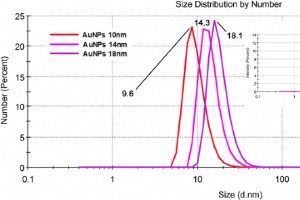
AbstractGold nanoparticles (AuNPs) are increasingly employed across industrial sectors, raising concerns about their environmental persistence and biological effects. Here, we report the synthesis of monodisperse, spherical AuNPs ranging from 10 to 18 nm, characterized by AAS, ICP‑MS, DLS, and TEM.
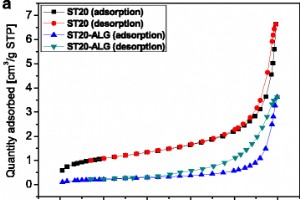
AbstractA novel bio‑hybrid composite—titania‑coated silica (ST20) further modified with sodium alginate (ST20‑ALG)—has been synthesized as an advanced adsorbent for heavy‑metal ions. The adsorption performance against Cu(II), Zn(II), Cd(II), and Pb(II) was evaluated across varying concentrations, pH
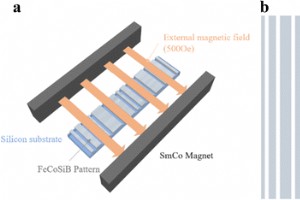
AbstractWe fabricated a series of multilayer FeCoBSi films with combined stripe patterns of varying thicknesses using UV lithography and DC sputtering. During high‑frequency testing, a broad resonance band emerged, reaching a full width at half maximum (FWHM) of 4 GHz for the 45 nm thick sample. Thi
Nanomaterials