Industrial manufacturing
Nanomaterials

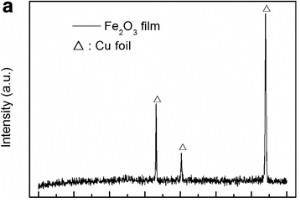
Abstract We present a scalable pulsed laser deposition (PLD) route to fabricate nanocrystalline Fe₂O₃ thin films directly on conductive substrates for use as lithium‑ion battery anodes. The films exhibit an outstanding high‑rate capacity of 510 mAh g⁻¹ at 15,000 mA g⁻¹ and a reversible capacity of 9
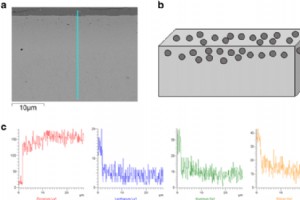
Abstract A graded nano‑glass/zirconia (G/Z) system was created by infiltrating nano‑glass into a nano‑zirconia surface, enhancing core‑veneer bond strength. Aging is a critical concern for yttrium‑stabilized tetragonal zirconia polycrystals (Y‑TZP), so it is essential to assess how aging affects the
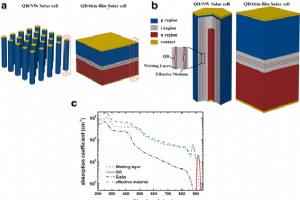
AbstractThis study introduces a GaAs/InAs nanowire–quantum dot (NW–QD) hybrid solar cell that achieves a remarkable extension of the absorption spectrum to 950 nm. By depositing five layers of InAs quantum dots on the sidewalls of 500‑nm GaAs nanowires, the device benefits from simultaneous spectral
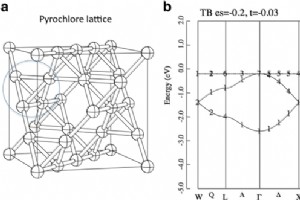
AbstractQuantum mechanics states that hopping integral between local orbitals makes the energy band dispersive. However, in some special cases, there are bands with no dispersion due to quantum interference. These bands are called as flat band. Many models having flat band have been proposed, and ma
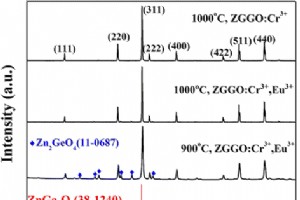
AbstractNear infrared (NIR)-emitting persistent luminescent nanoparticles have been developed as potential agents for bioimaging. However, synthesizing uniform nanoparticles with long afterglow for long-term imaging is lacking. Here, we demonstrated the synthesis of spinel structured Zn3Ga2Ge2O10:Cr
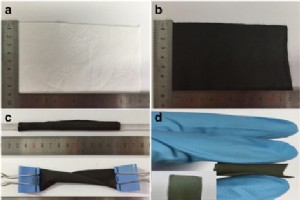
Abstract Three‑dimensional, free‑standing nanostructures have emerged as highly promising electrodes for energy storage, delivering superior electrochemical performance and enabling wearable power solutions. In this study, we grew interconnected V6O13 nanosheets directly onto a flexible carbonized t
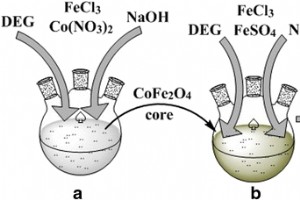
AbstractWe synthesized two families of core/shell spinel ferrite nanoparticles: CoFe₂O₄ cores with Fe₃O₄ shells and Fe₃O₄ cores with CoFe₂O₄ shells. Core diameters were ~4.1 nm and ~6.3 nm, respectively, and shell thicknesses ranged from 0.05 nm to 2.5 nm. The particles were prepared in diethylene g
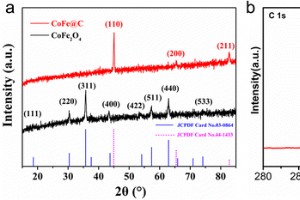
AbstractCoFe/C core–shell nanocomposites (CoFe@C) were fabricated by thermal decomposition of acetylene using CoFe2O4 as precursor. XRD, XPS, Raman, TEM and thermogravimetric analysis confirmed an amorphous carbon shell 5–30 nm thick, comprising ~48.5 wt % of the composite. The synergy between intri
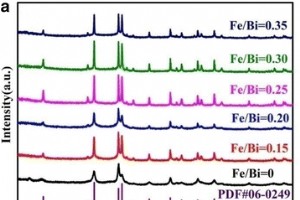
AbstractWe report the synthesis, comprehensive characterization, and application of bismuth oxychloride (BiOCl) and Fe³⁺‑grafted BiOCl (Fe/BiOCl) as high‑performance adsorbents for removing low‑concentration (0.01–0.04 mmol L⁻¹) cationic dyes (rhodamine B, RhB; methylene blue, MB) and anionic dyes (
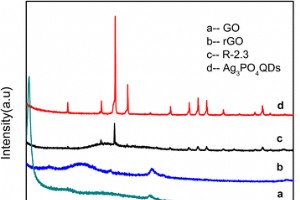
AbstractWe report, for the first time, a streamlined one‑step photo‑ultrasonic‑assisted reduction that yields reduced graphene oxide (rGO) decorated with 1–4 nm Ag₃PO₄ quantum dots (QDs). X‑ray diffraction, TEM, XPS, FT‑IR, Raman, and UV‑vis spectroscopy confirm uniform dispersion of the QDs on rGO
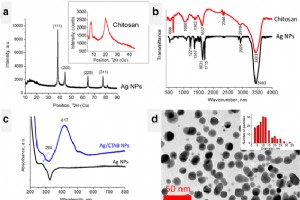
AbstractBackground: Developing new therapeutics against methicillin‑resistant Staphylococcus aureus (MRSA) is a pressing medical challenge. Antiseptics, unlike antibiotics, can target resistant strains while preserving normal microbiota.Materials and Methods: We evaluated the antibacterial potency o
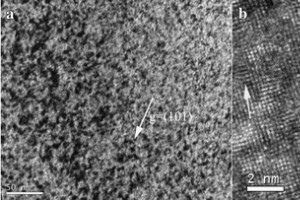
AbstractWe examined how post‑irradiation annealing influences the microstructure and mechanical behaviour of V‑4Cr‑4Ti alloys that were sequentially implanted with helium (He) and hydrogen (H) at room temperature (RT). Samples were annealed at 450 °C for up to 30 h in a high‑vacuum environment. High
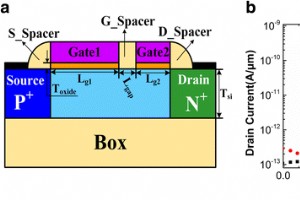
AbstractThe dual‑gate tunneling FET (DGTFET) DRAM provides a capacitor‑free design and markedly long retention. Using the Silvaco‑Atlas simulator, we systematically optimize the spacer dielectric stack to suppress reading‑zero leakage and extend the holding window. Simulation results reveal that a l
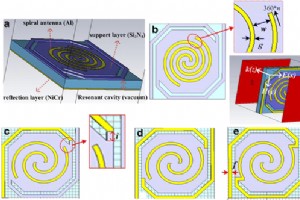
AbstractCoupling spiral‑type antennas to micro‑bridge bolometers offers a powerful route to extend infrared bolometer technology into the terahertz (THz) domain. In this study, we explore three novel antenna layouts—single, dual, and interconnected linear antennas—mounted on 25 µm × 25 µm micro‑brid
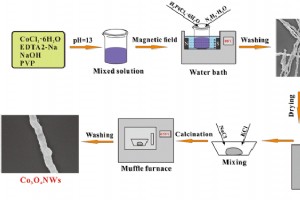
AbstractWe present a green, scalable route to synthesize Co₃O₄ nanowires (NWs) via a two‑step process: magnetic‑field‑assisted assembly of Co nanowires (CoNWs) followed by gentle air oxidation. The resulting 1‑D NWs, 3–8 µm long with aspect ratios exceeding 15, combine a high crystalline quality wit
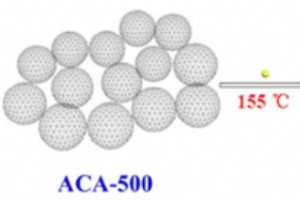
AbstractAn activated carbon aerogel (ACA-500) with high surface area (1765 m2 g−1), pore volume (2.04 cm3 g−1), and hierarchical porous nanonetwork structure is prepared through direct activation of organic aerogel (RC-500) with a low potassium hydroxide ratio (1:1). Based on this substrate, a polya
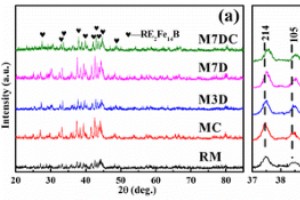
AbstractRare‑earth‑rich RE‑Fe‑B permanent magnets traditionally suffer from low coercivity, limiting their commercial appeal despite the cost and abundance advantages of La and Ce. In this study we employed an industrial alloy (RE₁₀₀ = La₃₀.₆Ce₅₀.₂Pr₆.₄Nd₁₂.₈) and fabricated RE‑Fe‑B magnets through
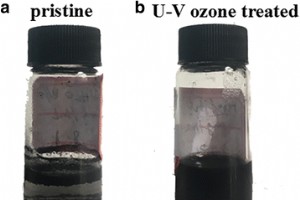
AbstractInverted planar perovskite solar cells (PSCs) offer low‑temperature, low‑cost fabrication and reduced hysteresis compared to conventional n‑i‑p architectures. The performance of PSCs hinges on the quality of the hole transport layer (HTL). Here, we demonstrate a green UV‑ozone treatment that
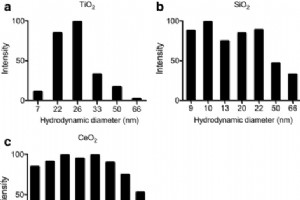
AbstractEngineered nanoparticles (ENPs) are rapidly incorporated into consumer products, yet their impact on marine ecosystems remains poorly understood. We examined the response of four diatom species—Odontella mobiliensis, Skeletonema grethae, Phaeodactylum tricornutum, and Thalassiosira pseudonan
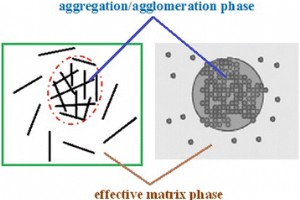
AbstractA two-step technique based on micromechanical models is suggested to determine the influence of aggregated/agglomerated nanoparticles on Young’s modulus of polymer nanocomposites. The nanocomposite is assumed to include nanoparticle aggregation/agglomeration and effective matrix phases. This
Nanomaterials