Industrial manufacturing
Nanomaterials


Abstract Nanoparticle‑based drug delivery has dominated oncology research for over a decade, largely driven by the enhanced permeability and retention (EPR) effect. Yet a comprehensive systematic review by Wilhelm et al. revealed that only a median of 0.7 % of injected nanoparticles reach tumors, un

Abstract A single‑size metamaterial design based on a perforated rectangular resonator atop a gold substrate and a thin lossy dielectric layer yields four sharp terahertz absorption peaks. Three peaks reach an average absorption of 97.80 %, while the fourth peak boasts an exceptional quality factor
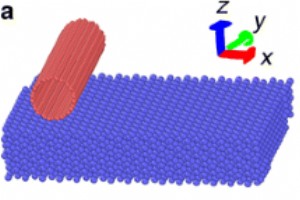
AbstractControlling the motion of carbon nanotubes is critical in manipulating nanodevices, including nanorobots. Herein, we investigate the motion behavior of SWCNT (10,10) on Si substrate utilizing molecular dynamics simulations. We show that hydroxyl groups have sensitive effect on the carbon nan
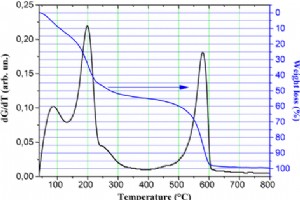
AbstractGraphene oxide (GO) films were formed by drop-casting method and were studied by FTIR spectroscopy, micro-Raman spectroscopy (mRS), X-ray photoelectron spectroscopy (XPS), four-points probe method, atomic force microscopy (AFM), and scanning Kelvin probe force (SKPFM) microscopy after low-te
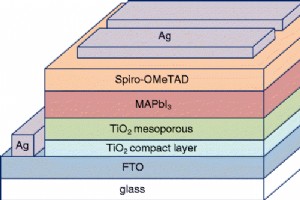
AbstractWe investigated how varying methylammonium iodide (MAI) concentrations in a two‑step wet process influences the morphology and photovoltaic performance of CH₃NH₃PbI₃ perovskite films. The device architecture—glass/FTO/TiO₂‑mesoporous/CH₃NH₃PbI₃/spiro‑OMeTAD/Ag—was fabricated on 1.5 × 1.5 cm²
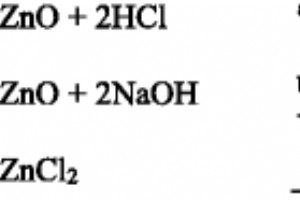
Abstract Zinc oxide (ZnO) is a cornerstone in biomedicine, appearing in enzymes, sunscreens, and topical analgesics. Its wide band‑gap confers strong UVA/UVB absorption, and its biological impact is governed by morphology, size, exposure duration, concentration, pH, and biocompatibility. ZnO nanopa
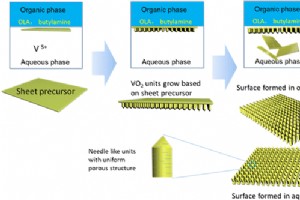
Abstract We report a facile, liquid‑interface‑derived synthesis of two‑dimensional (2D) mesoporous VO₂ microarrays. The arrays consist of needle‑like VO₂ particles that are uniformly porous, with ~2 nm crack‑like pores extending 20–100 nm deep across the particle surface. The organic–inorganic inter
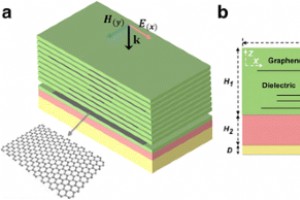
Abstract90 % absorption up to 50° incident angle and can be further scaled by adding more graphene layers, offering broad applicability in terahertz imaging, sensing, photodetection, and modulation.BackgroundThe terahertz (THz) band has emerged as a pivotal platform for spectroscopy, medical imaging

AbstractPlasmonic metasurfaces have attracted much attention in recent years owing to many promising prospects of applications such as polarization switching, local electric field enhancement (FE), near-perfect absorption, sensing, slow-light devices, and nanoantennas. However, many problems in thes
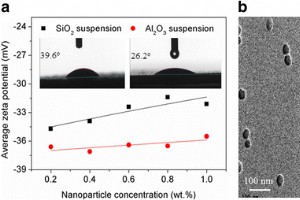
AbstractAl₂O₃ and SiO₂ nanoparticles, together with ultrasound, were employed to lower the supercooling degree of water. The study examined how nanoparticle concentration, contact angle, and ultrasonic intensity influence supercooling, while also monitoring nanoparticle dispersion stability during
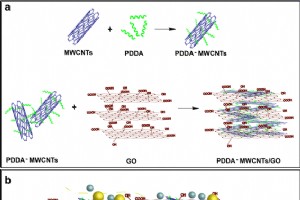
AbstractIndustrial expansion and rising energy demands have amplified environmental pollutants, posing a global threat. We introduce a novel, all‑carbon nanofiltration (NF) membrane composed of multi‑walled carbon nanotubes (MWCNTs) interleaved within graphene oxide (GO) nanosheets, creating a 3‑D a
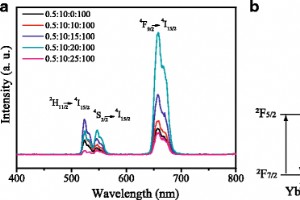
AbstractWe fabricated Er3+-Yb3+-Li+ tri‑doped TiO2 (UC‑TiO2) by introducing Li+ into Er3+-Yb3+ co‑doped TiO2. UC‑TiO2 displays markedly stronger up‑conversion emission than the co‑doped counterpart. When integrated into perovskite solar cells (PSCs), the power conversion efficiency (PCE) rose from 1
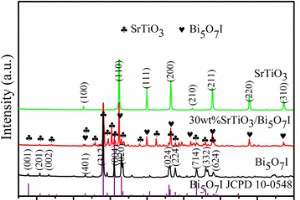
AbstractWe report a thermal‑decomposition route to synthesize SrTiO3/Bi5O7I nanocomposites that combine perovskite SrTiO3 nanoparticles with tetragonal Bi5O7I nanorods. XRD, XPS, SEM, EDS, FTIR, DRS, and PL analyses confirm phase purity, intimate heterojunction formation, and effective charge separ
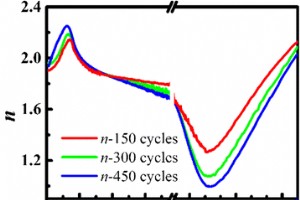
AbstractUsing point‑by‑point analysis of spectroscopic ellipsometry (SE) data, we rapidly and accurately quantified the optical properties of aluminum‑doped zinc oxide (AZO) thin films. Our study reveals two distinct mechanisms—interfacial effects and crystallinity—that govern the thickness‑dependen
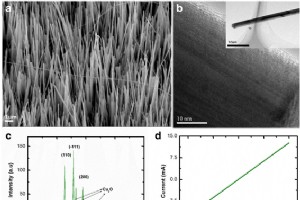
AbstractWe fabricated copper oxide nanowires (CuO NWs) ultraviolet (UV) light-assisted hydrogen gas sensor. The fabricated sensor shows promising sensor response behavior towards 100 ppm of H2 at room temperature and elevated temperature at 100 °C when exposed to UV light (3.0 mW/cm2). One hundred-c
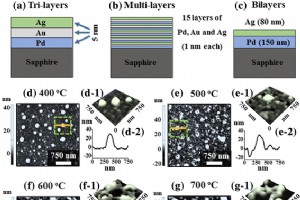
AbstractWe investigate how the morphology and optical response of PdAg and PdAuAg alloy nanoparticles evolve on sapphire (0001) when fabricated through solid‑state dewetting of multi‑metallic thin films. By varying annealing temperature, time, film thickness, and deposition order—bi‑layers (Pd/Ag),
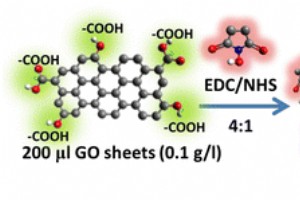
AbstractThis work presents a novel AuNP‑GO nanocomposite that combines the high biocompatibility of graphene oxide with the localized surface plasmon resonance (LSPR) of gold nanoparticles. The hybrid platform enables label‑free detection of protein interactions with unprecedented sensitivity. Using

AbstractMonolayer graphene, when suspended, absorbs only ~2.3% of incident light at normal incidence—a limitation for optoelectronic applications. We numerically demonstrate that a carefully engineered metamaterial, comprising a graphene sheet sandwiched between four silver (Ag) nanodisks of varyin
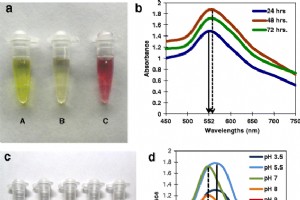
AbstractWe report the first green synthesis of protein‑coated gold nanoparticles (AuNPs) using the edible mycorrhizal fungus Tricholoma crassum. The AuNPs, 5–25 nm in diameter and of various shapes, form within one hour at 28 °C. UV–vis spectroscopy shows a characteristic SPR peak at 552 nm, shiftin
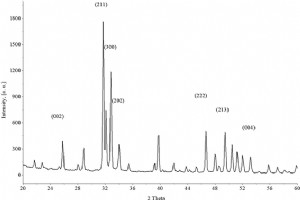
AbstractComposite materials based on hydroxyapatite (HA) are pivotal in bone tissue engineering. Strontium (Sr) incorporation at specific Ca/Sr ratios has been shown to promote osteogenesis. This study reports the synthesis of a 50/50 wt% biogenic HA/sodium borosilicate glass composite doped with 1
Nanomaterials