Industrial manufacturing
Nanomaterials

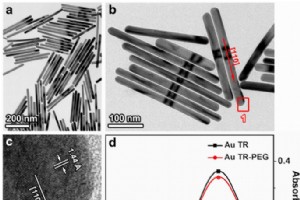
Abstract\nTunable‑aspect‑ratio gold nanorods were produced via a refined seed‑mediated protocol that employs ascorbic acid as a shape‑directing agent. By adjusting the ascorbic acid dosage, the rods’ aspect ratios were tuned from 8.5 to 15.6, giving longitudinal surface‑plasmon resonance peaks that
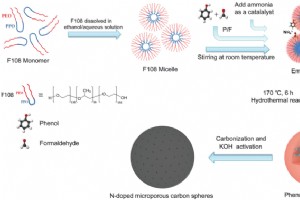
AbstractWe present a concise, one‑step hydrothermal route to synthesize nitrogen‑doped microporous carbon spheres (NMCSs) via carbonization and KOH activation of phenol‑formaldehyde (PF) resin spheres. By tuning the ethanol/water ratio and carbonization temperature, we obtain NMCSs with a specific s
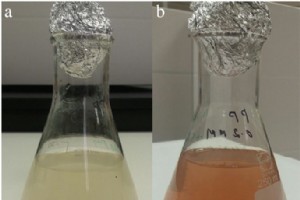
AbstractDrug‑resistant microbes and rising tumor rates demand innovative solutions. This study demonstrates the eco‑friendly synthesis of silver nanoparticles (AgNPs) using aqueous pomegranate (Punica granatum) peel extract—a common biowaste. The transformation of a clear solution to a dark brown hu
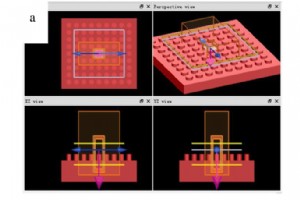
Abstract Silicon is the bedrock of the semiconductor industry, yet its inherent high reflectance and wide band‑gap limit performance in near‑infrared (NIR) photodetection. In this work, we employ a two‑step fabrication approach—deep reactive ion etching (DRIE) followed by plasma immersion ion implan
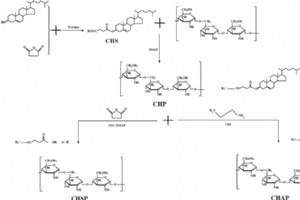
AbstractNanoparticle design hinges on how surface chemistry governs protein adsorption in the bloodstream. We synthesized three pullulan‑based polymers—cholesterol‑modified pullulan (CHP), CH‑modified animated pullulan (CHAP), and CH‑modified carboxylated pullulan (CHSP)—and formed nanoparticles via
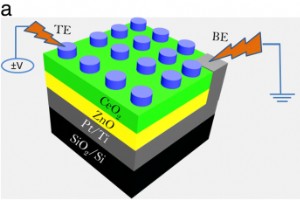
Abstract We fabricated Ti top / Pt bottom electrode memory cells incorporating bilayer CeO₂−x/ZnO and ZnO/CeO₂−x heterostructures via room‑temperature RF‑magnetron sputtering. Both layers are n‑type semiconductors, yet the device’s resistive switching (RS) characteristics depend strongly on the hete

Abstract We report a tumor‑specific theranostic platform that combines four clinically approved agents—artesunate (Arte), human serum albumin (HSA), folic acid (FA), and indocyanine green (ICG)—into a single nanoparticle (FA‑IHA NPs). These nanoparticles exhibit exceptional photo‑ and physicochemica
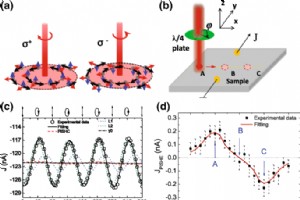
AbstractThe inverse spin Hall effect induced by circularly polarized light has been observed in a GaAs/AlGaAs two-dimensional electron gas. The spin transverse force has been determined by fitting the photo-induced inverse spin Hall effect (PISHE) current to a theoretical model. The PISHE current is

AbstractIn this study, we introduce a silicon‑based T‑shaped gate dual‑source tunnel field‑effect transistor (TGTFET) and evaluate its performance using detailed TCAD simulations. A comparative analysis with the conventional L‑shaped (LTFET) and U‑shaped (UTFET) TFETs is performed, highlighting the
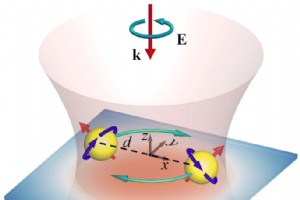
AbstractWe theoretically investigate the optomechanical response of a gold (Au) nanodimer—two optically bound nanoparticles—when illuminated by left‑handed circularly polarized (CP) light, either a plane wave or a focused Gaussian beam. Using the multiple multipole (MMP) method, we calculate optical
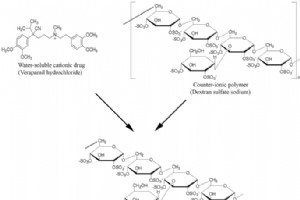
AbstractVerapamil, a calcium‑channel blocker used for hypertension, angina, and arrhythmias, suffers from low oral bioavailability (20–35%) due to extensive first‑pass metabolism. This study presents the development of hybrid verapamil‑dextran nanostructured lipid carriers (HVD‑NLCs) aimed at boost
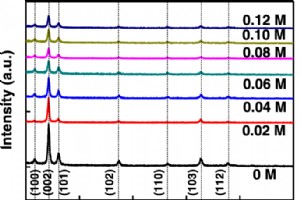
Abstract Al‑doped ZnO (AZO) nanospears were synthesized by a hydrothermal route on ZnO‑seeded glass substrates. X‑ray diffraction confirms a hexagonal wurtzite lattice with a strong (002) orientation, while scanning electron microscopy shows highly aligned, needle‑shaped structures with fine tips. I
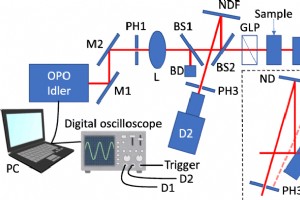
Abstract This study combines experimental measurements with rigorous numerical analysis to trace the degradation of a metasurface polarizer that delivers an extinction ratio of ~10,000 in the near‑infrared. Surface roughness and metallic loss are isolated in simulation; the dominant factor is an inc
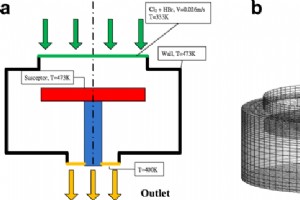
AbstractDuring the formation of Ge fin structures on a silicon-on-insulator (SOI) substrate, we found that the dry etching process must be carefully controlled. Otherwise, it may lead to Ge over-etching or the formation of an undesirable Ge fin profile. If the etching process is not well controlled,
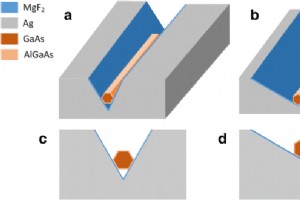
AbstractA hybrid channel plasmon nanowire laser based on GaAs/AlGaAs core-shell semiconductor nanowire and silver V-groove is proposed. The laser structure has potential capability of integrating with plasmonic waveguides, using channel plasmon-polariton modes in V-groove plasmonic waveguides. Guidi
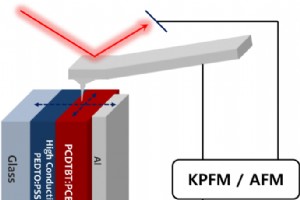
AbstractKelvin probe force microscopy (KPFM) was used to map the cross‑sectional potential distribution of a high‑open‑circuit‑voltage PCDTBT:PCBM bulk heterojunction (BHJ) solar cell. The potential drop is confined to the cathode interface, confirming the p‑type behaviour of the photo‑active layer.

AbstractUsing a simple co‑precipitation approach, we synthesized pristine and Mg‑doped ZnO nanoparticles (NPs) with 0–7.5 mol % Mg. X‑ray diffraction confirmed a single hexagonal wurtzite phase, while SEM revealed nanoscale grains (30–110 nm) with hexagonal morphology. Mg incorporation lowered the b
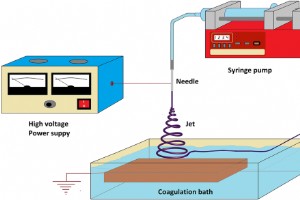
AbstractPolymeric nanofibers enable a wide range of textile functionalities. This study investigates polyamide 6/66 (PA 6/66) solutions at 12, 17, and 22 wt % to produce nanofibers via a basic electrospinning setup. The fibers were examined with scanning electron microscopy (SEM) and productivity me
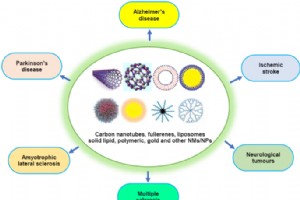
AbstractNanomaterials (NMs) possess unique physicochemical traits that enable precise drug delivery across the blood–brain barrier (BBB), offering enhanced efficacy and safety for neurological therapies. Engineered NMs—including metal chelators, gold and silver nanoparticles, micelles, quantum dots,
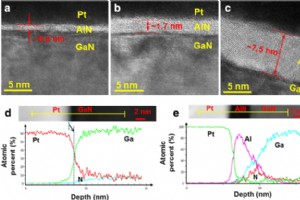
Abstract We examined how the thickness of atomic‑layer‑deposited (ALD) AlN influences the interfacial and electrical characteristics of Pt/AlN/n‑GaN MIS diodes. A 7.4‑nm AlN layer produced the highest interface and oxide‑trap densities, whereas a 0.7‑nm film exhibited dominant Al–O bonding and no cl
Nanomaterials