Industrial manufacturing
Nanomaterials

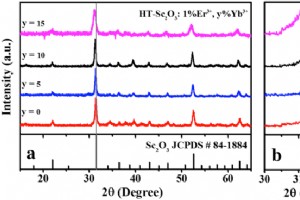
AbstractWe report a simple oleic‑acid mediated hydrothermal route to synthesize ~19 nm Sc₂O₃:Er³⁺,Yb³⁺ nanoparticles (NPs). X‑ray diffraction, TEM, and upconversion luminescence (UCL) measurements confirm a cubic bixbyite host with excellent crystallinity. Under 980 nm excitation, the hydrothermal

AbstractMatrix metalloproteinase‑7 (MMP‑7) drives tumour invasion by cleaving extracellular matrix and peptide bonds between alanine and leucine. Here we present a Pd‑functionalized carbon nanocomposite (Pd‑CNC) that acts as a high‑impedance enhancer in an amperometric MMP‑7 biosensor. Palladium n
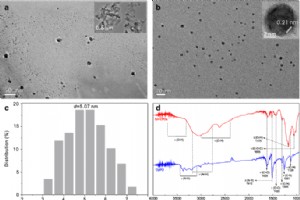
Abstract Red‑emitting carbonized polymer dots (CPDs) were fabricated from p-phenylenediamine (p-PD) aqueous solution under the catalytic influence of sulfuric acid (H2SO4). The resulting SA‑CPDs (average diameter ≈5 nm) exhibited the brightest photoluminescence among acids tested, with a quantum yi
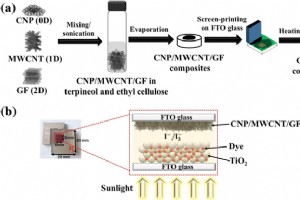
AbstractIn this study we demonstrate that nanostructured carbon composites, especially multi‑walled carbon nanotubes (MWCNTs) and their mixtures, can replace platinum (Pt) as counter‑electrode (CE) materials in dye‑sensitized solar cells (DSSCs). Using a simple screen‑printing process, we deposited
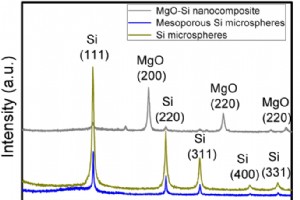
Abstract Silicon is a compelling anode material for sodium‑ion batteries (NIBs) because of its high theoretical capacity (954 mAh g⁻¹). Here we show that mesoporous silicon microspheres (MSMs) with uniformly distributed pores (1–10 nm) can be fabricated through an in‑situ magnesiothermic reduction o
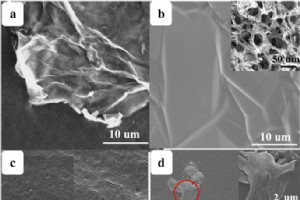
AbstractWe engineered thermal interface materials (TIMs) by combining reduced graphene oxide (RGO) and three‑dimensional graphene networks (3DGNs). The 3DGNs create a high‑conductivity phonon network, while RGO bridges the graphene and epoxy resin (ER) matrix, especially when its surface is enriched
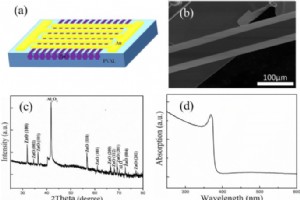
Abstract Wearable electronics demand inorganic semiconductors that can be fabricated on flexible, inexpensive substrates. In this work, we present a novel ultraviolet (UV) photodetector (PD) that incorporates a dense array of ZnO microwires (MWs) embedded within a polyvinyl alcohol (PVA) film. The d

Abstract Precise deposition of electrospun fibers remains a major challenge for organ hemostasis. We present an electric‑field‑modified e‑spinning system that incorporates a metal cone at the nozzle, enabling controllable fiber placement. The deposition area is tunable by altering the cone size, a b
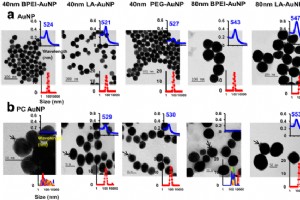
AbstractWe investigated how 40‑ and 80‑nm gold nanoparticles (AuNP) functionalized with cationic branched polyethylenimine (BPEI), anionic lipoic acid (LA), or neutral polyethylene glycol (PEG) interact with the human hepatocellular carcinoma (HCC) cell line C3A, both in the presence and absence of

AbstractMalignant tumours remain a leading cause of mortality worldwide, and the ability to detect early disease and predict metastatic spread is critical for selecting the most effective treatment strategy. Integrin αvβ3 is a well‑validated biomarker of tumour angiogenesis, making it an attractive

Abstract Black phosphorene, a two‑dimensional monolayer of phosphorus, has attracted attention for its direct bandgap, high carrier mobility, and mechanical flexibility. Using spin‑polarized density functional theory, we investigated how 12 transition‑metal (TM) atoms—Fe, Co, Ni, Cu, Ru, Rh, Pd, Ag,
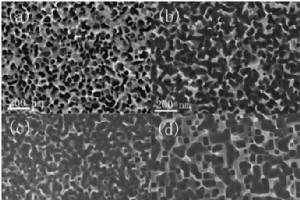
AbstractSilicon nanowires (SiNWs) with excellent light trapping properties have been widely applied in photovoltaic devices, which provide opportunities for boosting the photons harvested by Si. However, the photoexcited carriers are easily trapped and recombined by high-density surface defects due
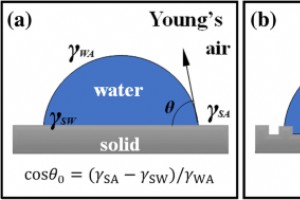
Abstract Oil–water separation is pivotal for mitigating industrial wastewater impacts and offshore oil spills. Porous metal filter membranes, engineered with tailored wettability, offer high‑efficiency, portable, thermally stable, and cost‑effective solutions. This review surveys recent progress i
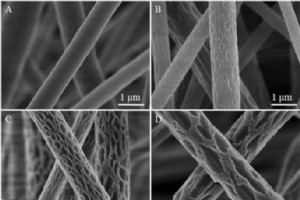
Abstract300 nm) achieve a specific surface area of 23.31 ± 4.30 m² g⁻¹ and a pore volume of 0.0695 ± 0.007 cm³ g⁻¹, translating into exceptional oil‑absorption capacities of 50.58 ± 5.47 g g⁻¹ (silicone oil), 37.74 ± 4.33 g g⁻¹ (motor oil), and 23.96 ± 2.68 g g⁻¹ (olive oil). These findings provide
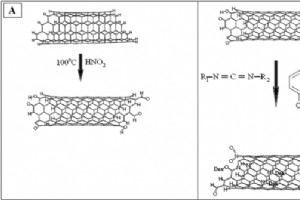
AbstractThis study investigates the cytotoxicity of oxidized multi‑walled carbon nanotubes (CNTox), carbon nanotubes functionalized with doxorubicin (CNT‑Dox), and with fluorescein (CNT‑FITC) on HT29 colon adenocarcinoma cells and on Balb/c mice. We demonstrate that doxorubicin can be covalently anc
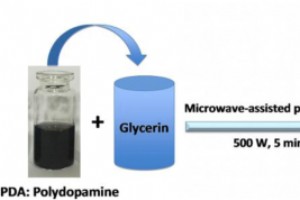
AbstractCarbon dots (CDs) are fluorescent nanomaterials prized for their tunable photoluminescence, high photothermal conversion, and excellent biocompatibility. Enhancing their quantum yield (QY) typically requires surface passivation or heteroatom doping, particularly nitrogen. In this study, we p
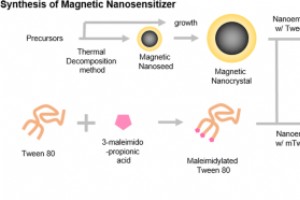
AbstractThe aim of this study was the development of a human epidermal growth factor receptor 2 (HER2)-targetable contrast agent for magnetic resonance imaging (MRI) with a high magnetic sensitivity. An anti-HER2 aptamer-modified magnetic nanosensitizer (AptHER2-MNS) was prepared by conjugation with
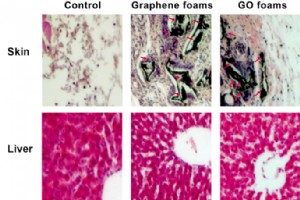
AbstractRecent years have witnessed remarkable advances in the biomedical use of graphene family materials. Their nanoscale dimensions, enormous surface area, intrinsic photoluminescence, and inherent antibacterial properties position them as powerful tools for bone tissue engineering, drug and gene
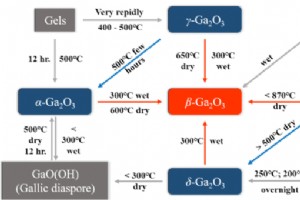
Abstract Gallium oxide (β‑Ga₂O₃) offers an ultrawide bandgap (~4.8 eV), a high breakdown field (~8 MV cm⁻¹), and a superior Baliga figure of merit, positioning it as a leading candidate for next‑generation high‑power devices such as Schottky barrier diodes (SBDs). This review synthesizes the fundame
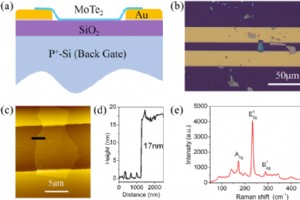
AbstractBoth p‑type and n‑type MoTe₂ transistors are essential for building complementary electronic and optoelectronic circuits. In this work, we demonstrate an air‑stable p‑type multi‑layer MoTe₂ transistor fabricated with Au electrodes, and we show that the device can be converted into an n‑type
Nanomaterials