Industrial manufacturing
Nanomaterials

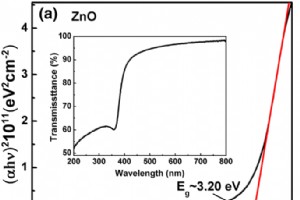
Abstract We investigated the band alignment of ZnO/β‑Ga₂O₃ (over 2 01) heterojunctions using X‑ray photoelectron spectroscopy (XPS). Atomic‑layer‑deposited (ALD) ZnO films were grown at 150 °C, 200 °C, and 250 °C. All interfaces exhibited a type‑I alignment. The conduction‑band offset (CBO) increase
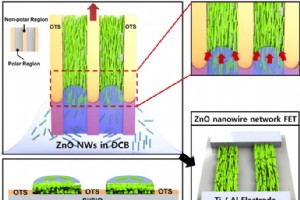
AbstractWe present a straightforward, low‑temperature process for creating arrays of gate‑controlled ultraviolet (UV) photodetectors based on zinc oxide (ZnO) nanowire (NW) network field‑effect transistors (FETs). The method combines molecularly patterned substrates, selective NW assembly via a cont
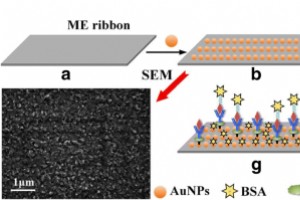
AbstractThis study introduces the first wireless magnetoelastic (ME) nanobiosensor that employs ME materials and gold nanoparticles (AuNPs) to detect atrazine with unprecedented sensitivity via a competitive immunoassay. When exposed to a time‑varying magnetic field, the ME substrate vibrates at its
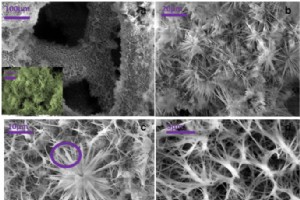
AbstractWe present a binder‑free electrode comprising self‑stabilized chlorine‑doped carbonated cobalt hydroxide nanowires (Co‑ClNWs) grown directly on nickel foam via a single‑step hydrothermal procedure. The needle‑shaped nanowires, 3–10 nm in diameter and highly mesoporous, furnish a large active
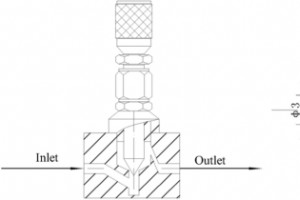
Abstract Graphene—an atomically thin two‑dimensional material—has become essential for electronics, photonics, catalysis, energy storage, and nanocomposites. However, mass production of defect‑free graphene remains a challenge. We present a straightforward, scalable hydrodynamic exfoliation process
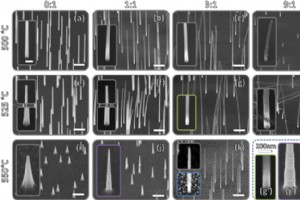
Abstract III–V nanowires (NWs) are emerging as versatile building blocks for advanced semiconductor devices. Alloying with minute amounts of nitrogen offers a powerful route to tailor band‑gap energies and improve chemical stability. In this study we demonstrate successful in‑situ nitrogen incorpora
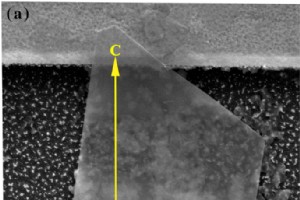
AbstractSchottky effect of two-dimensional materials is important for nanoscale electrics. A ReSe2 flake is transferred to be suspended between an Au sink and an Au nanofilm. This device is initially designed to measure the transport properties of the ReSe2 flake. However, a rectification behavior i
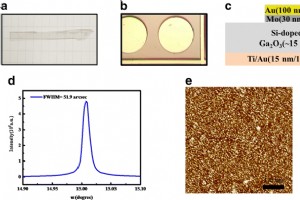
AbstractWe studied the reverse current emission mechanism of the Mo/β-Ga2O3 Schottky barrier diode through the temperature-dependent current-voltage (I-V) characteristics from 298 to 423 K. The variation of reverse current with the electric field indicates that the Schottky emission is the dominant
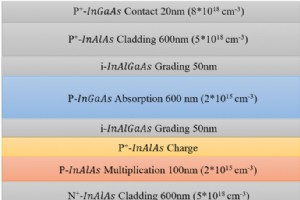
Abstract This study presents a rigorous two‑dimensional TCAD simulation of InGaAs/InAlAs avalanche photodiodes (APDs) and single‑photon avalanche photodiodes (SPADs) operating in Geiger mode. We analyze electric‑field profiles and tunneling mechanisms, establishing that a multiplication‑layer thickn
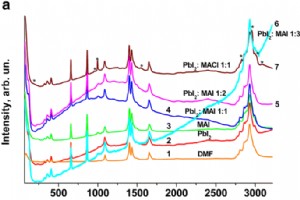
AbstractThe structural and morphological evolution of CH3NH3PbI2.98Cl0.02 thin films was systematically examined as a function of the molar ratio of the precursor solutions (PbI2 : CH3NH3I + CH3NH3Cl). A stoichiometric 1:1 ratio of PbI2 to CH3NH3I yields a perovskite phase between 70–80 °C, whereas
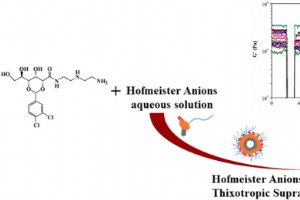
AbstractWe explored the physical gelation of a series of d‑gluconic acetal derivatives functionalized with fatty alkyl amine groups. One derivative forms robust, self‑healing hydrogels in water. Remarkably, the elastic modulus and tensile strength of these gels can be finely adjusted by adding Hofme
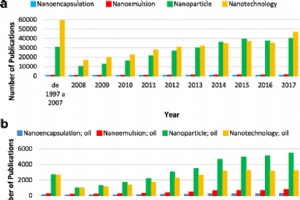
AbstractOils play a pivotal role in human nutrition, delivering essential fatty acids and fat‑soluble vitamins. Yet, they are highly susceptible to oxidation, heat, moisture, and light. Recent advances in nanoencapsulation—embedding oil droplets within nanoscale carriers—offer a robust solution to p
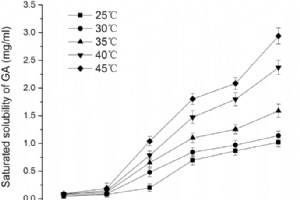
Abstract In this study, glycyrrhetinic acid (GA) liposomes were successfully formulated using the lyophilization monophase solution method. Preformulation work examined the solubility of soybean phosphatidylcholine (SPC), cholesterol, and GA in tert‑butyl alcohol/water (TBA/water) co‑solvents. We i
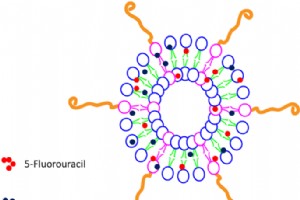
AbstractWe engineered a PEGylated nanoliposome co‑encapsulating the chemotherapeutic agent 5‑fluorouracil (5‑FU) and the autophagy inhibitor LY294002 (LY) to treat esophageal squamous cell carcinoma (ESCC). Comprehensive physicochemical and biological characterizations demonstrated successful dual‑d
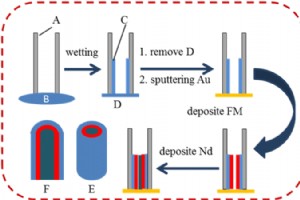
AbstractA new preparation method of three-layer coaxial nanocables has been developed in this work. Nd/FM (FM=Fe, Co, Ni)/PA66 three-layer coaxial nanocables were assembled successfully from outer to inner layer by layer. PA66 nanotubes which served as the outer shell were prepared by polymer soluti
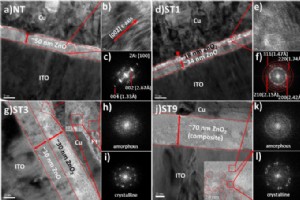
AbstractThis study investigates how peroxide surface treatment modifies the resistive switching behavior of zinc peroxide (ZnO2)-based programmable metallization cells (PMCs). Peroxide exposure converts the hexagonal ZnO lattice into a cubic ZnO2 phase, but excessive exposure leads to crystalline br
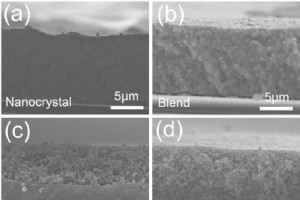
AbstractWe demonstrate that a hybrid micro‑structured TiO₂ coating can attain exceptional diffuse reflectance by harnessing both surface‑ and bulk‑scattering mechanisms. Conventional diffuse reflectors depend largely on random surface texturing; our numerical and experimental work shows that ordered
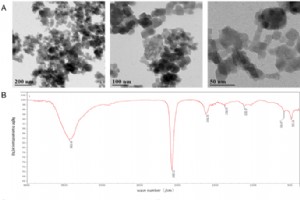
AbstractMesenchymal stem cells (MSCs) are widely applied in regenerative medicine, yet their post‑transplant fate remains poorly understood. Magnetic resonance imaging (MRI) offers a non‑invasive means to track transplanted MSCs, and Prussian blue nanoparticles (PBNPs) have emerged as a promising M
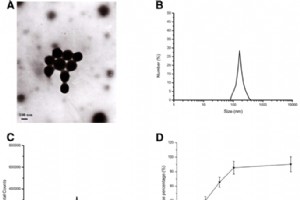
AbstractAlzheimer’s disease (AD) remains the leading neurodegenerative disorder among older adults, yet effective therapies are limited by the blood–brain barrier (BBB), poor amyloid‑β (Aβ) clearance, and chronic neuroinflammation. We engineered chitosan (CS)–bovine serum albumin (BSA) nanoparticle
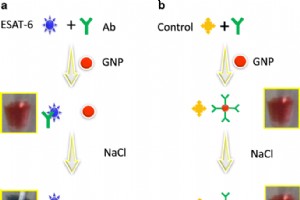
AbstractTuberculosis (TB) remains a leading cause of mortality worldwide, driven by the virulence factor ESAT‑6, an early secretory antigenic target of Mycobacterium tuberculosis. Rapid, low‑concentration detection of ESAT‑6 is essential for early intervention and disease containment. We present a s
Nanomaterials