Industrial manufacturing
Nanomaterials

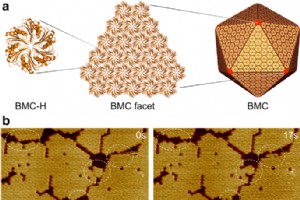
AbstractBacterial microcompartments (BMCs) are proteinaceous organelles that sequester metabolic enzymes within a semi‑permeable shell, enabling bacteria to carry out key biochemical reactions in the absence of membrane‑bound organelles. The shell is assembled from multiple homologous proteins—hexam
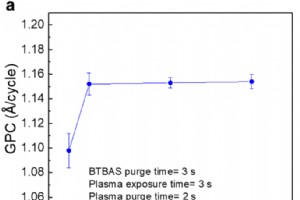
AbstractWe present a high‑performance, low‑temperature plasma‑enhanced atomic layer deposition (PEALD) process for silicon dioxide (SiO₂) that employs carbon dioxide (CO₂) as the oxidant and bis(tertiary‑butylamino)silane (BTBAS) as the silicon precursor. The process operates at 90 °C, producing SiO

AbstractIn this work, we synthesized Sm2O3/ZnO/SmFeO3 microspheres by a hydrothermal method combined with microwave assistance to serve as a methanol gas sensor. We investigated the effect on the microstructure at different hydrothermal times (12 h, 18 h, 24 h, and 30 h), and the BET and XPS results

AbstractExtramedullary multiple myeloma (EMM) remains a therapeutic challenge, with high‑dose chemotherapy offering modest survival benefits that are frequently offset by severe systemic toxicity. In this study, doxorubicin (DOX) was encapsulated in polyethylene glycol‑modified cadmium telluride qua
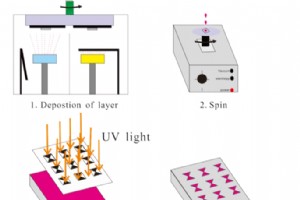
Abstract3 km s⁻¹. These findings demonstrate that the Al/Ni superlattice can serve as a highly efficient micro‑plasma generator, enabling improved initiator performance with lower energy input.Fabrication process of micro plasma generator IntroductionReactive multilayer foils (RMFs) store chemical e
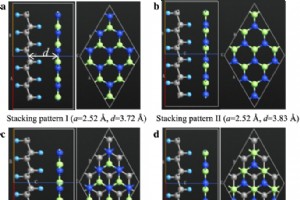
AbstractHydrogenated graphene (HG)/hexagonal boron nitride (h-BN) heterobilayer is an ideal structure for the high-performance field effect transistor. In this paper, the carrier mobilities of HG/h-BN heterobilayer are investigated based on the first-principles calculations by considering the influe
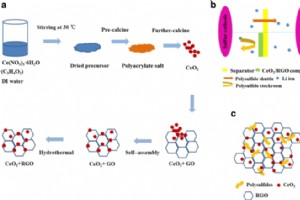
AbstractWe report a lightweight separator modified with a two‑dimensional composite of reduced graphene oxide (RGO) anchored with cerium oxide (CeO₂) nanoparticles. The conductive RGO network facilitates rapid electron transport, while the CeO₂ surface chemically binds high‑order polysulfides (Li₂Sn
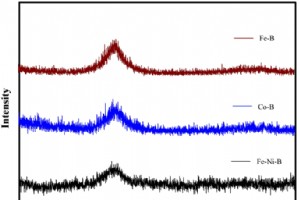
AbstractMagnetic Fe-B, Fe-Ni-B, and Co-B nanoparticles were successfully synthesized and introduced to water to prepare aqueous ferrofluids. The Fe-B, Fe-Ni-B, and Co-B particles are homogeneous amorphous nanoparticles with an average particle size 15 nm. The shape of the amorphous nanoparticles is
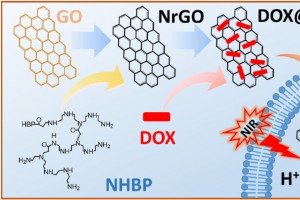
AbstractWe report a facile route to synthesize hydrophilic reduced graphene oxide (NrGO) by reducing graphene oxide (GO) with amino‑terminated hyperbranched polymer (NHBP). NrGO exhibits excellent aqueous dispersibility, strong near‑infrared (NIR) absorption, efficient photothermal conversion, and c
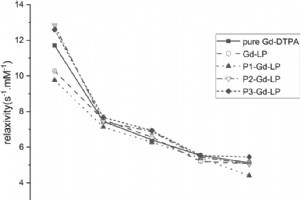
Abstract Magnetic resonance imaging (MRI) is indispensable for early tumor diagnosis, yet its inherent lack of specificity limits clinical impact. By harnessing angiogenesis as a molecular imaging target, contrast agents can be delivered directly to neovasculature via receptor‑specific carriers. W
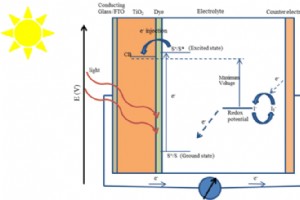
AbstractDye‑sensitized solar cells (DSSCs) are a promising class of thin‑film photovoltaics that combine low manufacturing cost, simple processing, and minimal toxicity. Despite their early promise, current DSSC efficiencies (≈12 %) still lag behind first‑ and second‑generation silicon and CIGS tech
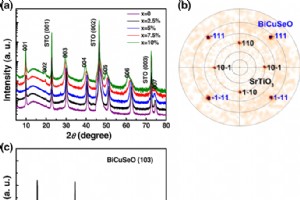
AbstractWe report the epitaxial growth of c-axis‑oriented Bi1−xBaxCuSeO thin films (0 ≤ x ≤ 10 %) and examine how Ba substitution influences their structure, valence states, and thermoelectric behavior. X‑ray photoelectron spectroscopy shows partial reduction of Bi3+ to a lower valence state upon Ba

Abstract Silicon nanocrystals (SiNCs) exhibit complex luminescence dynamics that arise from size‑dependent radiative and non‑radiative rates, inhomogeneous broadening, and inter‑particle interactions. These factors generate non‑exponential decay profiles, typically modeled by a stretched exponential
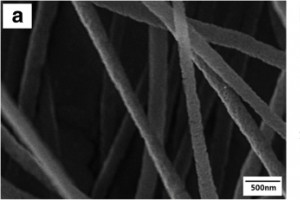
AbstractElectrospun polyurethane (PU) nanofibers were fabricated and examined using atomic force microscopy (AFM) to quantify their mechanical behavior. A three‑point bending test, performed on individual fibers, revealed a Young’s modulus of approximately 25 GPa for ~150 nm diameter fibers at room
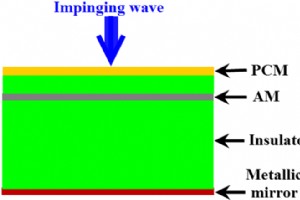
Abstract 0.9 over 2.11–3.63 THz, peaking at 53 % at 2.87 THz. In absorption mode (μc = 0.7 eV), the absorptivity exceeds 80 % across 1.59–4.54 THz, reaching 96.4 % at 3.06 THz. The underlying physics, switching mechanism, and parametric robustness are examined, highlighting the MFD’s suitability for
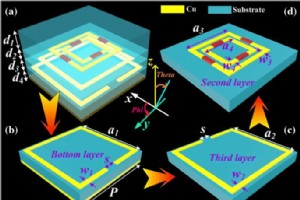
AbstractWe present a novel ultra‑wideband perfect metamaterial absorber (PMA) that integrates multilayer dielectric stacks, metallic double split‑ring resonators (MDSRR), and strategically placed lumped resistors. The design achieves absorptivity exceeding 80 % across 4.52–25.42 GHz (20.9 GHz bandwi
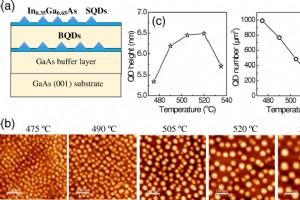
AbstractWe investigate the optical response of InGaAs surface quantum dots (SQDs) incorporated into a composite nanostructure that also contains buried quantum dots (BQDs) separated by a thick GaAs spacer. By tuning the substrate temperature during growth, we systematically vary the areal density of
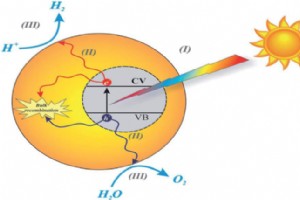
Abstract Graphitic carbon nitride (g‑C3N4) has emerged as a leading material for photocatalytic applications—including CO2 reduction, water splitting, and removal of organic pollutants—as well as for field‑emission technologies. This mini‑review examines recent advances in the crystal structure, sy
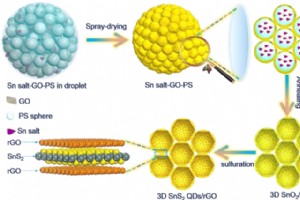
AbstractMetal dichalcogenides such as SnS₂ suffer from severe capacity fade due to volume pulverization and poor conductivity. We report a scalable spray‑drying and sulfidation route that produces a 3‑D honeycomb‑like reduced graphene oxide (rGO) scaffold uniformly decorated with ~6 nm SnS₂ quantum
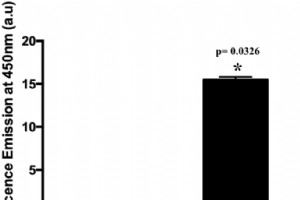
AbstractProtein glycation in diabetic plasma generates advanced glycation end products (AGEs) that drive disease progression. We glycated haemoglobin A0 (HbA0) in vitro using fructose, then used the resulting glycated protein as a template for gold nanoparticle (GNP) synthesis. The surface‑plasmon r
Nanomaterials