Industrial manufacturing
Nanomaterials

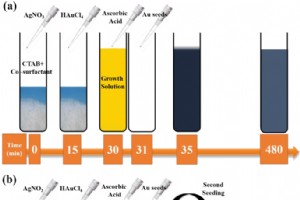
AbstractGold nanostructures (Au NSs) with controlled size and shape are emerging as versatile tools for nanomedicine. However, the cellular fate of different geometries remains poorly understood, particularly in aggressive cancers such as glioblastoma. Here we synthesized five distinct Au NSs—nanoro

AbstractLeveraging the abundant reticular proteins and reducing functional groups in eggshell membrane (ESM), we have developed a single‑step, green route to synthesize manganese dioxide (MnO₂) nanoparticles from potassium permanganate. In this process, ESM simultaneously serves as a template and re
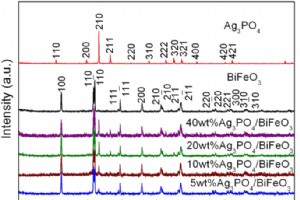
Abstract We present a facile, scalable synthesis of Ag3PO4 microparticles deposited on BiFeO3 microcuboids, forming p‑Ag3PO4/n‑BiFeO3 heterojunctions. Under visible‑light irradiation, these composites achieve markedly higher photocatalytic degradation of Acid Orange 7 (AO7) compared with bare BiFeO3
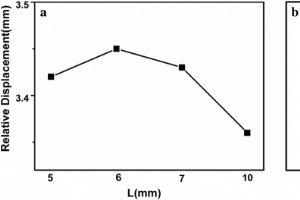
AbstractWe report a wireless magnetoelastic immunosensor that achieves unprecedented sensitivity for carcinoembryonic antigen (CEA) detection. By optimizing micro‑chip dimensions through simulation and experimentation, and leveraging gold nanoparticle (AuNP) amplification together with a biocompatib
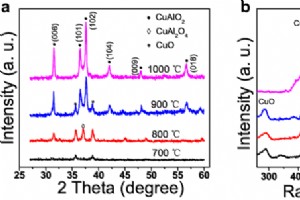
AbstractAlthough n‑type metal‑oxide TFTs have dominated the field, high‑performance p‑type devices remain scarce. In this study we report a scalable, solution‑based route to fabricate nanocrystalline CuAlO₂ thin films by spin‑coating, followed by post‑annealing in nitrogen at temperatures up to 1000
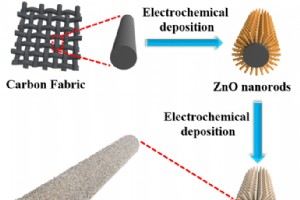
AbstractZnO@NiO core–shell heterostructures, fabricated by electrochemical deposition onto carbon fiber cloth, exhibit superior photocatalytic activity and excellent reusability. Their performance was evaluated by monitoring the UV‑induced degradation of rhodamine B and methyl orange. Compared with
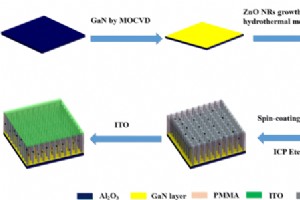
AbstractWe fabricated a novel isotype heterojunction ultraviolet photodetector by growing n‑ZnO nanorod arrays on n‑GaN thin films and spin‑coating graphene quantum dots (GQDs). Under 365 nm illumination, the hybrid detector demonstrates a rapid photoresponse—rise time 100 ms, decay 120 ms—alongside
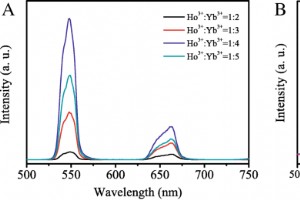
Abstract A sol‑gel synthesized Ho3+‑Yb3+‑Mg2+ tri‑doped TiO2 (UC‑Mg‑TiO2) demonstrates markedly enhanced up‑conversion fluorescence when Mg2+ is incorporated. The material was applied as a thin interlayer on the electron‑transport layer (ETL) of perovskite solar cells (PSCs). Devices incorporating U

AbstractThe morphologies and microstructures of Au-catalyzed InGaAs nanowires (NWs) prepared by a two-step solid-source chemical vapor deposition (CVD) method were systematically investigated using scanning electron microscopy (SEM) and high-resolution transmission electron microscopy (HRTEM). The d
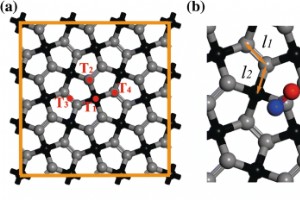
AbstractUsing density functional theory, we examined how the six gases CO, H2O, H2S, NH3, SO2, and NO bind to pristine penta‑graphene (PG). All gases except CO are physically adsorbed, showing moderate adsorption energies and charge transfer. NO, however, is chemically bound, causing notable deforma

Abstract Two‑dimensional (2D) materials are increasingly recognized as key components in next‑generation sensing technologies. This study presents a comprehensive analysis of carrier transport in MoS₂ Schottky diodes fabricated with asymmetric metal contacts—platinum (Pt) and aluminum (Al)—under bot
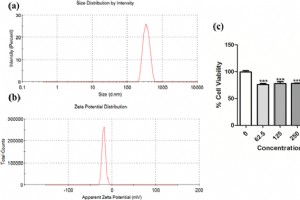
AbstractNanotechnology has been developing rapidly and is now used in many cutting-edge medical therapeutics. However, there is increasing concern that exposure to nanoparticles (NPs) may induce different systemic diseases as epigenetic mechanisms are associated with more and more disease. The role
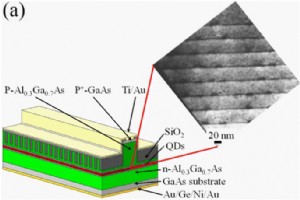
AbstractIn this paper, a laterally coupled distributed feedback (LC-DFB) laser based on modulation p-doped multiple InAs/GaAs quantum dot (QD) structures has been fabricated. The device exhibits a high side-mode suppression ratio (SMSR) of > 47 dB and a high thermal stability of dλ/dT = 0.092 nm/
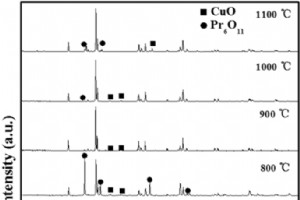
AbstractTetragonal Pr2CuO4 nanosheets, ~60 nm thick, were produced by coordination‑compound methods (CCMs) and demonstrate exceptional selective adsorption of malachite green (MG) in aqueous media. The material was comprehensively characterized by XRD, SEM, HRTEM, XPS, UV‑Vis DRS, and BET analyses.

AbstractWe present the self‑seeded metal‑organic chemical vapor deposition (MOCVD) growth of InGaAs/InP core–shell nanowires on Si‑(111) substrates, followed by a detailed optical and structural analysis. The substantial lattice mismatch between the InGaAs core and the InP shell introduces pronounce
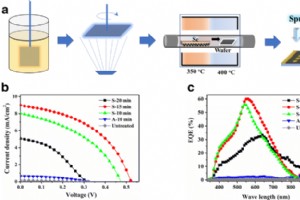
Abstract Thermal instability of Sb₂S₃ in vacuum limits the deposition of high‑quality crystalline films, which in turn hampers photovoltaic performance. We employed a short‑time selenylation post‑treatment to enhance the optoelectronic properties of Sb₂S₃ planar heterojunction solar cells. A mere 15

AbstractLeukemia, a hematologic malignancy marked by unchecked proliferation of white blood cells, continues to challenge clinicians with limited therapeutic options and high toxicity from conventional chemotherapy. Here we report the design, synthesis, and biological evaluation of transferrin‑decor

AbstractWe present a facial electrospinning technique that precisely deposits magnetic polyurethane (PU) nanofibers decorated with superparamagnetic γ‑Fe₂O₃ nanoparticles. A conical aluminum auxiliary electrode extends the jet‑stabilization zone, enabling four‑fold control over deposition area. The
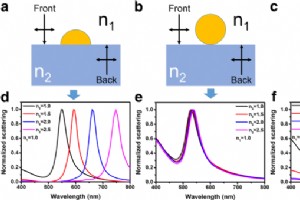
AbstractThree kinds of typical structures, hemi-/spherical nanoparticles/nanoparticle dimers on the substrate and spherical nanoparticles/nanoparticle dimers half-buried into the substrate, are used for FDTD simulation to theoretically discuss the influence of the substrate to the localized surface
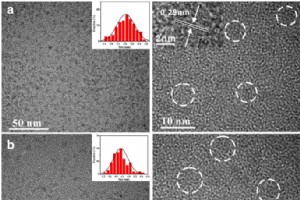
Abstract We report the first synthesis of dual‑emissive, color‑tunable Mn‑doped InP/ZnS quantum dots (Mn:InP/ZnS QDs) that exhibit an absolute photoluminescence quantum yield (PL QY) of up to 78 %. The dual emission—comprising an intrinsic InP core band and a Mn‑doped defect band—can be precisely tu
Nanomaterials