Industrial manufacturing
Nanomaterials

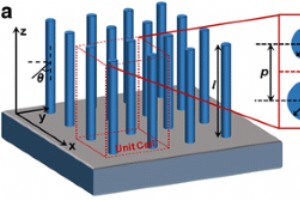
AbstractSolar cells based on subwavelength-dimensions semiconductor nanowire (NW) arrays promise a comparable or better performance than their planar counterparts by taking the advantages of strong light coupling and light trapping. In this paper, we present an accurate and time-saving analytical de
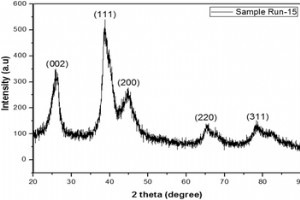
Abstract This study introduces a novel anodic PdAu/VGCNF catalyst designed to improve glycerol electro‑oxidation in alkaline fuel cells. By systematically varying catalyst loading, electrolyte temperature, and NaOH concentration, the optimal operating window was identified using response‑surface met

AbstractSi‑coated SiC (Si‑SiC) nanocomposite particles were synthesized via non‑transferred arc thermal DC plasma from solid‑state SiC powder. These particles were employed as sintering additives in spark plasma sintering (SPS) of micron‑sized SiC. The optimal 10 wt % Si‑SiC loading, combined with 0
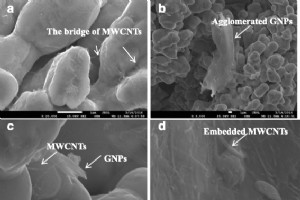
AbstractCombining one‑dimensional multi‑walled carbon nanotubes (MWCNTs) with two‑dimensional graphene creates a synergistic interface that enhances the dispersion, wettability, and bonding of reinforcement particles in a copper matrix. Using mechanical alloying, vacuum hot‑pressing (VHP), and hot i
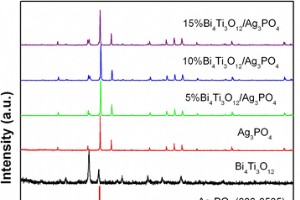
Abstract We report the synthesis of Bi4Ti3O12/Ag3PO4 heterojunction nanocomposites via an ion‑exchange route. Comprehensive characterization (XRD, SEM, TEM, BET, XPS, UV‑vis DRS, PL, EIS, photocurrent) confirms intimate interfacial contact and efficient charge separation. When evaluated for Rhodamin

AbstractA novel triphenylphosphine‑based porous polymer (TPDB) with an exceptionally high Brunauer–Emmett–Teller (BET) surface area was constructed via Friedel–Crafts alkylation of triphenylphosphine and α‑dibromo‑p‑xylene. Subsequent post‑functionalization with 3‑bromo‑1‑propanol (BP) and triethano
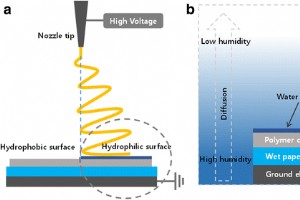
AbstractWe present a straightforward technique that enables electrospinning of polymers onto flexible, non‑conductive substrates by harnessing surface wettability and controlled humidity. By elevating the local relative humidity around a plasma‑treated, hydrophilic polymer surface, water monolayers
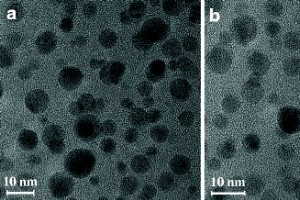
AbstractWe report a straightforward hydrothermal method for producing fluorescent carbon quantum dots (CQDs) from tofu‑production wastewater. Two CQD variants were obtained: CQDs‑1, synthesized in deionized water, emit blue fluorescence under UV light, while CQDs‑2, prepared in a NaOH solution, emit

AbstractRecent work in the field of nanotechnology and animal nutrition has highlighted the promise of nano‑selenium (nano‑Se) as a highly bioavailable supplement for poultry and other monogastric species. A recent comprehensive review in the Nanoscale Research Letters detailed the production routes
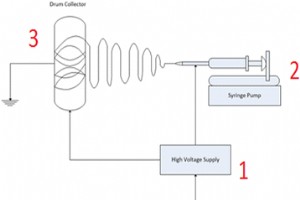
AbstractPlatinum remains the benchmark catalyst for direct methanol fuel cells (DMFCs), yet it suffers from rapid poisoning by carbonaceous intermediates, which degrades cell performance. In this work, we report the fabrication of a TiO₂–carbon nanofiber (CNF) support engineered by electrospinning,
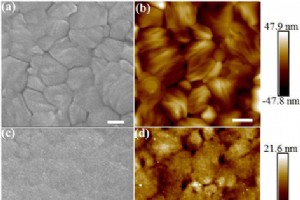
AbstractOrganic/inorganic hybrid perovskite solar cell has emerged as a very promising candidate for the next generation of near-commercial photovoltaic devices. Here in this work, we focus on the inverted perovskite solar cells and have found that remarkable photovoltaic performance could be obtain
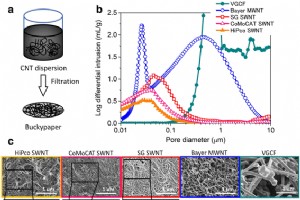
AbstractWe present a mercury‑intrusion porosimetry technique that quantifies the full spectrum of pores—micropores (50 nm)—formed within carbon‑nanotube (CNT) agglomerates. By examining CNTs of varying diameters and wall numbers, we demonstrate that larger diameters and multi‑wall structures broaden
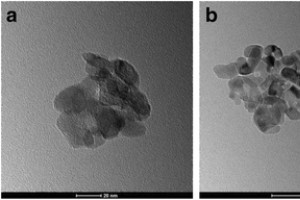
AbstractThis study experimentally investigates the flow and heat‑transfer performance of TiO₂‑water nanofluids with varying nanoparticle mass fractions in both spirally fluted and smooth stainless‑steel tubes over a wide Reynolds‑number range. Stability is assessed using a novel transmittance method
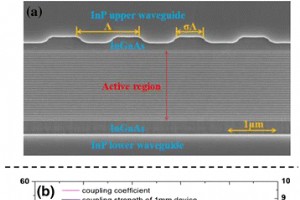
AbstractIn the present work, an ultra-low power consumption substrate-emitting distributed feedback (DFB) quantum cascade laser (QCL) was developed. The continuous-wave (CW) threshold power dissipation is reduced to 0.43 W at 25 °C by shortening the cavity length to 0.5 mm and depositing high-reflec
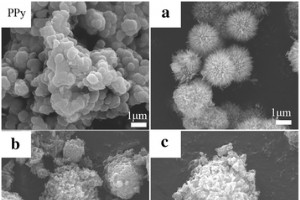
AbstractMnO₂@PPy core–shell micromaterials were synthesized by in situ chemical polymerization of pyrrole on the surface of manganese dioxide. The resulting polypyrrole (PPy) forms a uniform, tunable organic shell that encapsulates the MnO₂ core. Comprehensive characterization by SEM, FT‑IR, XPS, TG
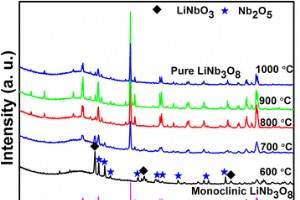
AbstractLiNb3O8 powders with a hollow morphology were fabricated via a hydrothermal synthesis followed by a controlled sintering step. The formation of voids arises from lithium volatilization during calcination, yielding aggregates with pronounced cavities. Among the series of samples, the 700 °C‑t

AbstractWe report a streamlined successive ionic layer adsorption and reaction (SILAR) combined with a hydrothermal route to fabricate CdS nanoparticle‑modified α‑Fe₂O₃/TiO₂ nanorod arrays for photoelectrochemical (PEC) water oxidation. The integration of a CdS/α‑Fe₂O₃/TiO₂ ternary system significan
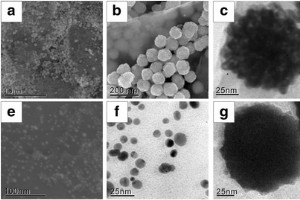
AbstractDirect ethanol fuel cells (DEFCs) demand robust, low‑cost catalysts that resist CO poisoning. We report a one‑pot synthesis of flower‑like palladium‑copper (Pd‑Cu) alloy nanoparticles anchored on reduced graphene oxide (Pd‑Cu(F)/RGO). Structural analysis by SEM, TEM, XRD, XPS, and EDS conf
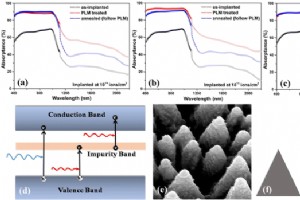
AbstractImpurity‑mediated near‑infrared (NIR) photoresponse in silicon is a key objective for next‑generation photovoltaics and photodetectors. In this study, we fabricated a series of n+/p photodiodes by combining sulfur ion implantation with femtosecond pulsed laser melting (PLM). The resulting

AbstractRadiation therapy for liver cancer is constrained by the liver’s low tolerance to ionising radiation, making radiosensitizers essential to lower required doses. AGuIX nanoparticles—ultra‑small, gadolinium‑based carriers—are uniquely suited to deliver radioisotopes or fluorophores for SPECT,
Nanomaterials