Industrial manufacturing
Nanomaterials

AbstractFaced with a growing global energy crisis, renewable sources are increasingly critical. Solar energy, abundant and inexpensive, remains the most promising candidate. Despite decades of progress in high‑performance photovoltaic (PV) devices, the high cost of modules limits widespread deployme
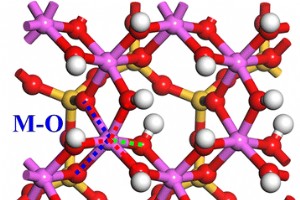
AbstractUsing dispersion‑corrected density functional theory (DFT‑D2), we investigated kaolinite nanoclays doped with transition metals Cr, Mn, Fe, and Co. The study examined how these dopants modify the crystal geometry and electronic structure, evaluating ferromagnetic (FM), antiferromagnetic (AFM
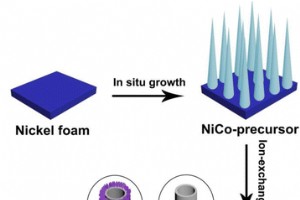
AbstractCore‑shell architectures combine the merits of both core and shell materials, delivering enhanced conductivity and enlarged surface area—key attributes for next‑generation energy storage. Here, we report a hierarchical NiCo₂S₄@NiMoO₄ core‑shell heterostructure grown as a nanotube array direc
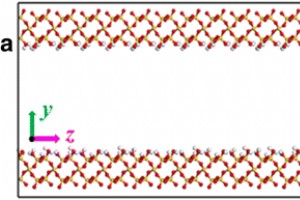
AbstractThis study employs molecular dynamics simulations to elucidate how surface interactions influence oil transport in nanochannels. We find that the channel width, oil polarity, material composition, and surface roughness all markedly affect the center‑of‑mass (COM) displacement and diffusion o
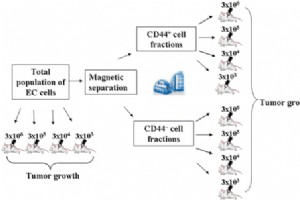
AbstractTargeting cancer stem cells (CSCs) is central to contemporary oncology. Using the Ehrlich carcinoma (EC) model, we identified CD44⁺/CD24⁻ cells as the dominant CSC subpopulation, exhibiting a ten‑fold higher tumorigenicity than CD44⁻ cells. A hybrid nanocomplex comprising GdYVO₄:Eu³⁺ orthova
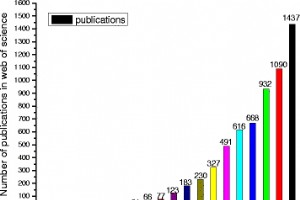
AbstractNanofluids, suspensions of sub‑100‑nm particles, have become a leading research frontier over the past three decades. While broad reviews cover many nanofluid systems, a focused analysis of TiO₂ nanofluids—renowned for their exceptional dispersibility, chemical stability, and non‑toxicity—of
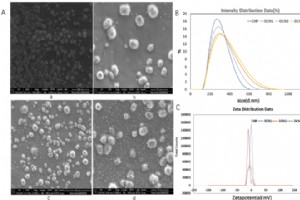
AbstractAlzheimer’s disease (AD) treatments often fail to reach therapeutic concentrations in the brain because of the blood–brain barrier (BBB). We engineered a cholesterol‑modified pullulan (CHP) nanoparticle loaded with the acetylcholinesterase inhibitor donepezil (DZP) and coated its surface wit
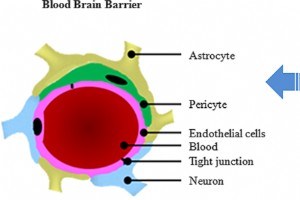
AbstractTargeting drugs to the brain remains a formidable challenge, largely due to the blood–brain barrier (BBB). This barrier is a sophisticated network of capillaries that tightly regulates entry of substances into the central nervous system. Consequently, a deep understanding of BBB physiology i

AbstractGlobal food security faces mounting pressure from pesticide residues, heavy‑metal contamination, and toxic elemental particles that compromise soil, water, and crop quality. These contaminants pose serious health risks—neurotoxicity, carcinogenicity, and metabolic disorders—affecting an est
AbstractMolybdenum disulfide (MoS2) has moderate hydrogen adsorption free energy, making it an excellent alternative to replace noble metals as hydrogen evolution reaction (HER) catalysts. The thickness of MoS2 can affect its energy band structure and interface engineering, which are the avenue way
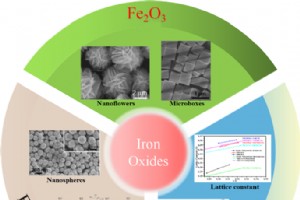
AbstractThe demand for green and efficient energy storage devices in daily life is constantly rising, which is caused by the global environment and energy problems. Lithium-ion batteries (LIBs), an important kind of energy storage devices, are attracting much attention. Graphite is used as LIBs anod
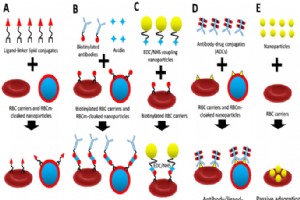
Abstract The use of cells as carriers to encapsulate chemotherapy agents has emerged as a promising strategy in oncology. By reducing systemic toxicity, improving tumor targeting, and enhancing drug penetration, cell‑based delivery systems offer significant clinical potential. Recent advances have d
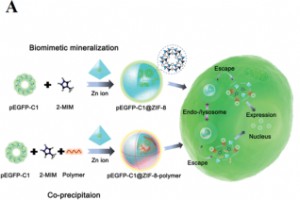
AbstractNanoparticle carriers can modulate drug hydrophilicity, influencing cellular uptake and reducing off‑target effects. Metal–organic frameworks (MOFs), crystalline porous nanomaterials assembled from metal ions and organic linkers, offer biodegradability, tunable pore size, and versatile surfa
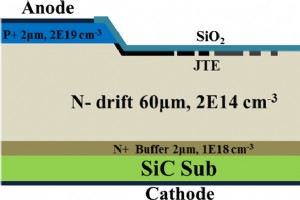
AbstractThis study investigates the impact of 184.9 nm ultraviolet (UV) irradiation on the static performance of high‑voltage 4H‑SiC PiN diodes. Forward conduction characteristics remain virtually unchanged after exposure, whereas the reverse blocking voltage rises markedly. TCAD simulations attribu

Abstract Reactive oxygen species (ROS) possess a dual nature: essential for cellular signaling yet lethal at elevated concentrations. By deliberately elevating ROS in tumors, nanomedicine can selectively trigger oxidative stress that leads to cancer cell death. This review surveys recent nanotechnol
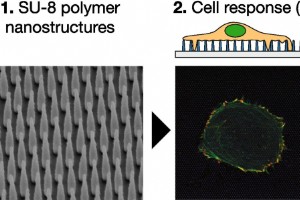
AbstractBackgroundWe investigate how arrays of polymer nanopillars on glass influence the actin cytoskeleton and focal adhesion (FA) organization in U2OS osteosarcoma cells. Our analysis reveals three distinct cellular regimes—full substrate contact, peripheral adhesion, and suspension on pillars—de

AbstractBrucellosis remains the most common bacterial zoonosis worldwide. Conventional diagnostics—culture, serology, and PCR—suffer from long turnaround times, limited sensitivity, or cross‑reactivity. Here we present a gold‑nanoparticle localized surface plasmon resonance (LSPR) nanobiosensor that
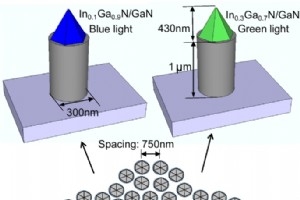
AbstractWe report large‑area, high‑quality multicolor emission from a 12‑fold symmetric GaN photonic quasicrystal nanorod array fabricated via nanoimprint lithography and a regrowth process. Optical pumping of In_xGa_{1‑x}N/GaN multiple quantum wells (MQWs) produces efficient blue (460 nm) and green
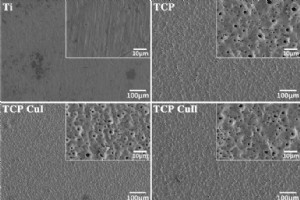
AbstractTitanium alloys are the benchmark for orthopedic implants due to their strength and biocompatibility. However, their inert surfaces can impair osseointegration, leading to implant loosening. In this study, we fabricated a copper‑doped titanium dioxide (Cu–TiO2) microporous coating on titaniu
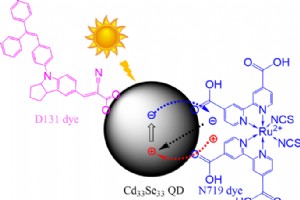
AbstractQuantum‑dot (QD) dye composites are promising for next‑generation photovoltaics, yet the interfacial electronic environment often limits charge‑transfer efficiency. In this study we employed density‑functional theory (DFT) to probe how the co‑adsorption of the broadband‑absorbing D131 dye i
Nanomaterials