


Industrial manufacturing
Resin
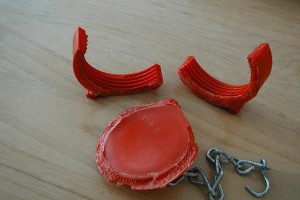
Nothing beats the frustration of a plastic fastener failing after installation. Plastic fasteners can fail in many ways—cracking, creeping, deforming, or fading. Unlike metal, which yields before breaking, plastic snaps under excess load. Factors such as UV exposure, chemicals, water, and salt can
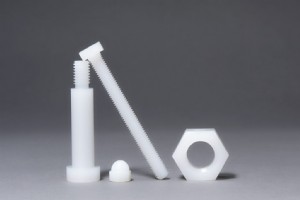
Plastic screws: why consider them? Even if metal has served you well, plastic offers unique advantages that can improve performance, reduce weight, and cut costs. Below are eight evidence‑based reasons why plastic hardware deserves a place in your product line. 1) Superior chemical resistance. Plast

Plastic materials are often assumed to be perfect insulators, yet many are engineered to manage electrostatic charge. This guide explains how anti‑static, dissipative, and conductive plastics are formulated, classified, and used across high‑risk industries. Electrostatics in Everyday Materials When

Understanding what makes a plastic truly clear requires a scientific lens. Below we break down the two key metrics that experts use to evaluate optical transparency in plastics and other materials. 1. Refractive Index The refractive index (n) quantifies how light bends as it travels through a substa

Fiber‑reinforced plastics (FRPs) combine high‑strength fibers with polymer matrices, yielding composites that outperform standard plastics in tensile strength, stiffness, and thermal resistance. Performance gains are dictated by fiber properties, matrix chemistry, fiber volume fraction, and alignme

History of Plastic Manufacturing Plastics have evolved dramatically since Alexandre Parkes first introduced Parkesine in 1862—a cellulose‑based, semi‑synthetic thermoplastic. Although Parkesine fell out of favor as production costs rose, the industry quickly pivoted to new synthetic resins, cellopha

For industries seeking a cost‑effective yet innovative engineering solution, plastic bearings can deliver unmatched performance. Manufacturers rely on a variety of materials for bearing components, and plastic consistently ranks at the top due to its ability to be engineered for optimal life and per
Fiber‑reinforced plastic (FRP), also called fiber‑reinforced polymer, is a composite material that blends a polymer matrix with reinforcing fibers such as basalt, carbon, glass or aramid. In some cases, asbestos, wood or paper fibers are also used. How FRPs Are Made Polymer formation begins with eit

One of the most widely used plastics today, nylon was first patented in 1935 by Wallace Carruthers, a chemist at Dupont®. Nylon is a thermoplastic derived from petrochemicals. It is semi‑crystalline, containing both amorphous and crystalline domains. When heated, it remains rigid until it reaches it

Ultrasonic welding is a precision bonding technique that fuses two identical or chemically compatible plastic parts using high‑frequency ultrasonic vibrations. Within seconds, it creates a solid‑state, gas‑tight, water‑tight joint without the need for screws, glue, or solder. The resulting parts can
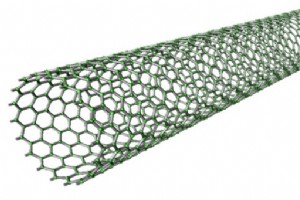
Polymer nanocomposites are reshaping modern plastic technology. A nanocomposite consists of nanoscale fibers—particles ranging from 1 to 100 nm—embedded within a continuous matrix or resin. When these nanoparticles are dispersed throughout a plastic resin, the resulting material behaves like a nea

Most metric fasteners are made to the DIN standard—but what does DIN stand for? Just as the American National Standards Institute (ANSI) was established to promote voluntary standards and industry conformity in the U.S., the German counterpart—DIN—was founded in 1917 in Berlin. Its name, Deutsches I
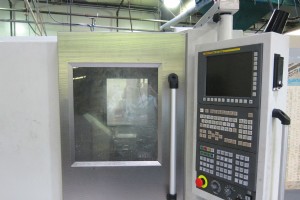
Today every machine that once operated without the benefit of CNC machining has been retrofitted with servo motors and a programmable controller or computer. But how were parts produced before CNC arrived? Half a century ago, transistors were not yet commonplace. The rise of transistor radios in the

As Independence Day approaches, I’m highlighting ten American inventions that have profoundly shaped manufacturing. Happy 238th Birthday, USA! 1) Interchangeable Parts Eliminating the need to build each machine from scratch, interchangeable parts became a cornerstone of mass production. Eli Whitney

A long-time Craftech customer, the American Printing House for the Blind (APH) in Louisville, KY has been producing tactile materials since 1858. The organization began with a single printing press that produced tactile books. In 1879, the federal Act to Promote the Education of the Blind designated

Plastic fasteners can accumulate a static charge when they rub against each other or the storage bag, creating a risk of contamination. Most of us have felt the familiar shock from walking across a carpet and touching a metal doorknob, or the cling on a freshly dried garment. That everyday phenomeno

Part I: Inorganic Mineral Fillers in Plastic Hardware When we encounter everyday plastic products—be it a piece of hardware or a simple plastic comb—we often assume they are composed entirely of polymer. However, the reality is more complex: up to 70% of the volume in many plastics can be organic or

Plastics are inherently flammable, which is why manufacturers routinely incorporate flame‑retardant additives to meet safety regulations and protect consumers. Flame‑retardant plastic additives are specialized compounds that inhibit, suppress, or delay combustion. They are most effective during the

Part II: Organic Fillers in Plastic Hardware Could organic materials be the future of plastic manufacturing when the oil runs out? Since plastics are petroleum‑based, what happens when oil supplies dwindle? Imagine the profound impact on everyday products—cell phones, computers, clothing, shoes, f

Plastic engineers who haven’t yet discovered TED Talks deserve a quick introduction. The TED platform hosts thousands of short, under‑20‑minute talks by world‑renowned innovators and thinkers. Listening to their insights can spark fresh ideas and deepen your expertise—ideal for a lunch‑break learnin
Resin

Harnessing Reactive Oxygen Species Toxicity for Advanced Tumor Therapy: Nanoparticle Strategies and Clinical Outlook

Accelerate COVID‑19 Drug Repurposing with BIOVIA Living Map

10 Proven Strategies to Maximize Robot Welding Efficiency & Consistency

PETG Filament Explained: Features, Benefits, and Printing Tips

