



Tachogenerators: Precision Speed Measurement for Industrial Motors and Equipment
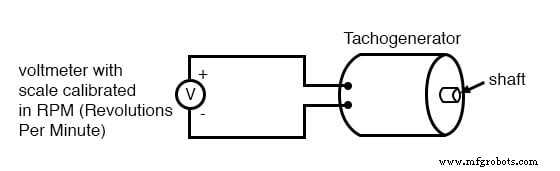
A tachogenerator is a specialized electromechanical generator that converts shaft rotation into a precise voltage signal. By measuring this voltage, engineers can accurately determine rotational speed and direction in real time.
When the shaft turns, the generator produces a voltage roughly proportional to its speed. High‑precision tachogenerators are engineered so that, over a specified range of speeds, the output voltage is linear and highly accurate—making them ideal for speed measurement in motors, engines, conveyors, mixers, fans, and other mechanical systems.
Most tachogenerators are designed to produce a 0‑to‑10 V signal. Because the device generates no voltage when idling, the zero‑voltage level is not considered “live”; the scale starts once the shaft begins to turn. Manufacturers offer units with different full‑scale speeds (e.g., 0‑10 V up to 10 000 rpm) to match the application’s requirements. While a voltage divider can theoretically extend the measurable range, over‑speeding a precision instrument shortens its service life and is therefore discouraged.
In addition to speed, tachogenerators can indicate rotational direction through polarity. A permanent‑magnet DC generator changes the sign of its output voltage when the shaft is reversed, providing a simple and reliable method for detecting direction in control systems.
Typical applications include:
- Electric motor speed monitoring
- Engine RPM measurement
- Conveyor belt velocity control
- Machine tool spindle speed feedback
- Industrial fan speed regulation
For further learning, refer to the DC Generator Theory Worksheet.
Industrial Technology
- Exploring Voltage Addition with Series Battery Connections
- Voltage Divider Lab: Design, Measurement, and Kirchhoff’s Voltage Law Verification
- Thermoelectricity: Understanding Thermocouples and the Seebeck Effect
- Potentiometric Voltmeter: Precise Voltage Measurement with Minimal Loading
- Build a Potato Battery: A Step‑by‑Step Guide to DIY Electrochemical Power
- Low‑Voltage AC Power Supply: Phase‑Shift Circuit Components & Best Practices
- Voltage Regulator Experiment with a 12‑Volt Zener Diode
- Voltage Follower Amplifier: Design, Build, and Measurement Guide
- Designing a High‑Gain Multi‑Stage Common‑Emitter Amplifier with Negative Feedback
- Understanding AC Waveforms: Sine Waves, Frequency, and Oscilloscope Basics