



Surge Suppressors: Expert Protection for Electronics
Background
According to the Institute of Electrical and Electronics Engineers (IEEE), power‑line disturbances—surges that can damage plugged‑in devices—occur roughly four times daily. Lightning, weather, traffic accidents, heavy industrial equipment, voltage fluctuations from utilities, and high‑frequency noise all contribute to these harmful spikes. A surge suppressor diverts excess current to ground, protecting devices even when they’re powered off.
History
The first commercial surge suppressor was introduced by General Electric in the 1950s, with parallel developments in Japan. Early models relied on selenium rectifiers and later on carbon piles. Modern suppressors use spark‑gap, gas‑tube, metal‑oxide varistor (MOV), or silicon avalanche (TVS) technologies, each chosen for its material properties and operating environment.
Transient‑voltage suppressors (TVS) clamp reverse‑bias voltage, breaking down when the applied voltage exceeds the device’s rated avalanche level. A single TVS protects DC circuits; two back‑to‑back devices secure AC systems.
Gas‑tube suppressors are ideal for communications and power‑line interfaces. When a surge occurs, the contained gas ionizes, creating a conductive path that shorts the surge to ground, then de‑ionizes to reset the device.
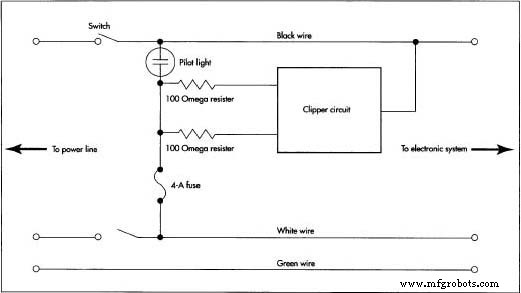
MOVs use varistors that clamp voltage spikes on both positive and negative halves of an AC waveform. When the applied voltage surpasses the MOV’s rating, it conducts, diverting excess energy into the varistor’s absorbent core and sparing downstream equipment.
Raw Materials
A gas‑tube suppressor’s core is a ceramic or metal cylinder filled with controlled‑gas. Copper or copper‑silver alloy brazing washers secure the ends, while thin‑walled electrodes (often Kovar) and getter material maintain a stable internal atmosphere.
An MOV suppressor incorporates ceramic varistor discs, balanced toroidal chokes, high‑frequency capacitors, and VHF filters. These components sit on a rigid, non‑conductive circuit board—typically fiberglass—providing electromagnetic shielding and mechanical support.
The Manufacturing Process
Gas‑tube Suppressor
- 1. Metallize tube ends with conductive copper.
- 2. Attach brazing washers.
- 3. Insert thin‑walled electrodes with radial flanges.
- 4. Heat the assembly to braid components and evacuate the interior.
- 5. Line with getter material to absorb residual gases.
MOV Suppressor
- 6. Metallize the circuit board (copper foil or deposition).
- 7. Etch slots for resistors and capacitors.
- 8. Solder MOVs, toroidal chokes, and capacitors.
- 9. Attach outlets, on/off switch, and secure the unit in a plastic or metal enclosure with ventilation.
Quality Control
Electrical equipment in the United States must meet IEEE standards accredited by the American National Standards Institute. Underwriters Laboratories (UL) independently tests products, awarding a UL seal that signals compliance and a rating that reflects performance. The UL mark on a surge suppressor guarantees rigorous safety and reliability testing.
The Future
Because the core design of surge suppressors is straightforward, innovation focuses on enhancing functionality and user convenience. While MOV units remain the dominant choice for home and commercial protection, newer models now offer features such as integrated phone‑line filtering, expanded outlet configurations, durable aluminum housings, and diagnostic LED indicators. As the demand for sensitive electronics—especially computers and telecom gear—continues to rise, surge suppressors are becoming an indispensable safeguard.
Manufacturing process
- Hands‑On Guide to Current Dividers: Build, Measure, and Simulate with a 6 V Battery
- Common-Emitter Amplifier Limitations: Distortion, Temperature, and High‑Frequency Challenges
- Insulated‑Gate Bipolar Transistors (IGBTs): Merging FET Precision with BJT Power
- DIAC: The Bidirectional Trigger for AC Thyristors
- Understanding Electrical Resistance and Circuit Safety
- Understanding Meter Design: From Classic Galvanometers to Modern Digital Displays
- Current Signal Systems: The 4‑20 mA Loop Explained
- Branch Current Method: A Step‑by‑Step Guide to Solving Circuit Networks
- Norton’s Theorem: Simplifying Linear Circuits with Current Sources and Parallel Resistance
- Understanding Battery Capacity: Amp-Hour Ratings and Condition Testing