


Industrial manufacturing
Industrial equipment

Turning is a foundational machining technique employed across manufacturing to shape metal parts. Unlike milling, it uses a stationary cutting tool that removes material from a rotating workpiece, gradually sculpting the final geometry. Here are five key facts that illuminate the importance and nu
Have you ever noticed faint, repeating lines on a finished 3D‑printed part? Those lines are known as ringing (or ghosting)—a common surface defect that can mar the quality of even the most precise prints. Understanding why ringing occurs and how to stop it is essential for any printer owner who d
Alligator shears, also known as crocodile shears, are specialized cutting machines that deliver precise, clean cuts on sheet metal, rebar, beams, and piping. Their distinctive hinged “mouth” design allows a powerful hydraulic cylinder to press a straight blade directly onto the workpiece, ensurin
3D printing has revolutionized rapid prototyping, but when the goal is to create components measured in micrometers, a specialized technique—3D microfabrication—is required. These dedicated printers combine the precision of traditional 3D printing with the power of laser or UV technology to build
Metal is routinely shaped after smelting to enhance strength, durability, ductility, and other physical attributes. While most traditional metalworking relies on heat, cold working—performed at or near room temperature—offers a distinct set of benefits. In this article we define cold‑worked metal,

3D printing has become a cornerstone of modern manufacturing, ranking as the most widely used prototyping method in the industry. Whether you’re refining a product design or testing a new concept, the process typically follows three core steps: modeling, printing, and finishing. Below, we break do
The Basics of Vulcanized Rubber Vulcanized rubber refers to any rubber that has been hardened through a controlled heat and sulfur treatment. During this curing process, the elastomer chains cross‑link, enhancing both strength and elasticity. The result is a material that resists tearing, deformatio
While most 3D‑printing techniques deposit solid material layer by layer, a growing subset—liquid additive manufacturing—employs liquefied polymers to build objects. By heating silicone rubber or other elastomers, these printers can extrude a liquid that solidifies into a robust part. What Is Liq
Permanent mold casting—also known as sandless casting—relies on a reusable steel or graphite mold to produce complex, high‑quality parts. Because the mold is reused, the process delivers tight dimensional control and excellent surface finish across multiple cycles. There are four main techniques u
Have you explored binder jet 3D printing—also known as drop‑on‑powder printing? This additive manufacturing technique has become a go‑to alternative for creating prototypes and finished parts, especially when speed, cost, and material versatility matter. Below we break down the science, workflow,
Welding is a staple fabrication technique that fuses metal parts by applying heat. When heated, metals melt into a liquid, allowing the surfaces to intermix. The resulting bond hardens upon cooling. Cold welding, however, achieves a similar bond without ever raising the temperature of the workpiec
Rubber pad forming may sound like a rubber‑based process, but it’s actually a sophisticated metalworking technique. It uses engineered rubber pads to flex and shape sheet metal without compromising its finish. Understanding Rubber Pad Forming As a form of deep‑drawing, rubber pad forming excels at
3D printing has surged in popularity, with the global market now worth over $21 billion—up from $4.4 billion in 2012. While the technology empowers both large manufacturers and hobbyists to produce prototypes and finished parts, it can also suffer from a subtle but costly flaw known as ghosting. W
Die casting remains a cornerstone of modern manufacturing, enabling the production of intricate metal components with exceptional dimensional accuracy. While alternative forming methods exist, die casting delivers unmatched precision by injecting molten metal into a carefully engineered mold cavit
In the high‑performance world of industrial additive manufacturing, Selective Heat Sintering (SHS) and Selective Laser Melting (SLM) are pivotal technologies that enable the creation of complex, high‑strength parts. Although less mainstream than Fused Deposition Modeling (FDM), both SHS and SLM ar
3D printing spans from whimsical toys to high‑performance automotive parts, fabricating three‑dimensional objects layer by layer using solid materials rather than ink. Robocasting—also known as robotic material extrusion—is a specialized variant widely adopted in industrial settings. But what exa
Pure titanium already rivals steel in tensile strength, but alloying it with carefully selected metals and elements unlocks even higher performance. Titanium alloys combine superior strength, tailored stiffness, and excellent corrosion resistance—qualities that make them essential in aerospace, me
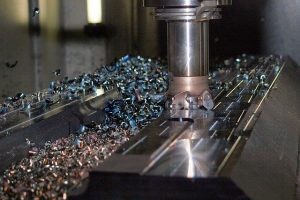
Featuring a rotating cutting tool, milling machines are able to quickly and efficiently remove material from otherwise hard workpieces. The workpiece is secured in place, after which it’s exposed to a cutting tool. Milling machines differ from lathes in the sense that they u
Manufacturers increasingly rely on 3D printers to produce prototypes directly from CAD files. Rapid prototyping—an industry‑time‑saving approach—has become the go‑to alternative to conventional methods. By focusing on speed, it delivers near‑instant production while preserving quality and design
3D printing transforms digital designs into physical parts by adding material layer by layer. While most machines use extrusion, powder bed fusion (PBF) employs a radically different method: it fuses fine metal or polymer powders with a high‑energy laser or electron beam. What is Powder Bed Fusion
Industrial equipment

EOS M 100 Metal 3D Printer – Compact, High‑Performance DMLS for Aerospace & Automotive
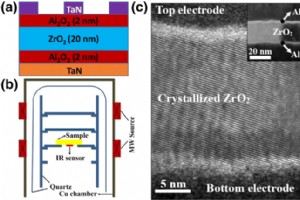
Microwave Annealing Boosts Dielectric Performance of Al₂O₃/ZrO₂/Al₂O₃ MIM Capacitors
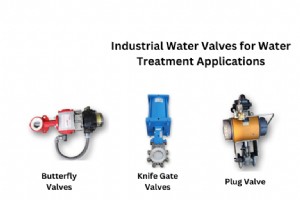
Premium Industrial Water Valves: Tailored Solutions for Reliable Water Treatment

Top Cloud Collaboration Tips for Remote Machinists & Engineers

