Industrial manufacturing
Industrial equipment
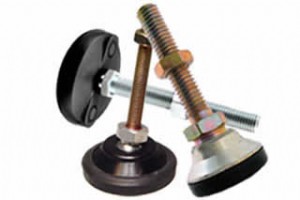
If your equipment relies on leveling mounts—also known as leveling feet—to maintain stability, you may wonder when its time to replace them. These components are engineered to level and isolate vibrations for machines, cabinets, fixtures, and other objects. By adjusting each mount to the same hei

Cold‑forming—also known as cold‑working—is a suite of metal fabrication techniques that shape metal at temperatures below its recrystallization point. Unlike high‑temperature processes such as welding or hot forging, cold‑forming includes rolling, angle bending, roll forming, straightening, blanki
In modern manufacturing, precision and durability hinge on the stability of the equipment. Heavy‑duty machines such as lathes, milling tables, and grinding heads generate significant vibrations that can compromise product quality and accelerate wear. Anti‑vibration leveling feet—also called leveli

A padlock is a smart investment that safeguards your business’s assets from theft and vandalism. Statistics show that more than nine in ten businesses experience losses linked to property theft. By selecting the right padlock, you add a reliable barrier against both opportunistic thieves and inten
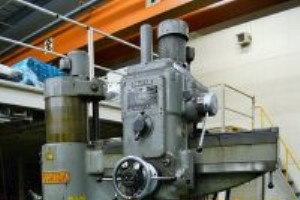
Industrial manufacturing relies on powerful, precise machines to shape metal, plastic, and composite workpieces. One of the most versatile tools in this arsenal is the pneumatic press, which delivers controlled force through compressed air to perform cutting, punching, bending, drawing, and formin
Steel is often associated with stainless steel, an iron alloy containing at least 11 % chromium. Yet many everyday products are actually made from plain carbon steel—a simple iron–carbon alloy with 0.05 % to 2 % carbon, depending on the grade. This subtle difference gives carbon steel a distinct
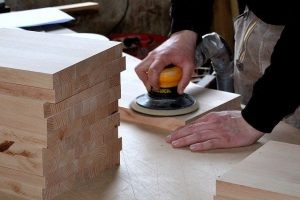
When building furniture or structural elements, the connection between two pieces of wood is crucial. While adhesives can be useful, a true woodworking joint relies on the geometry of the timber itself to keep the parts together. Below are the most common joints every woodworker should master. 1.
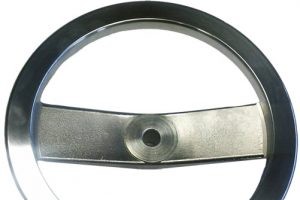
Choosing a handwheel is more than just picking a shape; it’s about selecting the right material to match your application’s demands. Handwheels—rotating wheels that are turned manually—control valves, adjust machinery, and execute precision tasks in industrial settings. Understanding each material
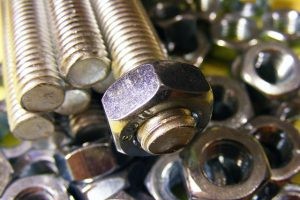
Machines rely on fasteners to hold components together, and one of the most ubiquitous types is the machine screw. From automotive engines to industrial lathes, these simple threaded bolts secure parts in place. To help you navigate the world of machine screws, this guide breaks down their design,
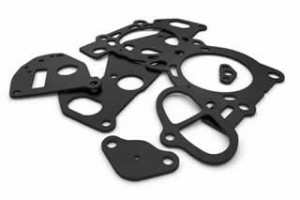
Most industrial machines are complex assemblies comprising dozens, sometimes hundreds, of individual components. When these components join, even microscopic gaps can allow pressurized gases or liquids to escape. Gaskets act as the invisible barrier that seals these joints, ensuring that fluids r
Washers—flat discs with a central hole—are essential components in fastening systems. They sit atop a bolt head or nut to evenly spread compressive forces, safeguarding the workpiece from damage and enhancing joint stability.Flat WashersFlat washers are the most widely used variety. Their name comes
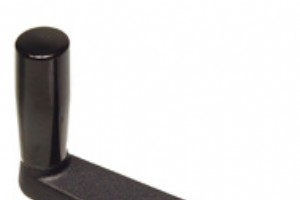
Crank handles have been indispensable since the early days of mechanical engineering. These simple yet powerful devices convert rotational input into precise rotary or reciprocating motion, enabling tasks from sharpening pencils to fine‑tuning industrial machines. What Is a Crank Handle? A crank h
Not every fastener needs a screwdriver or wrench. Many are built with a hexagonal socket that is driven by an Allen key—also known as a hex key. These compact, L‑shaped tools allow you to tighten or loosen fasteners manually, making them essential for furniture assembly, bicycle maintenance, and
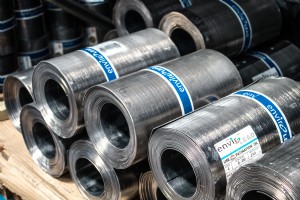
The Four Core Types of Steel Steel—a versatile alloy of iron and carbon—can be categorized into four primary families. Each family is further divided into grades that fine‑tune its properties for specific applications. 1. Carbon Steels Accounting for roughly 90 % of global steel production, ca
Steel, an alloy of iron and carbon, is the backbone of modern industry. Its exceptional strength and durability make it ideal for everything from automotive engines to towering bridges. To meet specific performance needs, steel is categorized by its alloy composition. Fasteners, for example, are t
Metals possess distinctive characteristics—hardness, strength, malleability, and ductility—that set them apart from other raw materials. These properties make them indispensable across industries such as aerospace, automotive, construction, and energy. However, to transform raw metal into functio
When most people hear the term resolution, they think of pixels on a screen. A TV or monitor might advertise 1920 × 1080, meaning 1920 horizontal pixels and 1080 vertical pixels. 3D printers don’t use pixels, but they still rely on a similar concept of precision. The Basics of 3D Printing Resoluti
Nails are the most fundamental fasteners in woodworking and construction, consisting of a smooth cylindrical shaft, a sharp point, and a flat head. While the basic design is simple, the industry offers a wide array of nail types tailored for specific tasks. Below is a clear, expert‑approved glossa

Named after the Titans of Greek mythology, titanium (atomic number 22) is a lustrous, high‑performance metal that powers everything from motorcycle frames and space shuttle parts to jewelry and biomedical implants. While its cost is higher than many traditional alloys, titanium delivers a suite of

Ball plungers, a specialized form of spring‑loaded devices (SLDs), are essential tools for precise positioning in manufacturing and repair tasks. Their unique construction—combining a steel ball, a compressed spring, and a threaded housing—enables rapid, repeatable movement under load while mainta
Industrial equipment