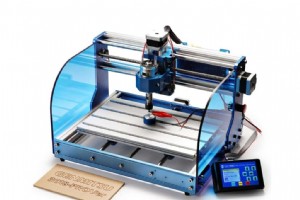
Industrial manufacturing
Industrial equipment

Bearings are essential for enabling smooth rotation in machinery. They comprise a housing with a central opening that accommodates a shaft, allowing it to turn with minimal friction. While all bearings share this basic design, pillow block bearings—also known as Plummer blocks—offer a robust, read
From denim and footwear to cable conduits and data drives, grommets—commonly known as eyelets—are everywhere. These small, ring‑shaped inserts are designed to sit snugly inside pre‑cut holes, securing components and shielding them from abrasive edges. What Exactly Is a Grommet? A grommet is a thin
3D printing is reshaping manufacturing. Studies indicate prototyping, proof‑of‑concept creation, and small‑batch production are the top three applications. While industrial printers can span several meters, desktop 3D printers remain compact enough to sit on a desk. What Is a Desktop 3D Printer? A

Bolts are indispensable fasteners in virtually every mechanical assembly. While they share a basic design, each part plays a crucial role in ensuring a secure, vibration‑resistant joint. Below we break down the essential elements that make a bolt reliable and effective. Head The head sits at the t
Fasteners are engineered with specific recesses—often called drive types—to accommodate various screwdriver or bit shapes. These recesses determine how a fastener is tightened, the amount of torque it can transmit, and its resistance to slippage. Below we outline the most common drive recesses and

Thermoplastic remains the cornerstone of modern 3D printing. Almost every fused filament fabrication (FFF) printer relies on a spool of thermoplastic filament to build objects layer by layer. During printing, the printer feeds the filament into a heated nozzle, melts it, and extrudes a precise str

All screws—except the special “grub” variety—feature a head: the part that accepts a screwdriver or drill bit. While heads come in many shapes, they fall into two primary categories: countersunk and non‑countersunk. Understanding the distinction helps you choose the right fastener for a given pr
Production is the engine that turns raw materials into the goods we rely on every day. Whether a product is mass‑made or tailored to a single client, the core purpose remains the same: convert resources into finished items ready for consumption. While all manufacturing follows this basic transform

3D printing is no longer a niche hobby; it’s a mainstream manufacturing force. According to recent market research, global sales of 3D printers have surged roughly 80% over the last five years, and industry analysts predict the trend will continue. Lower Cost, Higher Accessibility When 3D printers
3D printing builds objects layer by layer by depositing raw material onto a build plate. When reading about printers, you’ll often encounter the term “road,” which can be confusing for newcomers. In fused filament fabrication (FFF), a road is a thin, continuous line of extruded filament that the n

Electropolishing—also called electrochemical polishing—is a precision surface‑finishing process that removes fine amounts of material from a metal workpiece. By immersing the part in an electrolyte bath connected to a DC power supply, the surface oxidizes and dissolves, leaving a mirror‑smooth fin
Manufacturing methods are broadly split into two categories: additive and subtractive. Both transform raw materials—plastics, thermoplastics, steel, carbon fiber, and more—into finished parts. Although the end goal is the same, the way each process achieves it is fundamentally different. What Is A
\n\n\n\nManufacturing firms rely on a range of material‑removal techniques, from simple cutting to more intricate methods. Abrasive jet machining, also known as pencil blasting, belongs to the latter group. It uses a high‑velocity stream of fine abrasive particles to precisely strip unwanted materia
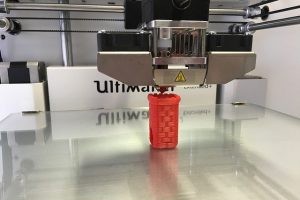
Fused Filament Fabrication (FFF) has become the industry standard for additive manufacturing. Whether in a home lab or a production line, FFF 3D printers build objects from filament, making them the most widely used category worldwide. According to recent market data, FFF accounts for roughly 70 %

3D printers depend on digital models to translate raw material into physical objects. Whether it’s fused filament fabrication (FFF), selective laser melting, selective laser sintering, or electron beam melting, every printer interprets a model file that adheres to a supported format. Today, the i

3D printing has evolved from simple air‑drying methods to sophisticated UV‑curing techniques. VAT polymerization is a leading example, using ultraviolet light to solidify resin and build parts with exceptional detail. What Is VAT Polymerization? In VAT polymerization, a vat of liquid photopolym

STL files, short for Standard Triangle Language, are the backbone of 3D printing. They’re the go‑to format for both hobbyists and industry professionals, enabling designers to transfer complex geometries to printers with ease. #1. The Dominant 3D Printing File Format While many printers accept
Blow molding is a widely used manufacturing technique for producing hollow objects and parts. By heating plastic until it becomes pliable, manufacturers can shape it into a shell. While all blow‑molding methods yield hollow components, extrusion blow molding distinguishes itself by utilizing an ex

Fused Filament Fabrication (FFF) printers construct objects by depositing material in successive layers. While filament is the most common feedstock, many systems are designed to handle alternative forms such as rods, slurries, or pellets. Understanding the nuances of each material type helps you
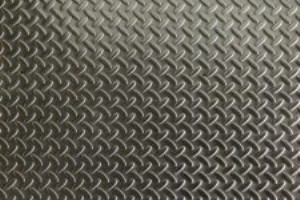
Sheet metal—thin, strong sheets of steel, aluminum, brass, tin, or copper—forms the core of countless consumer and commercial products. When a single component requires multiple metal layers, manufacturers turn to press joining to bond the sheets securely. Overview of Press Joining Also known
Industrial equipment