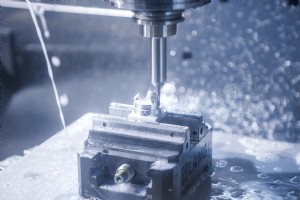
Industrial manufacturing
Industrial equipment

3D printing spans a spectrum from straightforward fused filament fabrication (FFF) to highly sophisticated laser‑assisted techniques. Directed Energy Deposition (DED) exemplifies the latter, leveraging a high‑power laser to melt feedstock as it is deposited. What is DED 3D Printing? DED is a laser
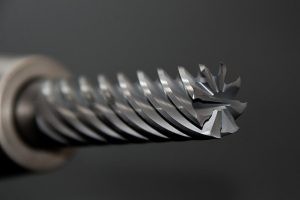
A milling machine is a precision manufacturing tool that uses a rotating cutter to shape a stationary workpiece. Unlike a lathe, which rotates the workpiece, the milling machine keeps the material still while the tool carves, drills, and contours it. #1) Invented in the 1700s The first true millin

Ever wondered where designers and consumers meet to buy and sell 3D models? A 3D printing marketplace is the online hub that connects professional designers with anyone who needs a ready‑to‑print object. Instead of starting from scratch, users can browse a vast library of pre‑designed files and do

While most consumers think of 3D printing as a plastic‑based technology, modern industrial printers can produce high‑strength metal parts. These machines don’t extrude molten metal like traditional FFF printers; instead, they use a powder‑bed fusion approach that builds objects layer by layer. Fun
Screws are among the most ubiquitous fasteners in industry and everyday life. Unlike bolts, which rely on a separate nut, a screw secures two or more surfaces by cutting its own thread into the material. Though you may have used screws countless times, you might not know the function of each compo
3D printing has become a cornerstone of contemporary manufacturing, enabling rapid prototyping and on-demand production across industries. While a range of additive technologies exist, they all depend on a common foundation: computer‑aided design (CAD). Before a part can be printed, it must first
In 3‑D printing, many systems extrude heated resin in a liquid or semi‑solid state to build layers. While this technique delivers a consistent material flow and reduces defects such as ghosting, the final parts must be solid. Photopolymerization—also known as UV curing—provides the critical step

3D printing delivers rapid, cost‑effective manufacturing for prototypes and finished parts. Yet, the technology can pose risks if safety protocols are ignored. #1 – Wear Safety Goggles Eye protection is critical. The U.S. Bureau of Labor Statistics reports about 20,000 workplace eye injuries each y
In the world of precision machining, planing and shaping are two foundational processes that shape raw material into finished components. Although they share the common goal of material removal, each operates under distinct mechanics and delivers different surface characteristics. Understanding th
In additive manufacturing, a bridge is a critical feature that connects two raised sections of a print, preventing sagging and collapse. Professional 3D‑printing facilities rely on bridging to maintain structural integrity, especially in parts with multiple overhangs or complex geometries. What Is
Not every cable is copper or aluminum. When speed and reliability matter, data travels through strands of glass called fiber optic cable. Today, fiber optics power the backbone of global internet, connecting homes and businesses to lightning‑fast, interference‑free networks. What Is Fiber Optic Ca
3D printing, a leading additive manufacturing technology, constructs objects by depositing raw material layer by layer using a specialized nozzle. While various printer models exist, they all follow a consistent workflow: preparation, building, and finishing. Stage 1: Preparation Before a print ca

When designing for 3D printing, two terms appear repeatedly: infill and shell. These components are essential to every print, dictating strength, material usage, and build time. Below we explain what each term means, how they differ, and why they matter. What Is Infill? Infill is the material that
Injection molding has been the backbone of plastic manufacturing since the late 19th century. Despite the rapid growth of additive manufacturing, the question remains: can 3D printing truly replace injection molding? Understanding Injection Molding Injection molding is a high‑speed process that
In the world of fasteners, screws are ubiquitous—everywhere from furniture assembly to structural construction. Unlike bolts, screws feature a pointed tip and external threading that bites into material, creating a secure bond. Among the myriad screw types, the eye screw stands out for its distin
In every 3D printing workflow, the print bed is the foundation that supports the object as it is built layer by layer. While many materials can serve this role, glass has become the industry standard for its proven performance and reliability. Uniform Heat Distribution Glass beds distribute heat e
Every 3D printer relies on a nozzle to extrude material onto the build platform. While most printers use a single nozzle, the emerging class of multi‑nozzle 3D printers houses two or more nozzles, each capable of handling a distinct filament or resin. These machines are specifically engineered for
Extrusion is the cornerstone of modern 3D printing. While printers come in many shapes—Fused Filament Fabrication (FFF), Stereolithography (SLA), Selective Laser Sintering (SLS)—most rely on the extrusion of material through a fine nozzle to build objects layer by layer. This process guarantees un
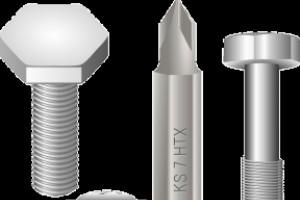
Impact extrusion is a high‑force metal forming technique that shapes metal slugs by forcing them through a die using a press—mechanical or hydraulic. Unlike conventional extrusion, it delivers a single, powerful impact that deforms the slug at or near room temperature. How Impact Extrusion Works

Steel—a robust iron‑carbon alloy—powers modern infrastructure, from bolts to bridges. Yet its very strength is vulnerable to a relentless enemy: corrosion. Understanding the science behind steel’s decay is the first step toward safeguarding structures and extending their service life. What Is Corr
Industrial equipment