Industrial manufacturing
Industrial equipment

With its silvery‑white hue, tungsten is a heavyweight champion in the metal world. Renowned for its strength, conductivity, and exceptional thermal stability, it powers everything from cutting‑edge machinery to everyday household items. Even seasoned material scientists may be surprised by the l

Forging and forming are foundational metalworking techniques used to reshape metals—from iron and steel to aluminum and bronze. While both manipulate metal, they differ fundamentally in method and outcome. Forging: A Blast of Force Forging applies controlled, high‑pressure blows—typically from ham
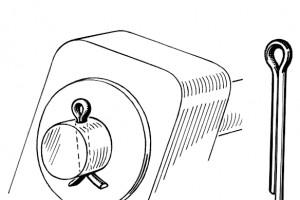
In industrial and automotive settings, bolts can loosen under vibration, load, or temperature changes. One of the most reliable solutions to prevent this is the use of a cotter pin. But what exactly is a cotter pin, and how does it keep a fastener secure? The Basics of Cotter Pins A cotter pin—
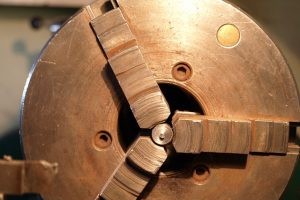
Manufacturing companies employ a range of machining techniques to transform raw or semi‑finished materials into finished parts. Two of the most widely used methods are turning and milling. Both processes use a machine to remove material from a workpiece, reshaping its dimensions and geometry. Howe
Not all screws use a traditional Phillips head. While Phillips screws are the most common, other types exist, such as JIS, an abbreviation for Japanese Industrial Standard. JIS screws are widely used in electronics and other products manufactured in Japan. If you’re not familiar with this altern

Manufacturing firms routinely use molds and dies to shape metal into precise billets and slabs. While traditional casting has long served this purpose, strand casting—also known as continuous casting—has emerged as a faster, more versatile alternative since its invention in the 1950s. What Is Stra
Joints are fundamental to every machine, product, and workpiece. When two or more surfaces are bonded together, a joint is formed. Among the many joint varieties, mechanical joints are specifically designed to connect moving parts. Some are temporary, others permanent, but all are integral to in
Welding typically relies on heat to fuse metal parts. Magnetic pulse welding (MPW), however, harnesses powerful electromagnetic pulses to bring components together at speeds exceeding 1,100 mph, without generating heat. How Magnetic Pulse Welding Works First developed in the 1970s, MPW is a solid‑
From cylinder heads and engine blocks to garden furniture and bicycle frames, die casting is the go‑to method for producing complex, high‑precision parts across a wide range of industries. The process starts with a carefully engineered mold. Molten metal—typically zinc, aluminum, magnesium, coppe
Do you know the frustration of a bolt or screw that gradually unwinds under vibration? Even if it seems secure at first, prolonged mechanical stress can cause fasteners to loosen, jeopardizing safety and reliability. The answer lies in thread‑locking fluid—an adhesive designed specifically to “loc
In modern manufacturing, heavy machines such as lathes and milling machines routinely generate vibrations during operation. These dynamic disturbances—commonly called chatter—can erode tool life, compromise surface finish, and ultimately accelerate machine wear. What Is Machining Vibration? Machini
From motorcycle and bicycle frames to musical instruments, cookware and more, countless products are manufactured with a powder‑coated exterior. Powder coating is a finishing process that involves the deposition of dry particulate matter (powder) onto the surface of an object or workpiece. The po
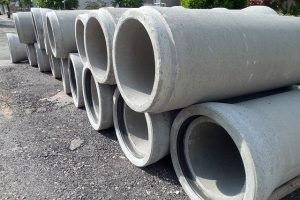
Centrifugal casting—also called rotocasting—uses the force generated by spinning to build hollow, cylindrical components from metals, alloys, and even concrete. By directing molten or wet material outward toward a rotating mold’s inner walls, the process yields uniform thickness and superior dime
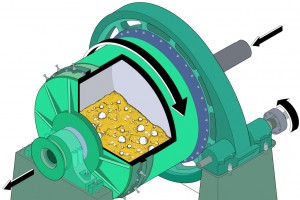
When most people think of milling machines, they envision a vertically oriented machine that contains rotary cutters. Traditional milling machines such as this are used extensively in the manufacturing industry to reshape workpieces. However, there are many other types of milling
Nails and screws are the two foundational fasteners in building and carpentry. The primary distinction lies in their design: nails feature a smooth shaft, while screws incorporate a threaded profile that can lock materials more securely. Despite the stronger grip that screws can provide, nails con
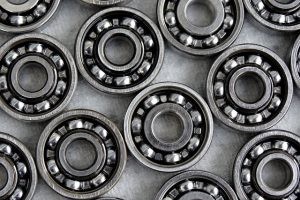
Superfinishing—also called micromachining or short‑stroke honing—is an advanced metal‑working technique that refines a workpiece’s surface beyond the finish achieved by grinding or conventional honing. By removing a very thin layer of material, it produces a distinctive cross‑hatched texture that

Sheet metal—made from steel, copper, nickel, tin, titanium, and other alloys—is substantially harder and stronger than wood. Because of its rigidity, it can’t be fastened with a standard screw. Specialized fasteners, known as sheet metal screws, are engineered to grip and hold sheet metal securely
Also known simply as shell molding, shell mold casting is a casting process that involves the use of resin-covered sand for the mold. Molten metal is poured into the mold’s cavity, at which point the mold vaporizes to create a hard shell. Although it sounds complex, shell mo
Chemical vapor deposition (CVD) is a precision manufacturing technique that uses a vacuum environment to deposit thin, high‑purity films onto substrates. From solar panels to semiconductor wafers, CVD plays a pivotal role in producing the next generation of electronics and renewable‑energy devices
Stainless steel is the backbone of modern manufacturing—from automotive engines to everyday hand tools and heavy‑industry equipment. While its presence is ubiquitous, few people understand the sophisticated metallurgy behind its creation. This article outlines the key stages of stainless steel pr
Industrial equipment