Industrial manufacturing
Industrial equipment

In fused filament fabrication (FFF), extrusion is the engine that brings raw polymer into precise shape. The printer pushes heated or softened material through a nozzle—essentially a die—depositing it layer by layer to build the part. What Is Extrusion? Extrusion forces a material—commonly a therm
Manufacturing firms rely on CAD files to design and produce components. Once a design is finalized, the CAD model is uploaded to a 3D printer, which fabricates the part from raw material. Rapid prototyping is the discipline that harnesses this workflow to create quick, functional prototypes that c
Lost‑foam casting is a sophisticated, yet surprisingly straightforward, manufacturing technique that turns polystyrene foam into precise metal parts. The process begins by filling a mold cavity with polystyrene pellets. Molten metal is then poured in, where the heat causes the foam to expand, vapo
Screws—comprising a head, shank, and tip—are the most ubiquitous fasteners in the world. While many feature a fully threaded shank, a significant subset is designed with a partially threaded body. Understanding this design choice is essential for professionals who rely on optimal load‑bearing per
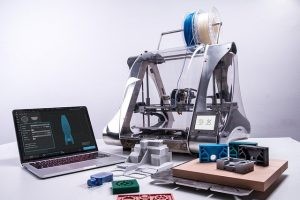
In additive manufacturing, the choice between a raft and a brim can significantly influence print quality, adhesion, and post‑processing effort. Both structures act as a foundation, yet they serve distinct purposes and exhibit different mechanical interactions with the printed part. What Is a Raft
Lathes are the backbone of metal fabrication, performing tasks from precise turning to fine sanding. Unlike milling machines, they rotate the workpiece while a stationary tool carves it. Turret lathes adopt this principle but stand out due to their rapid, interchangeable tool system. Overview of T
Creating a reliable digital model is the cornerstone of successful 3D printing. Before a printer can lay down material layer by layer, the object’s geometry must be defined in a digital file—typically an STL or OBJ. For professionals and hobbyists alike, the question is: what tools give you the mo
Since the mid‑1990s, binder jet has stood out as one of the earliest and most versatile 3D‑printing technologies. By depositing a liquid binder onto a bed of fine powder, it creates solid objects layer by layer—ranging from playful figurines to precision engineering components. In this guide, we’l
Protecting metal parts from rust, corrosion, and wear is a critical challenge in many industries. One of the most effective solutions is thermal spraying, a family of techniques that deposits a heated or melted coating onto a workpiece. Among these, plasma spraying stands out for its precision, ve
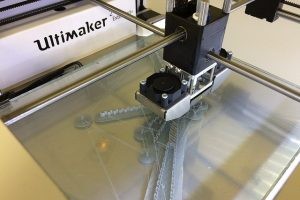
When exploring the landscape of additive manufacturing, selective laser sintering (SLS) often appears as a foundational technology. By directing a laser beam onto a bed of fine powder, the process selectively fuses particles into a solid structure—one layer at a time—without the need for a physica
When exploring the world of 3D printing, the term slicing appears in every conversation. Regardless of whether a printer builds with powdered or liquid material, slicing remains the essential bridge that translates a digital model into machine‑readable commands. In this article we’ll unpack what s

Molding is a foundational manufacturing technique where a heated or molten material is introduced into a die cavity, producing a part that mirrors the die’s geometry. Permanent mold casting differentiates itself by employing a durable, reusable mold, allowing manufacturers to produce numerous hig

Many consumers have never considered how their groceries arrive, yet supermarkets were the birthplace of practices that evolved into modern just‑in‑time (JIT) manufacturing. The concept of Kanban began in retail, then expanded to manufacturing, where companies like Toyota, Ford, and GM would only
With atomic number 30, zinc is a bluish‑silver metal that is moderately brittle at room temperature. Although it is best known as an essential mineral that supports immune function and metabolic regulation, zinc’s unique metallic properties make it a cornerstone of many industrial alloys. Corro
While the terms “3D printing” and “additive manufacturing” are often used interchangeably, they actually describe different scopes of technology. 3D printing is a specific subset of additive manufacturing focused on building objects layer by layer, whereas additive manufacturing encompasses a broa
Fused Filament Fabrication (FFF), also known as filament free‑form fabrication, is the most widely adopted 3D printing technology today. By extruding a continuous filament of plastic through a heated nozzle, the printer builds parts layer by layer with remarkable precision. #1) It’s the Dominant 3
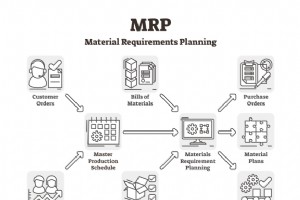
Every manufactured product—from a simple spoon to a complex spacecraft—has a foundational document: the blueprint. While the blueprint captures the design intent, the Bill of Materials (BOM) lists every part required to bring that design to life. A single component typically doesn’t have a forma
3D printing is reshaping manufacturing, and multi‑material additive manufacturing is at the forefront of that change. According to AMFG, the global market for 3D printing materials is projected to reach almost $500 million by 2029, underscoring the technology’s growing commercial impact. What Exac
Molding is a foundational manufacturing technique that shapes liquid materials—most commonly plastics, rubbers, and other polymers—into finished parts. After heating, the material is poured or injected into a mold cavity where it cools and hardens, adopting the cavity’s exact geometry. While the e
Electron Beam Melting (EBM) is a high‑precision additive manufacturing technology that creates metal parts layer by layer. By directing a focused electron beam inside a vacuum chamber, the powder is melted and fused with the previously deposited layers, producing strong, defect‑free components. Wh
Industrial equipment