Industrial manufacturing
Industrial equipment

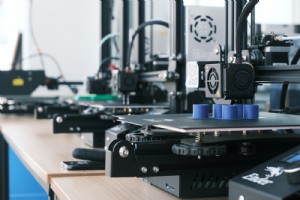
Fused Filament Fabrication, commonly known as FFF, is the foundation of modern 3D printing. First patented in the late 1980s, it allows anyone—from hobbyists to industrial manufacturers—to transform digital designs into tangible objects using a simple, filament‑based workflow. What Is FFF? FFF, or
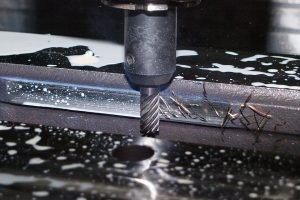
Single‑pass boring is a specialized machining technique that enlarges pre‑existing holes using a diamond‑tipped cutting tool. Unlike traditional drilling, the tool passes through the hole only once, providing a smooth, high‑quality finish with minimal tool wear. Manufacturers typically perform thi

3D printing builds objects layer by layer using a 3D printer. The digital model, created in CAD software, is uploaded to the machine, which then deposits material onto the build plate, starting with the base layer. When the printer’s motion system or material deposition is not perfectly synchroniz
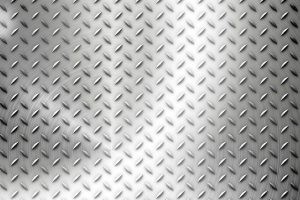
Sheet metal—flat, hot‑ or cold‑rolled sheets—forms the backbone of modern manufacturing. Companies shape and cut it to create everything from vehicle parts to aerospace components. The three most widely used sheet‑metal materials are steel, aluminum, and brass. Although they all provide a robust b
By now, 3D printing has become a cornerstone of modern manufacturing, used in everything from prototyping to mass production. Yet even the most tech‑savvy professionals may be surprised by some of the nuances behind this layer‑by‑layer process. #1 – Born in the 1970s, Grown in the 1990s While the
In the manufacturing sector, compressive forces are routinely applied to reshape and size workpieces. Among the various forging techniques, swaging—a cold‑working process with a history spanning centuries—continues to play a vital role. Though newer, faster methods exist, swaging remains a reliabl
Laminated Object Manufacturing, commonly referred to as LOM, is a cutting‑edge additive manufacturing technique that excels in rapid prototyping for the manufacturing sector. By translating a computer‑generated model into a physical prototype with remarkable speed, LOM helps engineers validate des
For anyone working with wood, metal, or composites, screws are the backbone of most fastening tasks. Their helical threads cut into material, allowing precise placement and secure holding power. Among the many screw styles, the countersunk variant is prized for its flush finish. What Is a Counter
In the world of additive manufacturing, the print bed is the foundation that turns a digital CAD design into a physical object. Whether you’re prototyping, mass‑producing, or creating a proof‑of‑concept, the bed’s surface, levelness, and adhesion properties determine the success of every print. Wh
Metal injection molding (MIM) marries the design flexibility of plastic injection molding with the strength and density of metal parts. Pioneered in the 1970s by entrepreneur Raymond Welch, MIM transforms finely ground metal powders blended with a polymer binder and a binding agent into complex, h
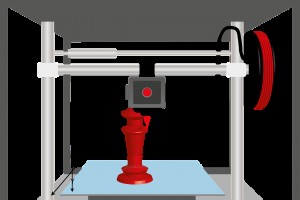
3D printers can produce highly detailed objects when operated correctly, but they are susceptible to a common flaw: warping. Warping manifests as uneven, curved surfaces that detract from both aesthetics and dimensional accuracy. Fortunately, this issue is largely preventable with proper settings
Manufacturing leaders rely on precise metal‑forming techniques to shape sheet metal into functional components. Two common methods—hemming and seaming—both involve bending and rolling the edge of the sheet, yet they serve distinct purposes and produce different joint characteristics. What Is He
When a supply chain breakdown, a vendor underperformance, or a price surge compels a business to find a new supplier, the instinct is to gather drawings and jump into sourcing. Success, however, requires a more systematic approach. The first and most critical step is to obtain the exact part you ar
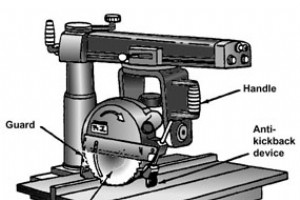
Woodworking often relies on specialized machinery to cut and shape timber with precision. The radial arm saw, a staple of mid‑century workshops, combines a circular blade with a movable arm, allowing craftsmen to execute a wide range of cuts—rip, crosscut, and miter—on a single platform. Origins a
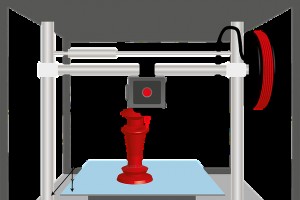
More and more manufacturing firms are adopting 3D printing to stay competitive. Statista reports that over 23,000 commercial‑grade 3D printers are in use worldwide, underscoring the technology’s growing influence. While traditional machinery remains essential for converting raw materials into fini
\n\n\n3D printers differ in build rates, largely dictated by the configured printing speed. For manufacturers, the ability to increase throughput can translate directly into higher productivity and lower unit costs. Most consumer and industrial printers expose a speed setting, enabling operators to

3D printing, a cornerstone of modern additive manufacturing, has reshaped how businesses create complex parts quickly and cost‑effectively. Despite its growing prevalence, misinformation still circulates. Below we clarify five widely held misconceptions. #1 It’s a Recent Technology The roots of 3D
Fused Filament Fabrication (FFF) has become the go‑to technique for producing custom‑sized and shaped parts in the manufacturing sector. By feeding a digitally designed model through a heated nozzle, a 3D printer layers plastic to build a physical object. While FFF is efficient and versatile, man

Molding techniques are essential in modern manufacturing, allowing complex parts to be produced by filling a mold cavity with material that adopts the mold’s shape once it cools. Two widely used processes—rotational molding and rotocasting—share the same rotating‑mold principle but differ in mater
Laser cutting eliminates the need for a physical blade. A focused beam of light vaporizes the material, producing clean, precise cuts without the mechanical wear of traditional tools. The two most prevalent laser sources in industry are CO₂ and Nd:YAG (often abbreviated Nd). Understanding their
Industrial equipment