Industrial manufacturing
Industrial equipment

Lathes remain indispensable in precision manufacturing, capable of reshaping a wide array of materials—from hardwoods to high‑strength alloys—by rotating the workpiece against a stationary tool. Below are the seven primary machining processes that modern lathes routinely perform, each grounded in
Nails are essential fasteners that secure objects by driving a slender shaft through them and using the flattened head to create a tight grip. While most people are familiar with the basic mechanics, many are unaware that nails come in distinct varieties—chiefly cut and wire—each crafted through a
Casting is a foundational metalworking technique that transforms molten metal into a solid part by pouring it into a mold cavity. While the basic principle remains the same, the method chosen determines whether the mold can be reused—classifying casting processes into expendable or non‑expendable
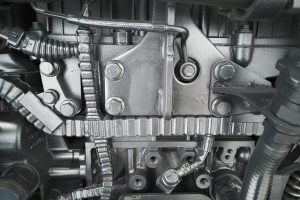
Chromium is one of the 91 transition metals on the periodic table. Its lustrous, silvery‑gray finish makes it a popular choice for applications ranging from motorcycle components to premium silverware plating. Below are five key facts that highlight why this metal is indispensable in modern manuf

Ultrasonic machining, also known as ultrasonic vibration machining, is a precision manufacturing technique that removes material from a workpiece using high‑frequency vibrations and abrasive particles. By generating rapid, microscopic oscillations, the tool drives a slurry of fine grit toward the
Steel and iron are foundational to modern manufacturing, yet they differ markedly in composition, properties, and everyday applications. What Is Iron? Iron (atomic number 26) is a lustrous, ductile metal that naturally occurs on Earth. Its chrome‑colored surface reflects light and its ferromagneti
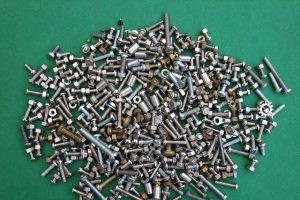
In the world of fasteners, the hexagon is the de‑facto standard. From furniture and appliances to automotive chassis and structural steel, hexagonal bolts and nuts are everywhere. But why has this six‑sided shape become the universal choice? Precision and Torque Efficiency Hexagonal fasteners prov
Manufacturing is evolving from traditional blade cutting to laser‑based solutions. Laser cutting employs a high‑energy beam to precisely vaporize or melt material, creating clean cuts with minimal heat‑affected zones. #1. The Technology Dates Back Over 50 Years Despite its futuristic reputation
\nPhoto: Douglas W. Jones\nSwage nuts, also known as self‑clinching nuts, are a specialized threaded fastener widely used in aerospace and high‑performance industries. By expanding the sheet metal around a pre‑drilled hole, they create a permanent, vibration‑resistant anchor that outperforms traditi

Photo: Cory Doctorow In metalworking, rolling compresses metal through heavy‑duty rollers to achieve a uniform thickness and improved mechanical properties. While hot and cold rolling are common, a more advanced technique—cryogenic rolling, or cryorolling—takes the process to extreme temperatures t
A grinding machine is a heavy‑duty piece of equipment that removes material from a workpiece using a rotating grinding wheel. Unlike a milling machine, which employs a cutting tool that spins against a stationary part, a grinding machine’s wheel grinds the surface of the stationary workpiece, prod

Steel, the world’s most versatile material, is an alloy of iron and carbon. With a typical composition of about 97 % iron and 1 % carbon—plus trace elements—steel delivers the strength and durability required across countless industries. In North America, the American Iron and Steel Institute repo
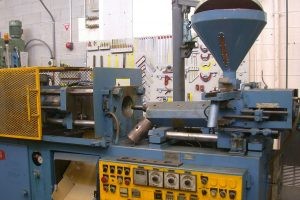
Injection molding, developed in the late 19th century, remains a cornerstone of modern manufacturing, producing a vast array of plastic parts. By heating raw plastic pellets until they melt and then injecting them into precisely engineered mold cavities, manufacturers achieve high precision and r

In the manufacturing world, turning is a cornerstone machining process that removes material from a workpiece using a stationary cutting tool on a lathe. The workpiece is mounted and spun while the tool slices away precise sections of material. Diamond turning elevates this classic method by emplo
Perforation is a precision manufacturing technique that creates a series of holes in a material. The image on the left demonstrates the process on solid substrates, producing a uniform array of perforations that enhance functionality. Perforated materials provide increased breathability, simplif
Welding is a foundational fabrication technique that joins metal components by heating them to a molten state, then allowing the material to solidify into a strong bond. Although the core principle—melting and fusing—remains consistent across all welding methods, technicians typically perform the
There are 118 confirmed elements on the periodic table. While most fall under the metal category, a significant minority are nonmetals, occupying the right side of the chart. Beyond their placement, metals and nonmetals exhibit distinct physical and chemical traits that influence their everyday a
Pickling is a metalworking treatment—not to be confused with the culinary process of preserving food—that uses an acid-based solution, known as pickle liquor, to remove surface impurities and contaminants from metal objects and workpieces. By submerging the item in the liquor, superficial oxides,
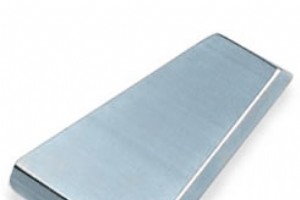
Neodymium magnets are renowned for their exceptional strength—often exceeding ceramic magnets by more than tenfold. This potency, however, comes with a vulnerability: exposure to oxygen and moisture can trigger corrosion over time. Protective coatings act as a shield, sealing the magnet’s core fro
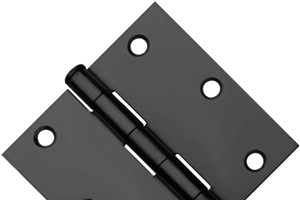
When selecting a hinge, the mount type determines how it attaches to the two pieces of wood or metal. Door hinges, for instance, are typically mounted on the door and its frame, but other applications require different mounting solutions. Below, we break down the five most common hinge mount types
Industrial equipment