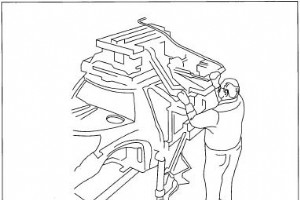
Industrial manufacturing
Industrial equipment

Flange gaskets are among the most frequently used gasket types in industrial piping systems. They provide a reliable seal between two flanged pipe sections, preventing leaks of fluids or gases. Overview of Flange Gaskets These gaskets are specifically engineered for flanged pipe connections, where
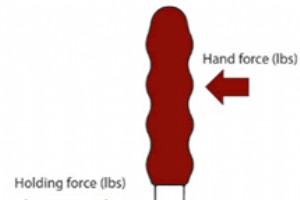
In precision manufacturing, a toggle clamp is indispensable for keeping workpieces stable during cutting, drilling, or machining. Whether you’re a seasoned craftsman or new to the shop floor, understanding how these clamps work can improve safety, accuracy, and workflow. What Is a Toggle Clamp? A
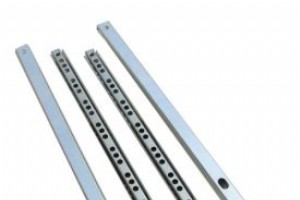
Every drawer—whether in a dresser, chest, nightstand, or workstation—relies on drawer slides to move smoothly. These hidden yet essential components allow drawers to glide in and out with minimal effort. What Are Drawer Slides? Drawer slides, also known as drawer runners, are precision-engineered
Water jet cutting has emerged as a cutting‑edge alternative to conventional machining techniques. By directing a high‑pressure stream of ultra‑pure water—sometimes mixed with abrasive particles—manufacturers can slice through a wide range of materials with pinpoint accuracy, all without the therma
When lifting heavy objects, a hoist ring—a robust, looped metal component—is indispensable. It attaches to the load, while the hoist’s chain or rope connects to the ring, allowing the load to be raised safely and efficiently. There are two primary categories of hoist rings: swivel and pivoting. Un
Steel permeates everyday life—from precision cutting tools and industrial die sets to towering bridges, skyscrapers, and furniture. In the United States alone, steel production exceeds 80 million tons each year. All steel is an iron‑carbon alloy, yet its properties vary widely. One widely used var
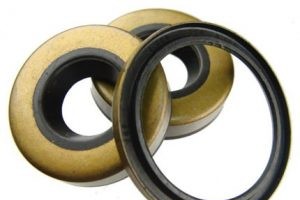
In industrial machinery, a shaft seal—often referred to as a lip seal—is the unsung hero that keeps lubricants and coolants from escaping around rotating shafts. Whether you’re operating a hydraulic pump, a conveyor system, or a precision lathe, a well‑designed shaft seal preserves both performanc
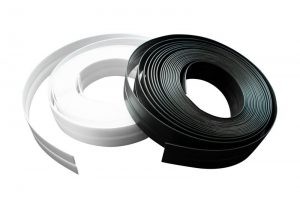
In mechanical design, a “living hinge” refers to a flexible joint made from a single continuous piece of elastic material. Though the term can be misleading, these hinges function like traditional pivots while offering unique advantages in flexibility, durability, and cost‑effectiveness. Overview

In manufacturing, the timing and flexibility of production cycles are critical to a company’s efficiency and cost control. Businesses typically categorize their production schedules as short‑run or long‑run—each with distinct operational implications. This guide clarifies the terminology, highligh
Stainless steel is classified by its crystalline structure. Under a microscope you’ll observe an array of crystals. Four main types exist: ferritic, martensitic, duplex, and austenitic. Among them, austenitic stainless steel is the most widely used. What Is Austenitic Stainless Steel? Austenitic s
Metals are commonly categorized as ferrous or non‑ferrous based on their iron content. While all metals share metallic bonds and form positive ions, the presence or absence of iron distinguishes their physical properties and industrial applications. An Introduction to Ferrous Metals A metal is dee

A hand truck—also called a dolly or stack truck—is an essential material‑handling tool that simplifies moving heavy items. Its L‑shaped frame, wheels, and dual handles allow you to load a box onto the lip and roll it safely to another location, reducing strain and the risk of injury. #1. Load Capa
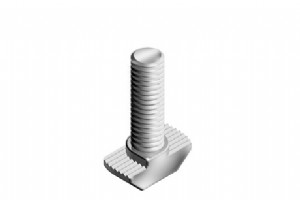
Screws are indispensable fasteners that secure objects together with threaded engagement. Among the many screw designs, the hammer‑head screw stands out for its distinctive rectangular head, which mimics the shape of a traditional hammer. Overview of Hammer‑Head Screws Unlike conventional flat‑hea
Cutting remains a foundational operation in manufacturing, whether you’re shaping raw materials or refining pre‑assembled components. While traditional blade tools are still in use, many manufacturers are turning to laser cutting—a technology that delivers a focused, high‑energy beam to melt and s
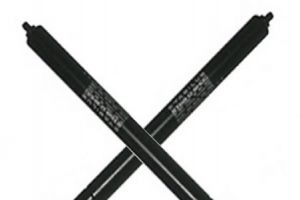
A spring is a device that stores energy. When a load is applied, that energy is transferred into the spring. Most springs use mechanical deformation, but gas springs rely on compressed gas to perform the same function. A gas spring consists of a sealed cylinder filled with nitrogen and a piston
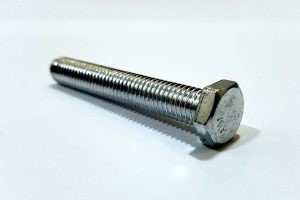
Not every fastener relies on a recessed drive. Hex cap screws, featuring a solid, six‑sided head, are a staple in manufacturing and construction where reliable torque and durability are essential. This guide explains their structure, how they compare to bolts, and the key benefits that make them a
Dowel pins—also called dowels—are short, cylindrical fasteners that join two or more components by being inserted into pre‑drilled holes. Though the basic principle is simple, selecting the right pin requires attention to several technical details. Below are five critical factors to keep in mind.
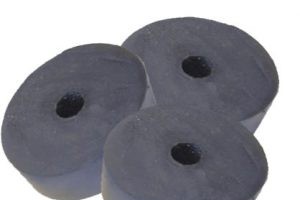
Despite their compact form, rubber bumpers deliver substantial protection for industrial equipment. From lathes and milling machines to grinding machines and planers, heavy‑vibration tools can quickly degrade components and floors. A properly installed rubber bumper mitigates shock, absorbs vibra
Washers are a fundamental component in fastening systems, used alongside bolts and nuts to spread load and reduce stress on the joined parts. While standard washers perform this load‑distribution role, locking washers add an extra layer of security by preventing the fastener from loosening under v
Springs, the ubiquitous coiled metal components in countless industrial and consumer products, store mechanical energy by deforming under load. While all springs share this fundamental principle, the manner in which they deform—either by extending or compressing—determines their specific function
Industrial equipment