


Industrial manufacturing
Metal

CuCr1Zr, mat. No CW106C, is counted among hardenable, low alloyed copper alloys. To the comparable make CuCrZr, mat. No 2.1293, acc. to DIN 17666 : 1983-12 applies: The strength values of CuCrZr are more favorable than of CuCr especially at higher temperatures. CuCrZr shows the following properties:
Material GX23CrMoV12-1 is equivalent to trademark G-X 22 CrMoV 12-1 acc. to DIN17245-87. It is due to its high creep and thermal strength (except at temperatures around 600 °C) applicated if fast temperature changes or even thermal shocks may occur. The well weldable material is used at room tempera
Material GP280GH is applicated at room temperature and increased temperatures.PropertiesGeneralPropertyTemperatureValueDensity20.0 °C7.8 g/cm³MechanicalPropertyTemperatureValueCommentElastic modulus23.0 °C200 - 215 GPaTypical for High Carbon SteelElongation20.0 °C22 %Poisson's ratio23.0 °C0.29
CuCr1Zr, mat. No CW106C, is counted among hardenable, low alloyed copper alloys. To the comparable make CuCrZr, mat. No 2.1293, acc. to DIN 17666 : 1983-12 applies: The strength values of CuCrZr are more favorable than of CuCr especially at higher temperatures. CuCrZr shows the following properties:
Material GP280GH is applicated at room temperature and increased temperatures.PropertiesGeneralPropertyTemperatureValueDensity20.0 °C7.8 g/cm³MechanicalPropertyTemperatureValueCommentElastic modulus23.0 °C200 - 215 GPaTypical for High Carbon SteelElongation20.0 °C22 %Poisson's ratio23.0 °C0.29
Material GP240GR is used at room temperature and increased temperatures for pressure vessels and fittings.PropertiesGeneralPropertyTemperatureValueDensity20.0 °C7.8 g/cm³MechanicalPropertyTemperatureValueCommentElastic modulus23.0 °C200 - 215 GPaTypical for High Carbon SteelElongation20.0 °C22 %Pois
Material G17CrMoV5-10 is equivalent to trademark GS-17 CrMoV 5 11 acc. to DIN17245-87. It is used at room temperature and increased temperatures as well as at increased pressures for thick-walled castings, e.g. for high-stress turbine casings and nozzle boxes in turbine pressure vessel and steam boi
Material CuSn5, mat. No. CW451K is used in the form of tubes for manometer springs or hose tubes as well as for contact springs and connectors. Basically the same application area as CuSn6 (CW452K). CuSn5 shows slightly higher electrical conductivity at slightly lower strength due to the lower tin-c
CuSn4, mat. No. CW450K, is comparable to the DIN-make CuSn4, mat. No. 2.1016, acc. to DIN 17662 : 1983-12. The material is specified by a favorable combination of very good cold formability with strength and hardness. It is corrosion resistant, good soft and hard solderable and shows still good elec
CuSn4, mat. No. CW450K, is comparable to the DIN-make CuSn4, mat. No. 2.1016, acc. to DIN 17662 : 1983-12. The material is specified by a favorable combination of very good cold formability with strength and hardness. It is corrosion resistant, good soft and hard solderable and shows still good elec
CuAl10Ni5Fe4 (CW307G) is a wrought alloy of high strength, also at increased temperatures. The strength properties of cold formable wrought alloys are primarily dependent on the deformation grade. Tensile strength, yield strength and hardness rise according to the increasing cold forming grade. Elon
CuAl10Ni5Fe4 (CW307G) is a wrought alloy of high strength, also at increased temperatures. The strength properties of cold formable wrought alloys are primarily dependent on the deformation grade. Tensile strength, yield strength and hardness rise according to the increasing cold forming grade. Elon
Cu-DLP, mat. No CW023A, is a deoxidized copper with limited, low residual copper-content. To the comparable DIN-make SW-Cu, mat. No 2.0076 acc. to DIN 1787 : 1973-01 applies: Tensile strength and Brinell hardness are increasable by cold forming. SW-Cu is hydrogen resistant and shows the lowest therm
Cu-DLP, mat. No CW023A, is a deoxidized copper with limited, low residual copper-content. To the comparable DIN-make SW-Cu, mat. No 2.0076 acc. to DIN 1787 : 1973-01 applies: Tensile strength and Brinell hardness are increasable by cold forming. SW-Cu is hydrogen resistant and shows the lowest therm
Cu-DLP, mat. No CW023A, is a deoxidized copper with limited, low residual copper-content. To the comparable DIN-make SW-Cu, mat. No 2.0076 acc. to DIN 1787 : 1973-01 applies: Tensile strength and Brinell hardness are increasable by cold forming. SW-Cu is hydrogen resistant and shows the lowest therm
Cu-DLP, mat. No CW023A, is a deoxidized copper with limited, low residual copper-content. To the comparable DIN-make SW-Cu, mat. No 2.0076 acc. to DIN 1787 : 1973-01 applies: Tensile strength and Brinell hardness are increasable by cold forming. SW-Cu is hydrogen resistant and shows the lowest therm
= 99,9% and a high residual copper-content. Tensile strength and Brinell hardness are increasable by cold forming. SF-Cu (Cu-DHP) is hydrogen resistant and shows the lowest thermal and electrical conductivity of the pure copper materials. Processing properties: hot forming: very good cold forming:
= 99,9% and a high residual copper-content. Tensile strength and Brinell hardness are increasable by cold forming. SF-Cu (Cu-DHP) is hydrogen resistant and shows the lowest thermal and electrical conductivity of the pure copper materials. Processing properties: hot forming: very good cold forming:
= 99,9% and a high residual copper-content. Tensile strength and Brinell hardness are increasable by cold forming. SF-Cu (Cu-DHP) is hydrogen resistant and shows the lowest thermal and electrical conductivity of the pure copper materials. Processing properties: hot forming: very good cold forming:
CuSn6, mat. No. CW425K, is comparable to the DIN-make CuSn6, mat. No. 2.1020, acc. to DIN 17662 : 1983-12. Properties of the CuSn-alloy are predominantly determined by the tin-content. Tensile strength, yield point and hardness increase according to the rising cold forming grade, elongation after fr
Metal
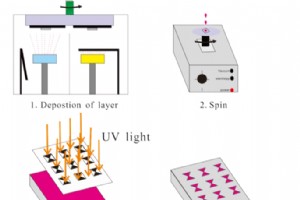
Energetic Al/Ni Superlattice Enables High‑Speed Micro‑Plasma Generation with Enhanced Flyer Velocities
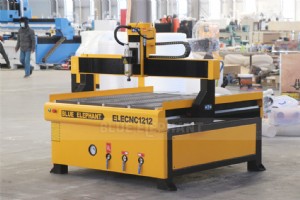
High-Precision 4-Axis 1212 4×4 CNC Router Now Shipping to Iceland
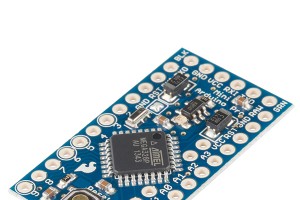
Build an Infinity Gauntlet: DIY Arduino LED Kit

Photoluminescence of Low‑Molecular‑Weight Poly(3‑hexylthiophene) Polymorphs: Insights into Interchain Interactions

