


Industrial manufacturing
Equipment Maintenance and Repair


Consistent, on‑time maintenance is the backbone of any productive facility. As your organization expands, the volume of assets, tools, and personnel grows, demanding a structured, automated approach to maintenance management. Below we outline the most effective solutions that will help you organize

Equipment failure is a pervasive issue in industrial settings, driving higher repair costs, production downtime, safety risks, and delivery delays. The International Society of Automation reports that factories lose 5%–20% of their productivity to downtime—amounting to thousands, even millions, of d
Extended equipment downtime not only compromises safety but also erodes productivity, driving costs upward. While preventive maintenance can mitigate many issues, an organized work request system is essential for responding quickly to faults when they arise. Implementing such a system is simpler th

Imagine if you were as outfitted with tools as Inspector Gadget — how much more straightforward and more effective you would be in your job as an industrial maintenance technician? In t

Well‑maintained parking lots enhance a property’s functionality, safety, aesthetic appeal, and brand perception. While many property managers focus on interior upkeep, neglecting exterior spaces can erode the first impression visitors receive. This guide outlines proven practices—from surface prese
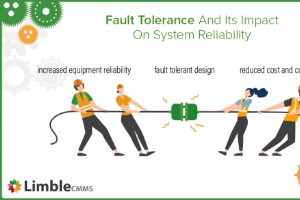
Systems that lack fault‑tolerance are inherently less reliable. For engineers focused on RAMS—Reliability, Availability, Maintainability, and Safety—designing with fault tolerance is therefore essential, especially for critical equipment where failure can jeopardize the entire system. In this arti

In a high‑performance organization, maintaining assets is a shared responsibility, not just the maintenance team’s. Total Preventive Maintenance (TPM) provides a proven framework that extends preventive duties to every production floor member. More manufacturers are adopting TPM to cut operating c

Physical assets inevitably wear out from routine use, so scheduled maintenance is a core part of any facility’s operational rhythm. While essential, it can interrupt normal workflow—think a key machine offline during an oil change or filter replacement. Effective scheduling, however, can keep downt

From modern armed forces to Silicon Valley start‑ups, many leaders turn to Frederick Winslow Taylor’s principles of scientific management to cut waste and boost performance. One cornerstone of that approach is the time study, a method that pinpoints the exact duration of every task on the plant floo

Testing is a cornerstone of reliable equipment maintenance. By examining a component’s material, geometry, or performance, technicians can verify that it meets design intent and safety standards. Depending on whether the test alters the part, the procedure is classified as destructive or non‑destru

A money pit describes any investment that spirals into excessive costs. In industrial settings, where heavy machinery depreciates quickly, an asset without a disciplined lifecycle plan can become a costly liability. This article demonstrates how structured Asset Lifecycle Management (ALM) can turn
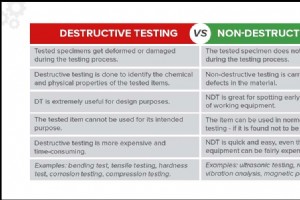
Designing reliable assets demands rigorous testing to gauge the durability of materials, components, and machinery. Testing can be conducted in a destructive or non‑destructive manner. In this article, we explore destructive testing—its principles, key use cases, and the expertise required to execu

In the early days of industrial production, maintenance was straightforward: machines were large, rugged, and largely free from frequent breakdowns. Production schedules were forgiving, and downtime was a low‑priority concern.Today’s manufacturing landscape is vastly more complex. Machines are incre

Acquisition of physical assets can be extremely expensive, especially in the industrial sector. Given the high level of capital expenditure involved, firms need to ensure their optimal
Businesses rely on a mix of assets to drive value—from sophisticated machinery to liquid cash. Fixed assets, however, are the long‑term investments that shape a company’s financial health and operational efficiency.Effective management of these assets is essential for boosting efficiency, cutting op

Assets in the industrial sector come with expiry dates. However, asset life cycles are quite elastic. With proper care and smart asset performance management, firms have the right tools

In today’s fast‑moving industrial landscape, a company’s most valuable asset is its people. Success hinges on a workforce that blends leadership, technical expertise, and hands‑on experience—from executives to floor technicians.However, many maintenance departments struggle to attract and retain ski

Learning from past failures is the best way to understand and prevent future equipment breakdowns. In practice, that learning process falls under the umbrella of failure analysis. These

Maintainability is a buzzword in discussions of maintenance and reliability, yet many still miss its true essence. In this article we unpack the concept, show how it can be measured, and explain how thoughtful asset design elevates maintainability.What Is Maintainability?Maintainability is a corners

When choosing a maintenance strategy, the principle is simple: a proactive approach always beats a reactive one. Yet, the choice is far from trivial. A range of proactive strategies exists, each with its own level of complexity, effectiveness, and cost. Understanding these nuances is essential befor
Equipment Maintenance and Repair

Laser‑Assisted MAPLE Deposition of Antibody‑Functionalized Upconversion Nanoparticles Enhances Cell Culture Performance

Short‑Run vs Long‑Run Production: Understanding the Key Differences

Essential CMMS Setup: Choosing Assets & Structuring Your Asset Tree

Top 5 Robot Applications for Turnkey Pre‑Engineered Solutions
