


Industrial manufacturing
Industrial Technology

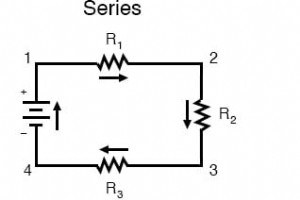
While a single battery and load resistor is easy to analyze, real-world electronics almost always involve multiple components. Understanding how these components are connected—either in series or in parallel—is essential for designing, troubleshooting, and optimizing circuits. Series and Parallel Co

SPICE (Simulation Program with Integrated Circuit Emphasis) is the industry‑standard tool for circuit simulation. Its output is presented in scientific notation, and the input netlists accept both scientific notation and metric prefixes. To fully grasp SPICE analyses, you must understand how SPICE e

Entering scientific notation on a handheld calculator is straightforward once you know the key commands. Most devices feature an E or EE button that lets you specify the power of ten. For instance, to input the proton mass (1.67 × 10⁻²⁴ g), you would press the following sequence: [1] [.] [6] [7] [EE
When you need to express a quantity using a different metric prefix than the one originally used, the trick is simple: shift the decimal point to the right or left according to the distance between the two prefixes on the metric “number line.” The number line is laid out from larger to smaller prefi
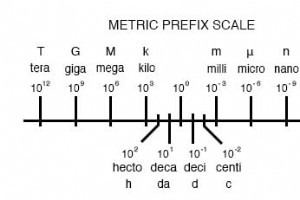
In the International System of Units (SI), measurement values are expressed using a compact notation that replaces explicit powers of ten with standard alphabetical prefixes. This system simplifies the communication of extremely large or small quantities while maintaining clarity. The following numb
Scientific notation not only simplifies the writing of extremely large or small numbers, but it also streamlines the arithmetic of multiplication and division. This technique is especially valuable when working with quantities in engineering, physics, and data science. Consider the task of determini
In many fields of science and engineering, scientists must work with numbers that are either astronomically large or extraordinarily small. These values can be so extreme that they challenge both our mental capacity and our written notation. Consider two examples: Proton mass = 0.0000000000000000000
The following table summarizes the thresholds at which electric current becomes perceptible, involuntary, or lethal, based on data from the Massachusetts Institute of Technology (MIT) safety page and the Cooper Bussmann, Inc. safety handbook.Both sources credit Charles F. Dalziel, a pioneer in the s
Mastering safe and efficient meter use is essential for any electronics technician, protecting both the user and ensuring accurate diagnostics. While the idea of connecting a meter to live circuits can feel intimidating, careful preparation and adherence to best practices eliminate the risk of accid
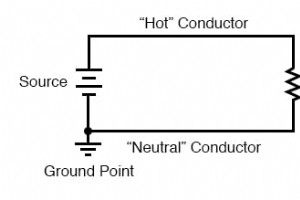
In any power system, a reliable earth‑ground connection is essential for predictable and safe operation. Without it, the voltage between any circuit point and earth can vary unpredictably, creating a serious shock risk. By grounding one side of the voltage source, we guarantee that at least one poin
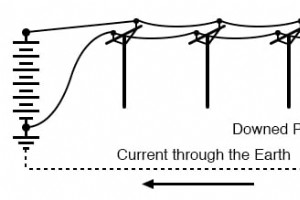
While direct contact with an energized circuit is the most obvious danger, everyday environments can harbor hidden electrical threats that catch many off guard. Skin resistance plays a crucial role in determining how much current can pass through the body. A higher resistance reduces the likelihood
Electrical accidents continue to pose a serious risk even with stringent lock‑out/tag‑out procedures. Prompt, expert response is critical to saving lives. How to Assist a Victim of Electrical Shock 1. Stop the source of power. Immediately shut off the relevant circuit breaker or disconnect switch. I
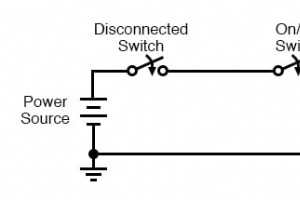
Before working on any circuit, always disconnect the power. Only when all sources of harmful energy are removed can a system be deemed safe. In industrial settings, this is referred to as placing the equipment in a Zero Energy State. While the focus here is electrical safety, the same principles app
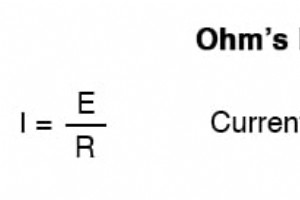
When safety signs warn, It’s not the voltage that kills, it’s current!, the truth is nuanced. Voltage alone is harmless, but it is the voltage that drives current through a body, and that current is what can burn tissue, freeze muscles, and induce cardiac arrhythmias. Understanding the relationship

Electricity demands a closed circuit to sustain flow. Consequently, the brief jolt from static discharge occurs only while equalizing charge between two objects, making such shocks typically harmless. Shock risks arise only when current can enter and exit the body through two distinct contact points
Electric shock can range from a harmless tingling to a life‑threatening event. While static discharges often leave only brief discomfort, high‑power circuits can inflict serious injury, with pain being only the surface symptom. When current flows through tissue, resistance dissipates energy as heat.
In this chapter, we confront a frequent oversight in electronics education: the neglect of comprehensive electrical safety. Anyone engaging with electricity deserves clear, actionable guidance. Publishers who omit this essential knowledge are inadvertently putting readers at risk. Drawing from a wee
When harnessed correctly, computers become indispensable allies in science and engineering. One of the most powerful applications is the simulation of electric circuits. These programs enable designers to evaluate concepts quickly, reducing both time and expense compared to physical prototyping. For
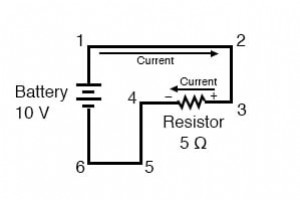
In a typical DC circuit powered by a single battery, conventional current flows from the positive (+) terminal toward the negative (–) terminal. In the example below, the current circulates clockwise through points 1 → 2 → 3 → 4 → 5 → 6 and back to 1. When the current passes
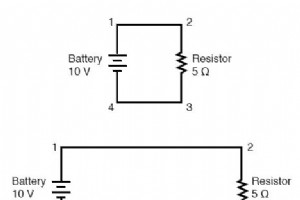
Up to now, we’ve examined simple single‑battery, single‑resistor circuits without considering the connecting wires. But does the wire’s length or the circuit’s shape influence our calculations? The following diagrams clarify the answer. In most textbook analyses, the wires are treated as having z
Industrial Technology
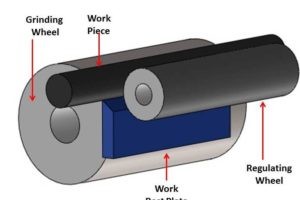
Centerless Grinding Explained: Key Differences from Centered Grinding

Elevate Production: Mastering Machine Operator Efficiency Measurement & Improvement
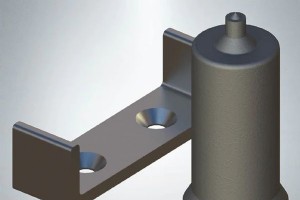
How to Create a Countersink Hole in Metal Workpieces: A Step‑by‑Step Guide
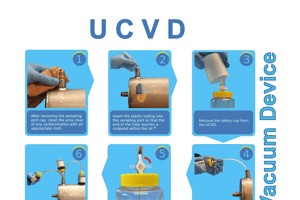
Introducing UCVD Oil Sampling Bottles – Reliable Collection for Precise Condition Monitoring
