


Industrial manufacturing
Industrial Technology

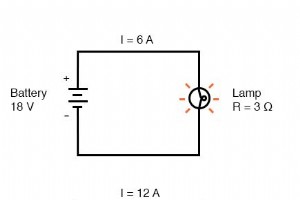
“Advances are made by answering questions. Discoveries are made by questioning answers.” —Bernhard Haisch, Astrophysicist Ohm’s Law remains a cornerstone of electrical engineering, yet its simplicity masks a crucial limitation: it assumes a constant resistance. In practice, many conductors, especial

In any electrical circuit, voltage, current, and resistance interact predictably, allowing precise control of one variable by adjusting the others. Among these, resistance is the simplest to manipulate by altering material, size, or shape—think of how a lamp’s thin filament offers more resistance th
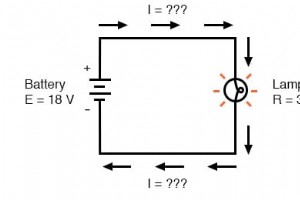
Learn the Power Formula In electrical engineering, power (P) is calculated by multiplying voltage (V) by current (I). The result is expressed in watts (W). Let’s apply this to a simple circuit example. Using Ohm’s Law to Determine Current For the circuit above, we have an 18‑volt battery an
In addition to voltage and current, there is another important parameter related to electric circuits: power. First, we need to understand just what power is before we analyze it in any circuits. What is Power and How Do We Measure It? Power is a measure of how much work can be performed in
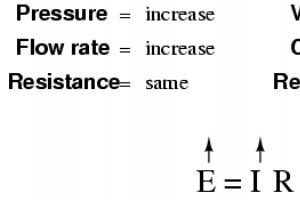
Ohm’s Law can be grasped intuitively using a familiar water‑and‑pipe system. Imagine a pump generating pressure (voltage) that forces water (current) through a pipe with a narrowing or valve (resistance). The interplay between these three variables mirrors electrical behavior. When the pipe’s restri
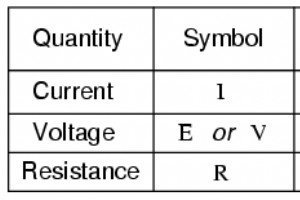
Ohm’s Law, first articulated by Georg Simon Ohm in 1827, is the cornerstone of circuit analysis. It links the three fundamental electrical quantities—voltage, current, and resistance—through a simple, yet powerful equation. Voltage, Current, and Resistance In any closed conductive path, electric cha
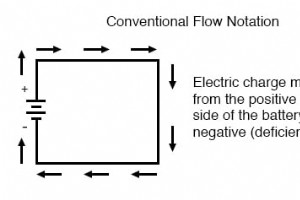
The nice thing about standards is that there are so many of them to choose from. —Andrew S. Tanenbaum, computer science professor Positive and Negative Electron Charge Benjamin Franklin’s early experiments with static electricity led him to postulate that charge moved from smooth wax to rough wool.
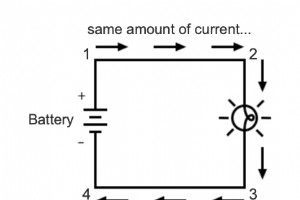
In any circuit, energy is required to push charge against resistance. That energy manifests as a voltage drop between points separated by resistance. In a simple series circuit the current—charge passing a point each second—is the same throughout, but the voltage between different pairs of points ca
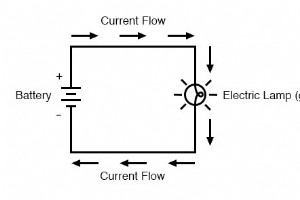
The circuit discussed earlier is far from practical and can be hazardous. Directly connecting the poles of a voltage source with a single wire creates a short circuit, allowing enormous current to flow. The resulting energy release—usually in the form of heat—can be dramatic and dangerous. Practical
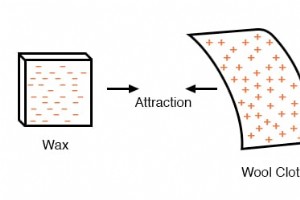
Before electrons can move, a circuit must exist, but that alone isn’t enough. A force—just as a push is required to launch a marble—drives charge carriers through a conductor. In static electricity, this force stems from an imbalance of electric charge: one body gains electrons (negative) while anot
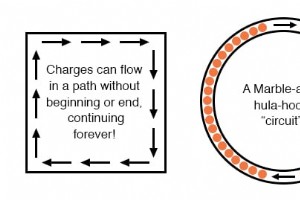
In everyday electronics, electrons move in a steady stream along conductors without relying on external “sources” and “destinations” that would need infinite charge capacity. That’s because the movement occurs within a closed loop—a circuit—where the flow is sustained by an internal motive force rat
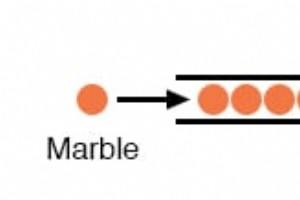
Electrons in different atoms exhibit varying degrees of freedom. In metals, outer electrons are loosely bound, moving chaotically between atoms under the influence of room‑temperature heat. These free electrons can drift freely, giving metals their high conductivity. Conductors vs Insulators Materia
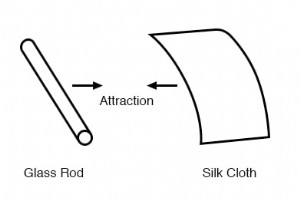
Long before modern physics, scientists observed that certain materials attracted each other after being rubbed. For example, rubbing silk against glass makes both surfaces cling together, and the attraction persists even when the objects are separated. Glass and silk aren’t the only materials that

Devoting an entire chapter in a modern electronics textbook to electron‑tube design and function may appear odd, given semiconductor dominance. Yet, beyond historical interest, tubes remain indispensable in niche domains where they outperform any solid‑state device yet invented. In certain high‑powe
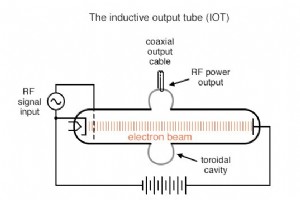
When radio‑frequency (RF) signals push beyond 1 GHz, conventional electron‑tube designs face steep penalties from inter‑electrode capacitance and transit‑time delays. Yet engineers have continually re‑imagined tube architecture to meet these challenges, producing a family of high‑frequency devices t
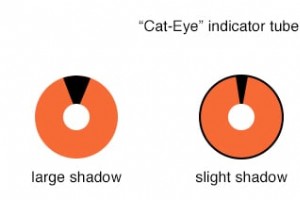
Display tubes have evolved from simple amplification devices to sophisticated visual instruments. Their applications range from oscilloscopes to television monitors, and from voltage meters to signal strength indicators. The most iconic example is the cathode ray tube (CRT). Originally devised to st

Up to now we have examined vacuum tubes, which are completely evacuated of gas and vapor. Introducing specific gases or vapors into the envelope transforms the tube’s behavior, enabling it to perform specialized functions in electronic circuits.Applying a sufficiently high voltage across a gas‑fille
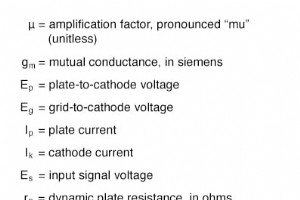
Electron tubes—those classic vacuum devices that once powered radios, televisions, and early computers—are still prized in high‑end audio, RF, and specialty amplifiers. Understanding their intrinsic parameters is essential for designing reliable, high‑performance circuits. For bipolar junction tran
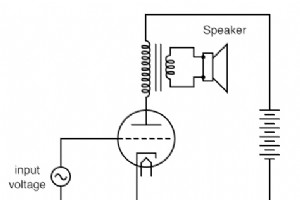
Combination Tubes: Merging Multiple Functions into a Single Glass Envelope In the same spirit that the integrated circuit revolutionized electronics, tube designers sought to condense multiple tube functions into a single glass envelope. By doing so, they reduced space requirements and improved reli

To counter the attraction of secondary electrons toward the screen, designers introduced a fifth wire element: the suppressor. Tubes featuring this component became known as pentodes. The suppressor is typically a wire coil or mesh positioned between the screen grid and the anode (plate). It
Industrial Technology

Discover the Essential Benefits of CMMS: Why Your Operations Need a Computerized Maintenance Management System

A Practical Taxonomy for Industrial Internet of Things (IIoT) Systems
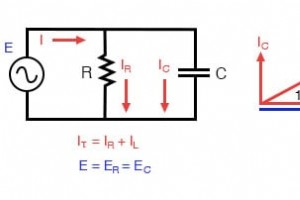
Parallel Resistor–Capacitor AC Circuits: Analysis, Impedance, and Ohm’s Law

Top 20 SAP Asset Management Consultants: Expert Solutions for Asset Optimization
