Industrial manufacturing
Industrial Technology

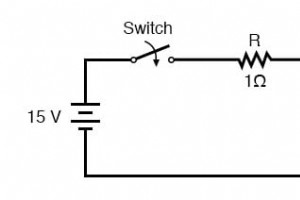
Inductors store energy in a magnetic field generated by current flow, the direct opposite of capacitors, which store energy in an electric field created by voltage across two plates. This magnetic storage causes an inductor to resist changes in current, whereas a capacitor resists changes in voltage
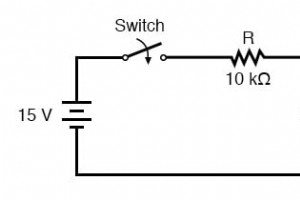
Capacitors store electrical energy in an electric field, functioning much like miniature secondary‑cell batteries. A fully discharged capacitor exhibits zero volts across its terminals, while a charged capacitor maintains a steady voltage, mirroring a battery’s behavior. When connected to an externa

In this chapter, we examine how capacitors and inductors react to abrupt changes in DC voltage—commonly referred to as transient voltages—when connected in series with a resistor. While resistors respond instantaneously to voltage changes, capacitors and inductors evolve their voltage and current ov
Inductors, like any electrical component, come with inherent limitations that must be honored to ensure reliability and optimal circuit performance. Factors Affecting Inductance Rated current Because inductors are made of coiled wire, their current‑carrying capacity is constrained by the wire’s resi
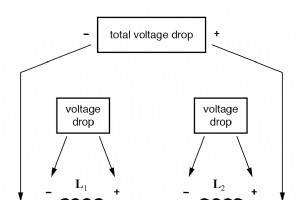
When inductors are wired in series, the total inductance equals the sum of each component’s inductance. This occurs because the same current flows through each coil, and the voltage drop across the series string is the algebraic sum of the individual drops. Consequently, a given rate of current chan
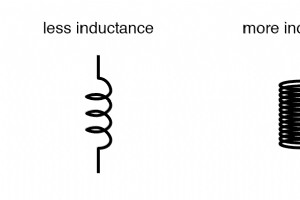
Inductance, the ability of a coil to store magnetic energy, is governed by four fundamental design parameters. These factors dictate how much magnetic flux a given current (amp‑turns) can generate. Number of Wire Turns All else equal, increasing the number of turns boosts inductance; reducing turns
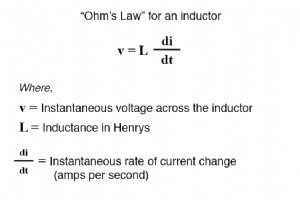
Unlike resistors, inductors do not exhibit a constant resistance. Instead, their voltage–current relationship is governed by a clear mathematical principle: This expression mirrors the capacitor equation, linking the instantaneous voltage drop across an inductor (v) to the instantaneous rate of cha
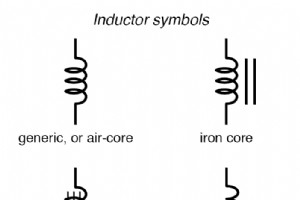
Whenever electrons flow through a conductor, a magnetic field is generated around it—this phenomenon is known as electromagnetism. Magnetic fields influence the alignment of electrons within atoms and can exert forces across space, just as electric fields do between charged particles. Like electric

When two conductive coils are positioned close together, the magnetic flux generated by one coil induces a voltage in the other. This phenomenon, known as mutual inductance, is the fundamental principle behind transformer operation. A transformer is a purpose‑built device that harnesses mutual induc
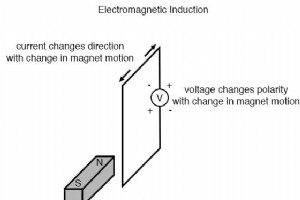
Michael Faraday’s landmark discovery of electromagnetic induction unlocked the practical generation of electricity. He showed that a voltage is produced across a conductor when it experiences a changing magnetic flux that is perpendicular to its length. One intuitive way to create a varying magnetic
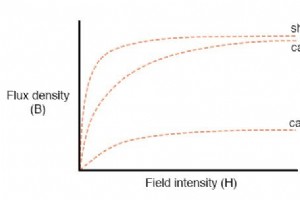
To visualize how a material’s permeability varies, we plot the magnetic field intensity (H) on the horizontal axis and the resulting flux density (B) on the vertical axis. Using H (mmf divided by material length) and B (total flux divided by cross‑sectional area) removes dependence on the specimen’s
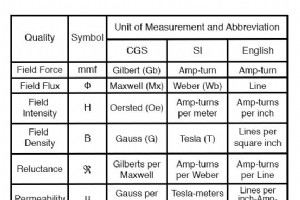
If the coexistence of multiple measurement systems for common quantities has left you puzzled, youre not alone. In magnetism, a lack of early standardization has resulted in three distinct unit systems. This guide demystifies the key magnetic quantities and shows how they relate to their electrical
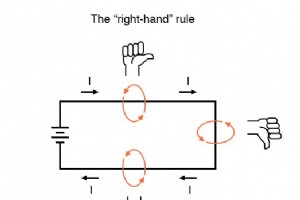
In 1820, Danish physicist Hans Christian Oersted unintentionally revealed the intimate link between electricity and magnetism while lecturing on the topic. By passing an electric current through a wire suspended above a compass, he observed the needle’s unmistakable deflection—evidence that moving c
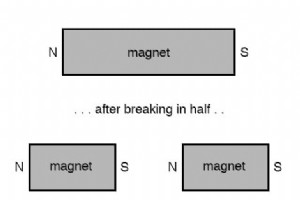
For centuries, scholars have marveled at certain mineral rocks that naturally attract iron. The earliest recorded reference dates back roughly 2,500 years in Europe, with even older mentions in East Asia. This mineral—known as lodestone or magnetite—captured the imagination of ancient scientists and
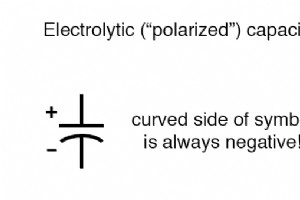
Capacitors, like every electronic component, have operational limits that must be observed to ensure circuit reliability and performance. Capacitor Working Voltage Working voltage: A capacitor is essentially two conductors separated by a dielectric. Exceeding the dielectric’s breakdown voltage cause
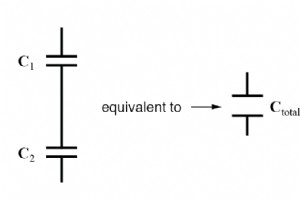
When capacitors are wired in series, the resulting equivalent capacitance is always smaller than the capacitance of any single component in the chain. This happens because the total distance between the effective plates increases—each capacitor adds its own plate spacing to the overall gap. With all
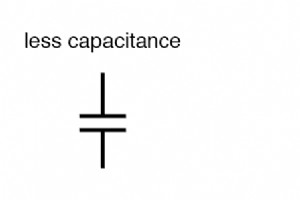
Capacitance is governed by three core physical parameters of a capacitor: plate area, plate spacing, and dielectric permittivity. These factors dictate how much electric‑field flux—essentially the charge that can be stored—develops for a given voltage across the plates. Plate Area All else being equ
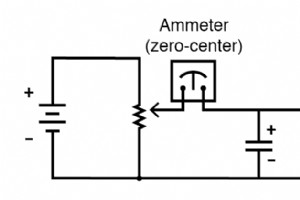
Capacitors do not possess a fixed resistance like conductors. Their behavior is defined by a clear mathematical relationship between voltage and current: In this equation, i represents the instantaneous current – the amount of current at a specific moment – as opposed to the average current (I) mea
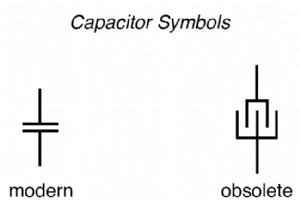
Introduction When a voltage is applied across two separated conductors, an electric field forms in the intervening space. In basic electronics we analyze how voltage, current, and resistance interact within conductive pathways, but fields extend beyond matter and describe the forces that act over em
The electrons in insulating materials are tightly bound, making them excellent barriers to free electron flow. Yet, even the best dielectrics cannot withstand unlimited voltage. When a sufficient electrical field is applied, any insulator will eventually undergo breakdown, allowing current to pass t
Industrial Technology