


Industrial manufacturing
Industrial Technology

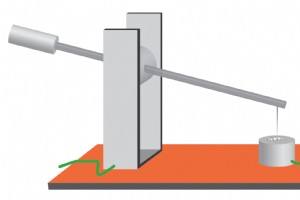
Diodes have powered countless electronic innovations, evolving from crude crystal detectors in the 19th century to today’s highly engineered silicon junction devices. This article traces that journey, highlighting key milestones, device structures, and practical performance characteristics. Early Se
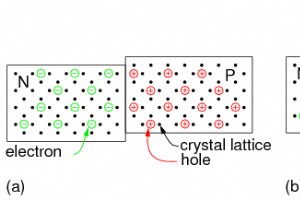
The PN junction is the cornerstone of modern semiconductor devices, turning a single crystal into a self‑sustaining voltage barrier that governs diode behavior. By doping one side of a crystal with acceptor atoms (P‑type) and the other with donor atoms (N‑type), a region of immobile charge forms at
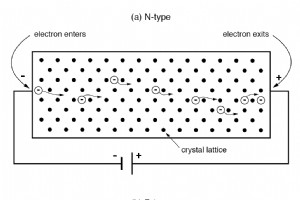
Pure semiconductors exhibit much higher resistivity than metals, yet they are far less insulating than materials such as glass. For an intrinsic (undoped) semiconductor to function effectively, its purity must reach at least one defect per 10 billion atoms—an equivalent to a single grain of salt in

Quantum mechanics describes electrons in atoms using four quantum numbers, which specify the allowed energy states—much like seats in a stadium. Each electron occupies a unique set of quantum numbers, analogous to a spectator assigned to a specific row and seat. Electrons can move between these stat

Valence Electrons Valence electrons occupy the outermost shell of an atom and dictate its chemical behavior. These electrons are responsible for ion formation and covalent bonding, which in turn determine an element’s reactivity and its ability to conduct electricity. Conductors Group IA elements—L
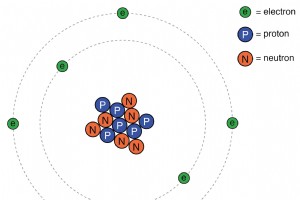
“I think it is safe to say that no one understands quantum mechanics.” — Physicist Richard P. Feynman Semiconductor technology is often called the cornerstone of the digital age. Its development unlocked miniaturized computers, advanced medical imaging, and ubiquitous communication devices. Be

This chapter delves into the fundamental physics that govern semiconductor devices, illustrating how these principles underpin a wide range of device architectures. While subsequent chapters prioritize practical circuit implementation, this section offers the essential theoretical foundation needed
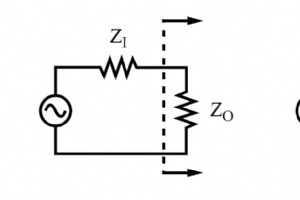
Attenuators are passive components that reduce the amplitude of a signal. They are essential in RF systems, test equipment, and audio chains to protect sensitive receivers or to match power levels. What Is an Attenuator? An attenuator weakens a high‑level signal so that a downstream device receives

Decibels as an Absolute Unit of Power Decibels are often used to express relative gain or loss, but they can also represent an absolute power level. In acoustics, 0 dB is defined as a sound‑pressure intensity of 1 picowatt per square meter—roughly the quietest sound a human ear can detect. A 40 dB s
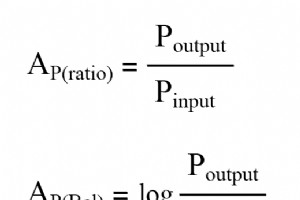
The Bel is Used to Represent Gain\nIn its most straightforward definition, an amplifier’s gain is the ratio of output power to input power. Because it is a ratio, it is dimensionless. Nevertheless, engineers use a dedicated unit—called the bel—to express gain in a more readable format.\nThe bel was
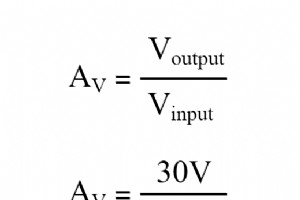
The Voltage Gain Amplifiers are designed to increase the magnitude of an input signal. The ability to quantify this increase is expressed as the gain, the ratio of output to input magnitude. Whether you’re comparing power, voltage, or current, the gain is a unitless figure that tells you how many t
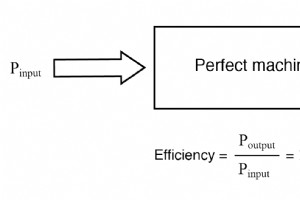
Practical Benefit of Active Devices The practical benefit of active devices is their amplifying ability. Whether the device in question be voltage-controlled or current-controlled, the amount of power required of the controlling signal is typically far less than the amount of power available in the
Passive Devices Passive devices are components that cannot modulate current using an external electrical signal. Classic examples include resistors, capacitors, inductors, transformers, and even diodes. Active Devices An active device can electrically control the flow of charge—essentially, it lets
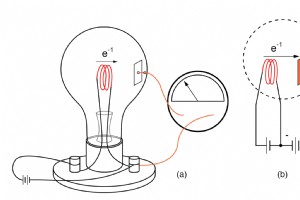
Introduction This third volume of the Lessons In Electric Circuits series marks a pivotal transition: we formally move from the realm of simple electric circuits to the dynamic world of electronic circuits. While electric circuits rely on conductive paths for the steady flow of charge, electronic ci
Microprocessor Programming Fundamentals The instruction set of a microprocessor is unique to each chip. For example, the Intel 80386 uses a different binary encoding than the Motorola 68020, meaning that identical operations require distinct machine codes. Because there is no universal standard for
In the early days of computing, pioneers such as Alan Turing and John von Neumann recognized that a truly useful machine must do more than merely execute a list of commands—it must be able to store, retrieve, and modify data within the same memory pool. This insight led to the concept of the stored‑
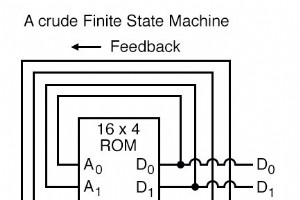
Feedback is a cornerstone of modern engineering, turning a straightforward circuit into a versatile control system. By embedding feedback loops—both negative and positive—designers can craft devices that adapt, stabilize, and perform complex logic with remarkable simplicity. Comparator + negative f
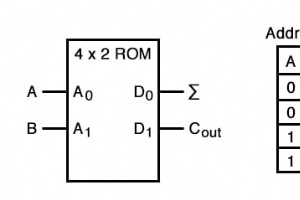
In the previous chapter we explored digital memory devices, discovering how solid‑state storage cells can be precisely addressed using binary values. By driving the address lines of a ROM with specific binary patterns, we can retrieve stored data directly from its memory cells. Imagine a ROM that ha
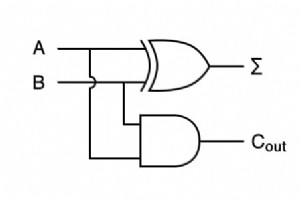
When we need to add two binary digits, the simplest device is a half‑adder. Its logic‑gate implementation is shown below: The Σ symbol denotes the “sum” output—the least significant bit (LSB) of the result—while Cout represents the “carry” output, the most significant bit (MSB). In industrial contr

The earliest digital storage devices that relied on moving parts were the punched paper cards that once guided Jacquard’s weaving loom in 1780. By the 1950s, those same cards found a new role in electronic computers, where metal‑to‑metal contact, pneumatic air‑flow, and optical sensing all read the
Industrial Technology

Warehouse Inventory Management Mastery: 80 Proven Resources on Frameworks, Best Practices, Software & Mobility Solutions
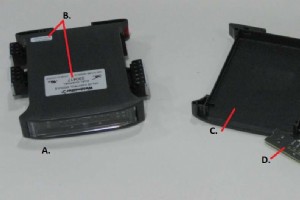
Modern Documentation Practices for Integrated PCB and Mechanical Design

Quality 4.0: Harnessing Wireless IoT Sensors to Revolutionize Manufacturing Excellence

PEG‑Coated Gold Nanostars: A Safe, High‑Contrast Agent for CT Imaging with Rapid Renal Clearance
