Industrial manufacturing
Embedded
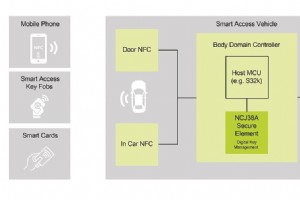
Automakers, smartphone makers and chip suppliers have been refining “digital car keys” for years. Thanks to the Car Connectivity Consortium (CCC), a cross‑industry body, the industry has converged on a single standard for unlocking vehicles, as Rainer Lutz, NXP Semiconductors’ director of digital ke
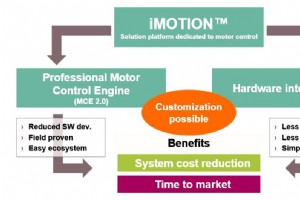
Energy‑conversion efficiency remains a cornerstone of modern electronics design. In electric‑motor systems this efficiency is challenged twice: first, electrical energy must be generated to power the controller; second, it must be transformed into mechanical torque. Eliminating motor‑related noise i

Microchip Technology’s PIC18-Q43 family delivers a suite of configurable core‑independent peripherals (CIPs) that shift routine software tasks into dedicated hardware. This architecture delivers faster execution, reduces CPU load, and accelerates time‑to‑market for embedded solutions. The CIPs – in
Trinamic Motion Control GmbH & Co. KG has unveiled two integrated driver solutions that streamline the design and control of high‑power stepper motors. The TMCM‑1278 smart stepper motor driver module merges a motion controller and driver into one compact unit, tailored for NEMA 23 and NEMA 24 motors
Infineon Technologies has launched the IMC300 motor controller series, combining the iMOTION Motion Control Engine with a dedicated Arm Cortex‑M0 microcontroller. This new line expands the existing IMC100 family and delivers the flexibility demanded by variable‑speed drives. Both IMC100 and IMC300
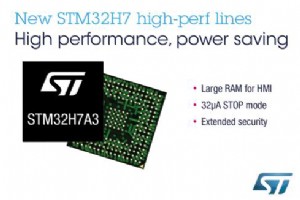
Three STM32H7 microcontrollers from STMicroelectronics deliver a 280‑MHz Arm Cortex‑M7 core paired with a double‑precision floating‑point unit. Designed for the next generation of smart devices, these MCUs combine high‑speed processing with energy‑efficient operation. The STM32H7A3 and STM32H7B3 fam
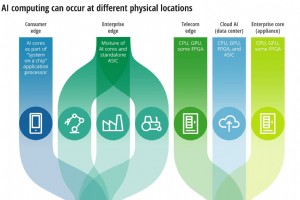
In 2020, analysts forecasted over 750 million edge AI chips—devices that perform or accelerate machine learning directly on the hardware—would be sold, generating approximately US$2.6 billion in revenue. The edge‑AI segment is expected to outpace the broader semiconductor industry, with unit sales p

Renesas Licenses 3db Access Ultra‑Wideband Technology for Secure IoT Connectivity Renesas Electronics has entered a memorandum of understanding (MoU) with Switzerland‑based fabless semiconductor company 3db Access to license its secure ultra‑wideband (UWB) technology. The partnership aims to embed 3

Combining AI with IoT yields the AIoT—an expanding domain where microcontrollers now host sophisticated machine learning, thanks to breakthroughs in neural‑network compression and optimization. Modern smartphone application processors routinely execute AI inference for tasks such as image analysis a
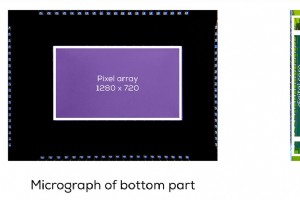
PARIS — Prophesee, the Paris‑based pioneer of neuromorphic vision systems, and Sony Corp. announced at the International Solid‑State Circuits Conference (ISSCC) in San Francisco a groundbreaking stacked event‑based vision sensor that blends Prophesee’s event‑driven architecture with Sony’s advanced
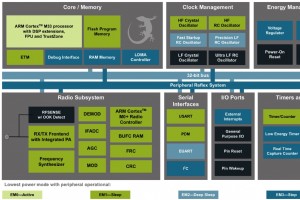
Silicon Labs has introduced the EFR32MG22 family—ultra‑low‑power Zigbee system‑on‑chip (SoC) solutions engineered for eco‑friendly IoT devices that operate within mesh networks. Built on the industry‑standard 802.15.4 PHY and MAC of Zigbee 3.0, the new SoCs leverage Zigbee Green Power to cut power u
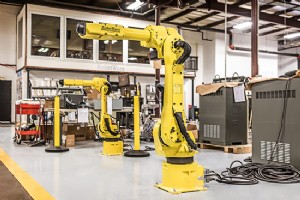
A robotic manipulator is programmable on three or more axes that specify the movements of a robot, either the robotic arms or body. These robotic manipulators are automatically controlled and reprogrammable without physical modification, and they are adaptable to different applications of t
Diodes now offers automotive‑grade, low‑power real‑time clock (RTC) solutions – the PT7C4363BQ and PT7C4563BQ (the latter featuring an adjustable timer) – designed to meet stringent automotive reliability requirements. The PT7C4363BQ and PT7C4563BQ are qualified to AEC‑Q100 Grade 1, operating reliab
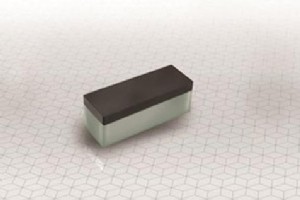
Murata’s LXTBKZMCMG‑010 is a compact 6.0 × 2.0 × 2.3 mm RFID tag that mounts directly onto metal surfaces. By overcoming the detuning and signal reflection that plague conventional RFID tags near metal, it delivers reliable read performance, enabling accurate tool tracking, warranty management, and

Texas Instruments (TI) has, for the first time, embedded a dedicated AI accelerator into its automotive system‑on‑chip (SoC), underscoring the rapid integration of deep‑learning capabilities in advanced driver‑assist systems (ADAS). The new block combines TI’s latest C7x digital signal processor (DS
ROHM today announced the BD71850MWV, a highly integrated power‑management IC (PMIC) engineered specifically for NXP Semiconductors’ i.MX 8M Nano family. The PMIC delivers 95 % efficient DC/DC conversion, integrates every power rail required by the processor, and supports DDR and system‑IO supplies—a
ON Semiconductor has unveiled a new family of four low‑power solid‑state lighting devices that empower automotive manufacturers to deliver the high performance and advanced functionality consumers now demand for exterior and interior illumination. Designed for low‑power LED applications, the family
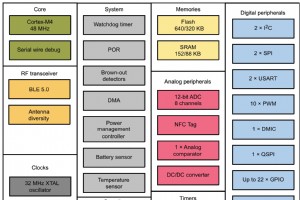
NXP Semiconductors has introduced the QN9090 and QN9030 Bluetooth 5 system‑on‑chips (SoCs), offering hardware‑compatible options for 802.15.4, multiprotocol RF, and optional NFC technology. These new members of the QN series are engineered for intelligent, battery‑operated devices, delivering except

Arm today launched two cutting‑edge IP cores that bring advanced machine‑learning capability to resource‑constrained endpoints, including IoT and low‑power devices. The Cortex‑M55 microcontroller is the first to integrate Arm’s Helium vector‑processing engine, while the Ethos‑U55 is a compact versio

BRISTOL, UK — XMOS has re‑engineered its Xcore processor core for machine learning, launching the Xcore.ai, a crossover processor designed for AIoT devices. Priced from just $1, the chip promises high‑performance inference in a compact, low‑power package. Xcore.ai represents the third generation of
Embedded