Industrial manufacturing
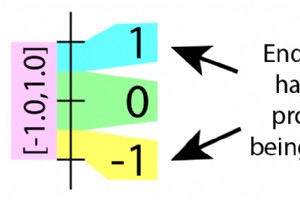
VHDL includes a built‑in pseudo‑random generator that yields floating‑point values in the [0, 1] interval. By scaling and offsetting these values, you can create random data of any type—real, integer, std_logic_vector, or time—suitable for testbenches. The following guide shows how to build these ge
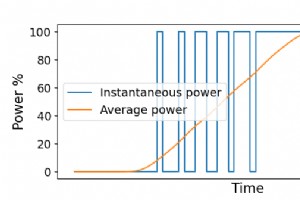
Pulse‑width modulation (PWM) turns a digital FPGA pin into a powerful analog controller. By switching the supply on and off at high speed, PWM delivers the exact average current a device needs, without ever generating a true analog voltage. Typical PWM applications include audio output for speakers,

I’ve noticed that many of the gadgets that I’ve bought the last couple of years have shifted away from LED blinking to led breathing. Most electronic gizmos contain a status LED whose behavior gives away indications of what’s going on inside of the devic
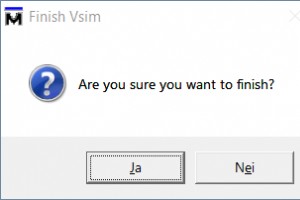
When a VHDL testbench reaches the end of its intended execution, you’ll want the simulator to halt cleanly and, if possible, return control to any calling script. This article reviews the most common and reliable techniques for stopping a simulation across major VHDL simulators, with code examples f
Most VHDL simulators expose the Tool Command Language (Tcl) as their primary scripting interface. When you type a command at the simulator console, you are using Tcl, and you can also write scripts that drive and observe your VHDL design. This article walks you through building a self‑checking testb
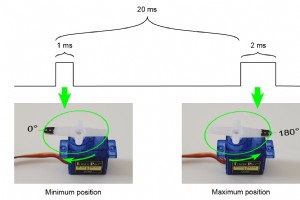
Radio‑controlled (RC) servos are the heart of hobbyist aircraft, cars, and boats. They translate a remote radio command into a precise angular position. Because RC systems have been around for decades, the industry‑standard interface is pulse‑width modulation (PWM) rather than a pure digital protoco
The VHDL generate statement allows designers to automatically replicate a block of code across multiple instances, each wired to distinct signals. Think of it as a compile‑time for loop that can create chained processes or module instances, dramatically reducing boilerplate and improving maintainabi

Text strings in VHDL are generally limited to fixed-length character arrays. That makes sense because VHDL describes hardware, and generic-length strings require dynamic memory. To define an array of strings, you have to allocate space at compile-time for the highest numb
This tutorial walks you through using Xilinx Vivado’s Integrated Logic Analyzer (ILA) and Virtual Input/Output (VIO) cores to debug and monitor VHDL designs on‑chip. By the end you’ll know how to insert probes, configure triggers, and capture precise signal behavior without external equipment. Overv
When designing VHDL for safety‑critical FPGA applications, simply writing testbenches isn’t enough. Engineers must prove that a module behaves exactly as specified, free of hidden side‑effects. Formal verification provides that mathematical assurance. Formal verification bridges the gap between requ
VUnit is a leading open‑source VHDL verification framework that couples a Python test‑suite runner with a dedicated VHDL library. Together they automate testbench compilation, execution, and result reporting, enabling engineers to follow a test‑driven development cycle. In this tutorial, Ahmadmuntha
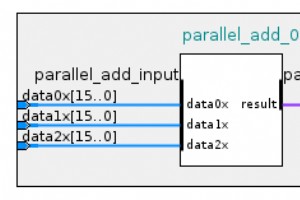
Have you ever wanted to run a VHDL simulation that includes a Quartus IP core through the VUnit verification framework? That’s what FPGA engineer Konstantinos Paraskevopoulos had in mind, but he couldn’t find a suitable tutorial for it. Fortunately, he used his talent to figure out how and was kind
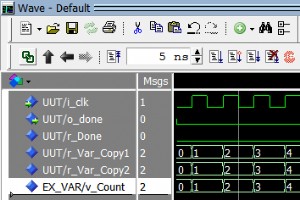
In VHDL, variables behave similarly to C variables: their value is available immediately after an assignment and remains unchanged until the next assignment. This makes them ideal for temporary storage and procedural calculations within a process. Key Rules for Using Variables in VHDL Variables
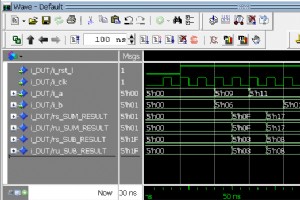
Digital designers rely on precise arithmetic inside FPGAs and ASICs. A core concept is the distinction between signed and unsigned data types in VHDL. Both types are defined in the numeric_std package from the IEEE library. While many designers still use std_logic_arith, this package is not IEEE‑s
In VHDL, records offer a powerful way to streamline your design, much like structs in C. By grouping related signals into a single type, you can dramatically reduce code duplication, improve readability, and simplify port maps across multiple entities. Records shine when you work with large, recurri
What Is a VHDL Procedure?\nProcedures belong to the subprogram family in VHDL. They encapsulate reusable logic, reducing code duplication and improving maintainability. By defining a procedure once, you can invoke it from multiple processes or architectures, ensuring consistent behavior.\nExample: I
Using both Numeric_Std and Std_Logic_Arith Package Files Below you’ll find the most frequently used VHDL type conversions. The article is divided into two sections: the first showcases conversions that rely on the modern numeric_std package, while the second demonstrates equivalent conversions usin
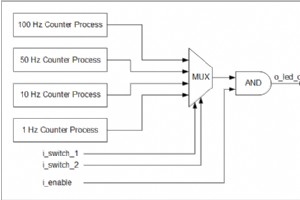
Introduction Welcome to a hands‑on guide that walks you through creating a simple LED blinker on an FPGA using either VHDL or Verilog. The example demonstrates core FPGA concepts: concurrent processes, frequency synthesis, and multiplexer logic—all driven by a 25 MHz clock. Project Overview Generat
Using VHDL Process or Verilog Always Blocks In both VHDL and Verilog, Process blocks (VHDL) and Always blocks (Verilog) are the core constructs for describing hardware behavior. They are used to model two distinct types of logic: Combinational logic – outputs depend only on current inputs. Sequenti
VHDL, short for Very High Speed Integrated Circuit Hardware Description Language, is one of the two primary hardware description languages used to design FPGAs and ASICs. While it may appear verbose compared to software languages, its syntax is precise and designed for describing digital logic at a
VHDL